






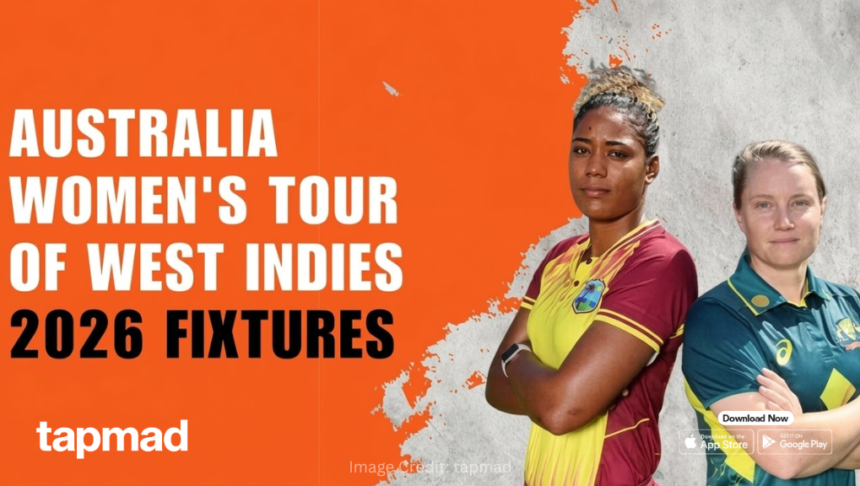
Australia Women vs West Indies Women: Momentum, Matchups, and What Comes Next
A Series Defined Early — But Not Without Stakes
By the time the third T20I arrived in Kingstown, the narrative around Australia Women vs West Indies Women had already been shaped. Australia had secured the series with two authoritative wins, but the final match remained far from a dead rubber. Instead, it offered a platform for experimentation, tactical adjustments, and individual statements.
- Australia Women vs West Indies Women: Momentum, Matchups, and What Comes Next
- How Australia Seized Control of the Series
- West Indies’ Chase: Promise Without Closure
- Australia’s Bowling: Discipline Over Flash
- Conditions at Arnos Vale: A Tactical Variable
- Third T20I: What It Offers Beyond the Scoreline
- Predicted Playing XIs
- Global Broadcast and Streaming Overview
- Broader Implications: Depth vs Development
- Conclusion: More Than a Series Result
At the Arnos Vale Ground in St Vincent, both teams entered with contrasting objectives. Australia aimed to reinforce depth and consistency, while West Indies sought a consolation victory to restore balance in a one-sided contest.
How Australia Seized Control of the Series
Australia’s dominance in the second T20I illustrated why they remain one of the most formidable teams in women’s cricket. Their 17-run victory was not just about the margin—it was about control across phases.
A Structured Batting Performance
Australia’s innings unfolded in layers:



- Georgia Voll set the tempo early with a sharp 39 off 23 balls, striking at 169.56
- A 54-run opening stand with Beth Mooney (17 off 20) provided early stability
- Phoebe Litchfield (35 off 29) and Ellyse Perry combined for a crucial 58-run partnership
- Perry’s late acceleration—42 off 28 balls—ensured a competitive total
The final score of 164/5 in 20 overs reflected a balanced approach: aggressive starts, controlled middle overs, and a decisive finish.
Contributions Across the Order
Late cameos from:



- Georgia Wareham (11 off 8)
- Nicola Carey (9 off 5)*
- Tahlia McGrath (5 off 7)*
ensured Australia maintained a run rate of 8.20, stretching West Indies’ bowling unit under sustained pressure.
West Indies’ Chase: Promise Without Closure
Chasing 165, West Indies showed glimpses of resistance but struggled to sustain momentum.
Early Setback, Mid-Innings Recovery
- Qiana Joseph was run out early (11 runs), disrupting the start
- Captain Hayley Matthews responded with a commanding 56 off 41 balls, including seven fours and three sixes
- A 77-run partnership with Stafanie Taylor (22 off 27) stabilized the innings
The Turning Point
The match shifted decisively when Matthews fell at 90 (12.1 overs). Her dismissal, followed by Taylor’s exit at 104, removed the backbone of the chase.
Despite Deandra Dottin’s unbeaten 39 off 28 balls, the required rate escalated beyond reach. West Indies finished at 147/4, falling 17 runs short.



Australia’s Bowling: Discipline Over Flash
Australia’s bowling unit did not rely on dramatic collapses. Instead, they applied sustained pressure:
- Alana King: 2/25 in 4 overs, including the crucial Matthews wicket
- Georgia Wareham: 1/16 in 3 overs
- Kim Garth: economical 0/20 in 4 overs
The strategy was clear—tight lines, controlled lengths, and minimal scoring opportunities. The result was a gradual squeeze rather than a sudden breakdown.
Conditions at Arnos Vale: A Tactical Variable
The venue has played a consistent role in shaping outcomes.
Pitch Behavior
- Slower surface, generally favoring bowlers
- Average score: around 126
- Spinners slightly dominant: 11 wickets vs 9 for pacers in recent matches
Weather Influence
- Temperature around 26°C
- High humidity levels
- Dew expected in the second innings, making chasing marginally easier
These conditions create a nuanced balance: difficult batting early, but improved stroke play later under lights.
Third T20I: What It Offers Beyond the Scoreline
With the series already decided, the third match serves a different purpose.
Tactical Experimentation
Both sides are likely to:
- Rotate players
- Test bench strength
- Explore alternative combinations
Psychological Edge
For West Indies, a win would:
- Restore confidence
- Validate adjustments made across the series
For Australia, maintaining dominance reinforces:
- Squad depth
- Consistency under varying conditions
Predicted Playing XIs
West Indies Women
Qiana Joseph, Hayley Matthews, Stafanie Taylor, Deandra Dottin, Shemaine Campbelle, Jahzara Claxton, Chinelle Henry, Jannillea Glasgow, Aaliyah Alleyne, Afy Fletcher, Karishma Ramharack
Australia Women
Georgia Voll, Beth Mooney, Phoebe Litchfield, Ellyse Perry, Georgia Wareham, Tahlia McGrath, Nicola Carey, Sophie Molineux, Alana King, Kim Garth, Darcie Brown
Global Broadcast and Streaming Overview
The third T20I is accessible across multiple regions, reflecting growing global interest in women’s cricket:
- India: FanCode (live streaming)
- Pakistan: Tapmad app and website
- New Zealand: TVNZ+, TVNZ 1, Sport Nation, Alternative Commentary Collective
- South Africa: SuperSport, SuperSport Grandstand Channel 201
- United Kingdom: TNT Sports
- Worldwide: ICC TV (subject to regional rights)
Match start time: 6:30 AM IST
Broader Implications: Depth vs Development
This series highlights a familiar dynamic in women’s cricket:
- Australia: a system built on depth, adaptability, and consistent performance
- West Indies: a side capable of brilliance but still seeking sustained execution
The gap is not merely about talent—it reflects structural consistency, squad rotation strategies, and execution under pressure.
Conclusion: More Than a Series Result
While Australia Women have already sealed the series, the final T20I represents more than a formal conclusion. It is a test of resilience for West Indies and a benchmark of consistency for Australia.
Matches like these contribute to the broader evolution of women’s cricket—where competitiveness, visibility, and tactical depth continue to rise. Even in a decided series, the final contest carries weight: in performance, perception, and preparation for what comes next.