






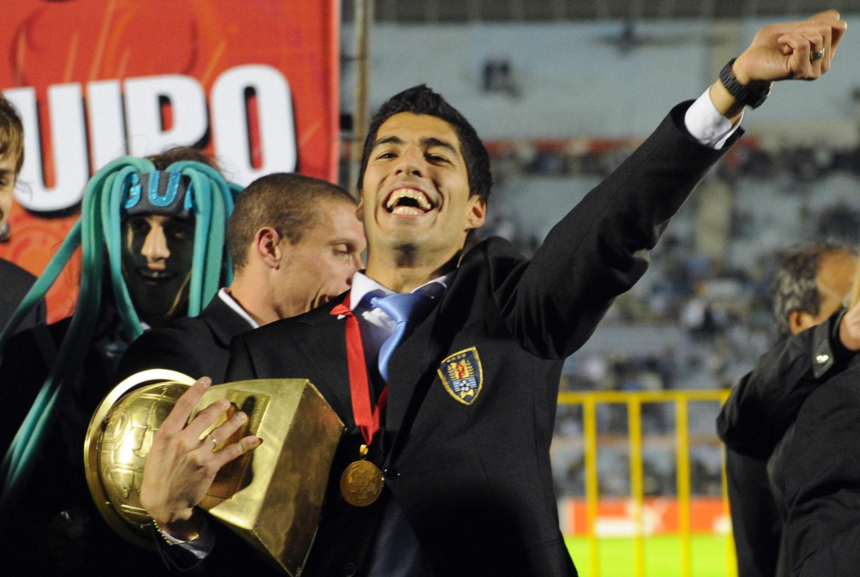
Luis Suárez: The Enduring Edge of Football’s Ultimate Competitor
Introduction: A Name That Still Resonates Across Eras
Few footballers of the modern era have combined brilliance, controversy, and relentless competitiveness quite like Luis Suárez. From the streets of Salto in Uruguay to the grandest stages of European football and beyond, Suárez has built a career defined by goals, intensity, and decisive moments.
- Luis Suárez: The Enduring Edge of Football’s Ultimate Competitor
- From Salto to Global Stardom
- Premier League Firepower: The Liverpool Years
- Barcelona: Peak Dominance in a Golden Era
- Reinvention at Atlético Madrid
- 2026 Context: The Suárez Name in Champions League Drama
- Style of Play: What Made Luis Suárez Unique
- Controversy and Complexity
- Legacy: Where Does Luis Suárez Rank?
- Influence on Modern Football
- Looking Ahead: The Future of the Suárez Legacy
- Conclusion: A Career Defined by Impact
Even in 2026, his name continues to surface in major football conversations—not only because of his legacy, but also due to the continued presence of players sharing his surname in top-level competitions. Most recently, during a dramatic UEFA Champions League night, a different Suárez—Luis Javier Suárez—played a pivotal role in a historic comeback, a reminder of how enduring the Suárez name remains in football narratives.
This article takes an analytical feature approach, examining the career, influence, and ongoing relevance of Luis Suárez in a rapidly evolving football landscape.
From Salto to Global Stardom
Luis Suárez’s journey is one of persistence and transformation. Born in 1987 in Salto, Uruguay, he emerged from modest beginnings to become one of the most feared strikers in world football.



His early development at Nacional laid the groundwork for a European career that would soon explode into prominence.
Ajax: The First Explosion
At Ajax, Suárez refined his attacking instincts. He was not just a scorer—he was a creator, a disruptor, and a relentless presser. His goal tally in the Eredivisie quickly turned heads across Europe.



Premier League Firepower: The Liverpool Years
Suárez’s move to Liverpool marked a defining chapter.
During the 2013–14 season, he produced one of the most dominant individual campaigns in Premier League history:
-
31 league goals (in just 33 matches)
-
Multiple Player of the Season awards
-
A near-title-winning campaign for Liverpool
His style combined unpredictability with clinical finishing. He could score from distance, create chances out of nothing, and press defenders into mistakes.
Barcelona: Peak Dominance in a Golden Era
Suárez reached the pinnacle of club football at FC Barcelona, forming part of the iconic attacking trio alongside Lionel Messi and Neymar.



Key Achievements:
-
UEFA Champions League winner
-
Multiple La Liga titles
-
European Golden Shoe winner (2015–16)
During this period, Suárez was arguably the most complete striker in the world. He combined:
-
Tactical intelligence
-
Physical aggression
-
Elite finishing
His ability to complement Messi while maintaining elite individual output remains one of the defining traits of his career.
Reinvention at Atlético Madrid
After leaving Barcelona, Suárez joined Atlético Madrid, where many expected his decline.
Instead, he delivered:
-
A La Liga title-winning campaign
-
Crucial goals in tight matches
-
Leadership in a disciplined system
This phase demonstrated his adaptability. He no longer relied solely on pace but instead leaned on positioning, experience, and efficiency.
2026 Context: The Suárez Name in Champions League Drama
While Luis Suárez himself is no longer at the center of European knockout football, his legacy echoes in current competitions.
During the 2026 UEFA Champions League Round of 16, a dramatic comeback by Sporting CP saw them overturn a 3-0 deficit to defeat Bodø/Glimt 5-0 after extra time.
A critical moment came when:
-
Luis Javier Suárez converted a penalty in the 78th minute, leveling the aggregate score at 3-3 and forcing extra time.
This moment was pivotal in shifting momentum and ultimately led to Sporting’s progression.
The parallel is notable: while not the same individual, the Suárez surname once again became synonymous with decisive impact in elite competition.
Style of Play: What Made Luis Suárez Unique
Luis Suárez’s footballing identity cannot be reduced to statistics alone.
Key Attributes:
1. Relentless Aggression
He played on the edge—constantly pressing, challenging defenders, and forcing errors.
2. Clinical Finishing
Few strikers could match his composure in front of goal. Whether inside the box or from distance, Suárez converted chances at an elite rate.
3. Creativity Under Pressure
He was not just a finisher. Suárez frequently created goals through improvisation and instinct.
4. Tactical Intelligence
His movement off the ball often went unnoticed but was critical in breaking defensive structures.
Controversy and Complexity
Suárez’s career has also been marked by controversy. Incidents involving disciplinary issues often overshadowed his brilliance.
However, these moments also contributed to his reputation as one of football’s most intense competitors—someone who operated at emotional extremes.
From a cultural perspective, Suárez represents a type of footballer that is becoming increasingly rare: raw, instinctive, and unapologetically competitive.
Legacy: Where Does Luis Suárez Rank?
In evaluating Suárez’s place in football history, several factors stand out:
-
One of the top goal scorers of his generation
-
A central figure in one of Barcelona’s greatest teams
-
A player who succeeded across multiple leagues
-
A striker capable of transforming teams
He is often discussed alongside contemporaries such as Messi and Neymar—not necessarily in terms of global fame, but in terms of impact within elite attacking systems.
Influence on Modern Football
Suárez’s influence extends beyond his own achievements.
Tactical Influence:
-
High-pressing forwards are now standard in modern football
-
Strikers are expected to contribute defensively and creatively
Cultural Influence:
-
His intensity set a benchmark for competitive mentality
-
Younger forwards emulate his pressing and finishing style
Looking Ahead: The Future of the Suárez Legacy
As football evolves, the archetype of the striker continues to shift toward versatility and intelligence—qualities Suárez embodied throughout his career.
Even as new names rise, moments like the recent Champions League comeback—featuring Luis Javier Suárez—highlight how the legacy continues to resonate.
The name “Suárez” remains associated with decisive moments, pressure situations, and elite-level execution.
Conclusion: A Career Defined by Impact
Luis Suárez’s story is not just about goals or trophies. It is about influence—on matches, teams, and the broader identity of modern strikers.
From Ajax to Liverpool, Barcelona to Atlético Madrid, and now through echoes in contemporary competitions, Suárez’s imprint on football remains unmistakable.
His career serves as a case study in intensity, adaptability, and competitive excellence—qualities that continue to define elite football in 2026.