






AFCON in Crisis: How a Controversial Final Reshaped African Football
A Tournament Defined by Drama, Not Just Glory
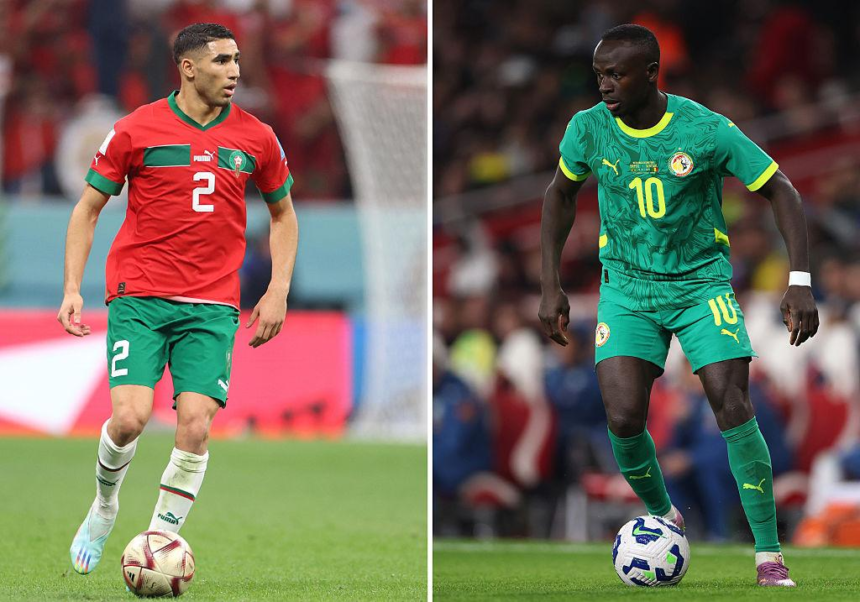
The Africa Cup of Nations (AFCON), long celebrated as the pinnacle of African football, has rarely faced a controversy as profound as the one unfolding in 2026. What should have been remembered as a fiercely contested final between Senegal and Morocco has instead become a defining case study in governance, discipline, and the integrity of the sport.
- A Tournament Defined by Drama, Not Just Glory
- What Happened in Rabat: A Final That Spiraled
- CAF’s Intervention: Regulations Take Center Stage
- Senegal’s Response: “Unjust, Unprecedented and Unacceptable”
- Morocco’s Position: Rules Above Emotion
- Beyond the Final: Sanctions and Fallout
- AFCON’s Reputation Under Scrutiny
- The Legal Battle Ahead: CAS as Final Arbiter
- A Defining Moment for African Football
- Conclusion: Football, Law, and Legacy
In a decision that has sent shockwaves across the continent, Morocco have been declared champions of the 2025 AFCON tournament—days after Senegal had celebrated a dramatic 1–0 extra-time victory. The reversal, triggered by an appeal and enforced by the Confederation of African Football (CAF), has ignited debate across sporting, legal, and cultural spheres.
This is not just a football story. It is a moment that could reshape how African football is governed going forward.
What Happened in Rabat: A Final That Spiraled
The final, played on January 18 in Rabat, had all the ingredients of a classic. Senegal and Morocco, two of Africa’s strongest footballing nations, were locked in a tense contest that extended into extra time.


But the defining moment came late in stoppage time.
A penalty was awarded to Morocco following a VAR review by Congolese referee Jean-Jacques Ndala. The decision sparked immediate outrage from Senegal’s players and staff. In protest, several Senegalese players walked off the pitch—a move that would later prove decisive.



For approximately 14 minutes, the match descended into chaos. Officials and players clashed, tensions spilled into the stands, and the integrity of the match appeared to hang in the balance.
Eventually, Senegal captain Sadio Mane persuaded his teammates to return. Morocco missed the penalty, and Senegal went on to win the match in extra time thanks to a goal from Pape Gueye.
At full time, Senegal were champions—or so it seemed.
CAF’s Intervention: Regulations Take Center Stage
The turning point came when Morocco lodged an appeal with CAF, arguing that Senegal’s temporary walk-off constituted a breach of competition rules.



CAF’s Appeals Committee agreed.
Citing Articles 82 and 84 of the AFCON regulations, the committee ruled that:
-
Any team that leaves the pitch without the referee’s authorization is considered to have forfeited the match
-
The result is automatically recorded as a 3–0 loss
As a result, Senegal’s 1–0 victory was annulled and replaced with a 3–0 win for Morocco.
The official ruling stated that Senegal’s conduct fell “within the scope of articles 82 and 84 of the regulations of the Africa Cup of Nations.”
This decision effectively stripped Senegal of the title and crowned Morocco African champions for the second time—50 years after their first triumph.
Senegal’s Response: “Unjust, Unprecedented and Unacceptable”
The reaction from Senegal was immediate and forceful.
In an official statement, the Senegalese Football Federation declared:
“The Senegalese Football Federation condemns this unjust, unprecedented and unacceptable decision, which brings African football into disrepute.”
The federation confirmed it would escalate the matter to the Court of Arbitration for Sport (CAS) in Lausanne, signaling that the dispute is far from over.
Secretary general Abdoulaye Seydou Sow was even more direct, stating:
“This is a travesty. This decision is based on absolutely nothing. It has no legal foundation.”
He added:
“We will not back down. Senegalese people should have no doubt. The truth is on Senegal’s side, the law is on Senegal’s side.”
This escalation transforms the issue from a sporting dispute into a legal battle with international implications.
Morocco’s Position: Rules Above Emotion
Morocco, while benefiting from the ruling, has maintained a more measured stance.
The Royal Moroccan Football Federation emphasized that their appeal was not about disputing the match outcome on the field, but about ensuring that competition rules were applied consistently.
In a statement, the federation said:
“The federation reaffirms its commitment to respecting the rules, the clarity of the competitive framework, and the stability of African competitions.”
This framing positions Morocco not as opportunistic beneficiaries, but as advocates for regulatory consistency—an argument that resonates with governing bodies but divides public opinion.
Beyond the Final: Sanctions and Fallout
The fallout from the match extended beyond the title itself.
CAF imposed several disciplinary measures linked to the chaotic scenes:
-
Senegal coach Pape Bouna Thiaw was fined $100,000 and suspended
-
A $100,000 fine imposed on Morocco for interference in the VAR process remains in place
-
Morocco striker Ismael Saibari had his suspension reduced from three matches to one, and his fine was overturned
These sanctions underscore the scale of disorder during the final and CAF’s attempt to assert control over the situation.
However, they also highlight inconsistencies that critics argue weaken the legitimacy of the broader ruling.
AFCON’s Reputation Under Scrutiny
Perhaps the most significant consequence of this controversy is reputational.
CAF itself acknowledged that the events surrounding the final had “severely tarnished” the image of African football. The scenes—players walking off, clashes on the pitch, and disputes over VAR—have raised uncomfortable questions:
-
Are AFCON regulations sufficiently clear and enforceable?
-
Do refereeing standards and VAR processes command trust?
-
Can CAF maintain consistency in disciplinary decisions?
For a tournament that has grown in global stature, these questions carry substantial weight.
AFCON is not just a continental competition; it is a showcase of African football to the world. Incidents of this magnitude risk undermining that progress.
The Legal Battle Ahead: CAS as Final Arbiter
Senegal’s decision to appeal to the Court of Arbitration for Sport introduces a new phase.
The CAS process is designed to provide an independent legal review of sporting disputes. Its ruling will be final and binding, meaning the fate of the AFCON 2025 title could still change.
What this process achieves is clarity—either confirming CAF’s authority and interpretation of its regulations or overturning the decision and reinstating Senegal as champions.
Key issues likely to be examined include:
-
Whether Senegal’s walk-off constitutes a definitive refusal to play
-
Whether the players’ return mitigates the breach
-
Whether CAF applied its regulations proportionately
The outcome will set a precedent not just for AFCON, but for football governance across Africa and beyond.
A Defining Moment for African Football
The AFCON controversy is more than a dispute over a single match. It is a stress test for the structures that govern African football.
At stake are not just medals and trophies, but credibility, trust, and the future direction of the game on the continent.
For players like Sadio Mane, officials within CAF, and millions of fans, the events in Rabat represent a turning point—one that forces African football to confront difficult questions about fairness, discipline, and transparency.
Conclusion: Football, Law, and Legacy
The Africa Cup of Nations has always been a tournament rich in passion and drama. But in 2026, that drama has extended beyond the pitch into courtrooms and boardrooms.
Morocco’s crowning as champions, Senegal’s fierce resistance, and the looming CAS verdict together form a narrative that will define this era of AFCON history.
Regardless of the final outcome, one conclusion is clear: African football stands at a crossroads. How it resolves this crisis will shape not only future tournaments, but the integrity of the game itself.