






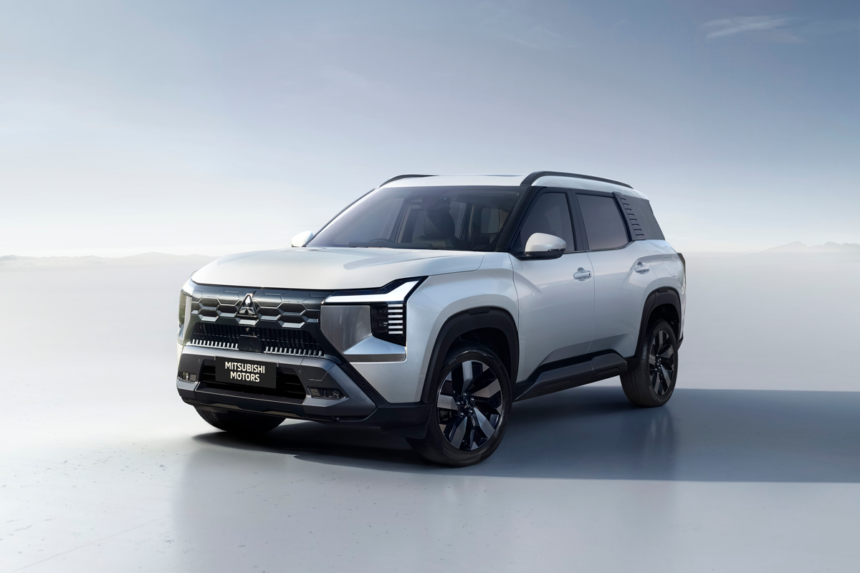
Mitsubishi Destinator: A Strategic Entry into the Affordable 7-Seater SUV Market
Introduction: A Calculated Move into High-Demand Territory
The arrival of the Mitsubishi Destinator signals a deliberate expansion by Mitsubishi Motors into one of the fastest-growing segments in emerging markets: affordable, family-oriented SUVs.
- Introduction: A Calculated Move into High-Demand Territory
- Market Positioning: Filling the Gap Between Compact and Premium
- Engineering Foundations: Built for Emerging Markets
- Powertrain Strategy: Turbocharged Efficiency
- Interior and Technology: Designed for Family Utility
- Safety and Driver Assistance: Expanding ADAS Accessibility
- Pricing and Ownership Proposition
- Design Language and Exterior Identity
- Industry Context: Why the Destinator Matters
- Future Outlook: A Platform for Expansion
- Conclusion: A Pragmatic, Market-Focused SUV
Positioned as a practical yet feature-rich option, the Destinator is not merely another addition to the lineup—it is a targeted response to evolving consumer demand for versatility, space, and value. With pricing details surfacing ahead of its official South African launch at the end of March 2026, the model is already attracting attention for its balance between affordability and specification.
Market Positioning: Filling the Gap Between Compact and Premium
The Destinator occupies a carefully defined space within Mitsubishi’s SUV hierarchy. It slots between the Mitsubishi Outlander Sport and the full-size Mitsubishi Outlander, offering a bridge between compact affordability and premium practicality.
This positioning is not incidental. It reflects a broader industry trend where manufacturers are increasingly targeting:
Related News

-
Growing middle-class families
-
Urban users needing flexible seating
-
Emerging markets with price-sensitive buyers
As highlighted by Lerato Nonyane, General Manager: Product & Marketing at Mitsubishi Motors South Africa:
“The Destinator is an all-new SUV designed for South African families and explorers alike. With its bold capabilities and versatile design, we are excited to help our customers embark on new journeys while strengthening our presence in the compact SUV segment.”
The statement underscores the vehicle’s dual identity—both functional and aspirational.
Engineering Foundations: Built for Emerging Markets
Originally previewed as the DST Concept, the Destinator transitions into production with a clear engineering philosophy: simplicity, durability, and adaptability.
Key Dimensions and Platform
-
Length: 4,680 mm
-
Wheelbase: 2,815 mm
-
Width: 1,840 mm
-
Height: 1,780 mm
-
Ground clearance: 214 mm
Built on a unibody platform shared with the Outlander Sport, the SUV is manufactured at Mitsubishi’s Cikarang plant in Indonesia. This production strategy reflects cost efficiency while maintaining structural integrity.
Despite its SUV classification, the Destinator is front-wheel drive only. However, Mitsubishi compensates with a drive mode selector offering five terrain-specific settings:
-
Wet
-
Tarmac
-
Normal
-
Gravel
-
Mud
Complementing this is the Active Yaw Control system, described as “rally-bred,” which improves cornering stability by distributing torque between the front wheels.
Powertrain Strategy: Turbocharged Efficiency
At the core of the Destinator is a familiar but enhanced engine configuration.
Engine Specifications
-
Engine: 1.5-litre turbocharged petrol
-
Power: 120 kW
-
Torque: 250 Nm
-
Transmission: Continuously Variable Transmission (CVT)
-
Drivetrain: Front-wheel drive
This setup represents a significant upgrade from the naturally aspirated version found in related models, increasing output from 77 kW and 141 Nm to more competitive levels.
The choice of a CVT aligns with the vehicle’s target market—prioritizing smooth operation, fuel efficiency, and lower maintenance complexity over performance-oriented driving.
Interior and Technology: Designed for Family Utility
The Destinator’s cabin is structured around practicality, with three rows of seating accommodating seven occupants. The focus is on maximizing space and usability rather than luxury alone.
GLS Trim: Functional Baseline
The entry-level GLS includes:
-
18-inch alloy wheels
-
LED headlights
-
Fabric upholstery
-
Climate control
-
4.2-inch TFT driver display
-
8-inch infotainment system
-
Six-speaker sound system
-
Keyless entry and push-button start
-
Reverse camera and rear parking sensors
-
Six airbags and core stability systems
This configuration establishes a comprehensive baseline, ensuring essential comfort and safety features are standard.
Exceed Trim: Premium Enhancements
The higher-spec Exceed variant introduces a more sophisticated experience:
-
12.3-inch infotainment display
-
8-inch digital driver cluster
-
Eight-speaker Yamaha premium sound system
-
Panoramic sunroof
-
Wireless smartphone charging
-
Ambient lighting
-
Electric driver’s seat
-
Surround-view camera
-
Adaptive Cruise Control
-
Forward Collision Mitigation
-
Blind Spot Monitoring
-
Rear Cross Traffic Alert
Additional touches such as imitation leather upholstery, chrome detailing, and roof rails reinforce its premium positioning.
Safety and Driver Assistance: Expanding ADAS Accessibility
One of the most notable aspects of the Destinator is the inclusion of advanced driver assistance systems (ADAS) in a relatively affordable SUV.
Across the range, buyers benefit from:
-
Six airbags
-
Electronic Stability System
-
Hill Start Assist
-
Active stability control
-
Lane assist technologies
-
Blind spot monitoring
-
Collision mitigation systems
This reflects a broader industry shift toward democratizing safety technology, making it accessible beyond high-end vehicles.
Pricing and Ownership Proposition
Pricing has emerged ahead of the official launch, placing the Destinator competitively within its segment:
-
Destinator 1.5T GLS CVT – R489,900
-
Destinator 1.5T Exceed CVT – R569,900
Buyers can also expect:
-
5-year/unlimited km warranty
-
5-year/75,000 km service plan
-
Estimated monthly finance: approximately R7,150
This pricing strategy positions the Destinator as Mitsubishi’s most affordable seven-seat SUV in South Africa, undercutting many rivals while offering comparable or superior features.
Design Language and Exterior Identity
Visually, the Destinator adopts Mitsubishi’s contemporary SUV styling cues:
-
T-shaped LED lighting signature
-
Honeycomb-pattern grille with acrylic surface
-
18-inch alloy wheels (machine-cut on Exceed)
-
Rear spoiler
-
Roof rails (Exceed)
The model is available in six colour options:
-
Black
-
Red Metallic
-
Lunar Blue
-
Blade Silver Metallic
-
Graphite Grey Metallic
-
Quartz White Pearl
The design emphasizes modernity without straying into overly aggressive styling, aligning with its family-oriented positioning.
Industry Context: Why the Destinator Matters
The introduction of the Destinator reflects several broader automotive trends:
1. Growth of Affordable 7-Seaters
Demand for multi-purpose vehicles is rising, especially in markets where one car must serve multiple roles.
2. Localization Strategy
Production in Indonesia enables Mitsubishi to control costs while maintaining regional supply efficiency.
3. Technology Democratization
Features like ADAS, large infotainment screens, and premium audio systems are no longer exclusive to luxury vehicles.
4. Competitive Pressure
The Destinator enters a segment increasingly contested by brands offering value-driven SUVs, including emerging Chinese manufacturers.
Future Outlook: A Platform for Expansion
The Destinator’s success will likely influence Mitsubishi’s broader strategy in developing markets. Potential future developments may include:
-
Expanded drivetrain options (possibly hybrid variants)
-
Additional trim levels or special editions
-
Wider rollout across Africa and other emerging regions
Given its positioning and specification, the model could serve as a foundation for Mitsubishi’s long-term presence in the compact-to-mid SUV segment.
Conclusion: A Pragmatic, Market-Focused SUV
The Mitsubishi Destinator is not attempting to redefine the SUV category. Instead, it executes a more calculated objective: delivering a well-equipped, seven-seat vehicle at a price point aligned with real-world affordability.
By combining practical dimensions, a turbocharged engine, comprehensive safety features, and competitive pricing, Mitsubishi has created a product tailored to the needs of modern families in developing markets.
Its success will depend not on novelty, but on consistency—how well it delivers on reliability, value, and everyday usability.