






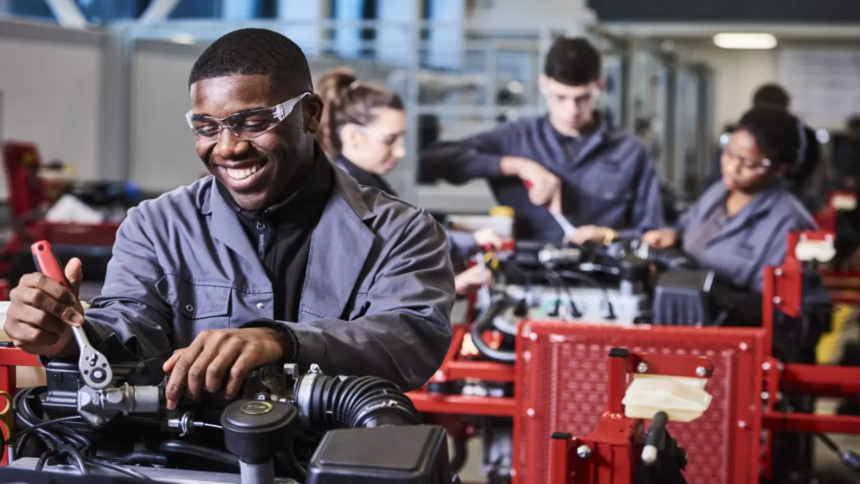
MA Automotive Tool and Die Millwright Apprenticeships 2026
A Practical Guide to Entering South Africa’s Automotive Engineering Workforce
In an industry where precision engineering meets high-volume production, technical skills are not optional—they are foundational. The MA Automotive Tool and Die Millwright Apprenticeship Programme 2026 offers a structured pathway for young South Africans to enter this demanding but rewarding sector.
- A Practical Guide to Entering South Africa’s Automotive Engineering Workforce
- Understanding the Programme: What This Apprenticeship Delivers
- What You Will Actually Learn
- The Role of a Millwright: Why It Matters
- Entry Requirements: Who Can Apply
- Profile of the Ideal Candidate
- Why This Apprenticeship Stands Out
- Application Process: What It Achieves and How to Complete It
- Broader Impact: Skills Development and Industrial Growth
- Future Outlook: Where This Path Can Lead
- Conclusion
Set in Pretoria’s Rosslyn industrial hub, this apprenticeship is positioned within a real automotive manufacturing environment, providing not only training but also direct exposure to the systems that drive modern vehicle production.
Understanding the Programme: What This Apprenticeship Delivers
At its core, the programme is designed to develop multi-skilled artisans, specifically millwrights—professionals trained to work across both mechanical and electrical systems.
Programme Snapshot
-
Company: MA Automotive Tool and Die (Pty) Ltd
-
Location: Pretoria (Rosslyn), Gauteng
-
Programme: Millwright Apprentice
-
Employment Type: Contract (Apprenticeship)
-
Industry: Automotive Manufacturing
-
Experience Required: None (Entry-level)
-
Closing Date: 31 March 2026
This structure reflects a deliberate focus on entry-level access, allowing individuals without prior work experience to transition into technical careers.



What You Will Actually Learn
The apprenticeship is not theoretical. It is built around hands-on engagement with industrial systems, ensuring that participants develop applied competence rather than classroom-only knowledge.
As part of the programme, apprentices will:



-
Learn how to install, maintain, and repair industrial machinery
-
Work with electrical and mechanical systems in integrated environments
-
Operate within a production-focused manufacturing setting
-
Receive structured training combined with workplace exposure
This dual approach—training plus real production experience—aligns with global best practices in artisan development.
The Role of a Millwright: Why It Matters
A millwright is one of the most versatile roles in industrial engineering. Unlike specialized technicians, millwrights operate across disciplines, making them critical in automated production environments.
In automotive manufacturing, this includes:
-
Maintaining assembly line systems
-
Troubleshooting breakdowns in real time
-
Ensuring machinery efficiency and safety compliance
-
Supporting continuous production with minimal downtime
This versatility explains why millwrights are consistently in demand across manufacturing sectors.



Entry Requirements: Who Can Apply
The programme sets clear academic thresholds to ensure candidates can handle the technical demands.
Qualification Pathways
Option 1:
-
Grade 12 / NQF Level 4 with:
-
Pure Mathematics
-
Physical Science
-
Technical Drawing
-
OR
Option 2:
-
NCV Level 4 with:
-
Mathematics
-
Language subjects
-
Advantageous Subjects
While not mandatory, the following increase competitiveness:
-
Fitting & Turning
-
Electrical / Electrical Engineering
-
Mathematical Techniques
These requirements indicate a preference for candidates with strong analytical and technical foundations.
Profile of the Ideal Candidate
Beyond academic qualifications, the programme emphasizes behavioral and practical attributes.
Applicants are expected to be:
-
Technically inclined, with a clear interest in machinery and engineering
-
Hands-on, comfortable working with tools and equipment
-
Willing to operate in a factory environment, including production pressures
-
Detail-oriented and safety-conscious, critical in industrial settings
This combination reflects the realities of manufacturing—precision, discipline, and adaptability.
Why This Apprenticeship Stands Out
Several factors differentiate this opportunity from generic training programmes:
1. Direct Industry Exposure
Participants train inside an active automotive manufacturing facility, not a simulated environment.
2. Clear Career Pathway
The programme leads toward becoming a qualified Millwright, a recognized artisan role with long-term employability.
3. Skills That Transfer Across Industries
Millwright skills are applicable in:
-
Automotive manufacturing
-
Mining and heavy industry
-
Energy and utilities
-
FMCG production plants
4. Entry-Level Accessibility
No prior experience is required, lowering barriers to entry for young applicants.
Application Process: What It Achieves and How to Complete It
The application process is designed to screen candidates based on academic readiness and alignment with technical training requirements.
How to Apply
-
Select the application portal:
https://gruppocln.simplify.hr/vacancy/elqazp?utm_source=Indeed&utm_medium=Organic&utm_campaign=organic_feed -
Submit your application with the required academic qualifications
-
Ensure all information is accurate and complete before submission
Important Considerations
-
Only candidates who meet subject requirements will be considered
-
Late applications may not be accepted
-
The deadline is 31 March 2026
Timely and accurate submission is essential, as industrial apprenticeship slots are typically limited.
Broader Impact: Skills Development and Industrial Growth
Programmes like this play a strategic role beyond individual employment. They contribute to:
-
Reducing youth unemployment through technical training
-
Strengthening the artisan pipeline in South Africa
-
Supporting the automotive manufacturing sector, a key economic contributor
-
Bridging the gap between education and industry requirements
In practical terms, apprenticeships like this help align workforce capabilities with industrial demand.
Future Outlook: Where This Path Can Lead
Completing a millwright apprenticeship opens multiple progression routes:
-
Qualification as a certified artisan
-
Specialization in automation or advanced electrical systems
-
Advancement into supervisory or maintenance management roles
-
Opportunities in international manufacturing environments
As industries continue adopting automation and smart manufacturing systems, multi-skilled technicians will remain essential.
Conclusion
The MA Automotive Tool and Die Millwright Apprenticeship Programme 2026 is structured as a direct entry point into the engineering and manufacturing sector. It combines technical training, workplace exposure, and a defined career trajectory, making it particularly relevant for young individuals seeking practical, skill-based employment.
With no experience required but clear academic expectations, the programme strikes a balance between accessibility and technical rigor. For candidates who meet the criteria and are prepared for a hands-on environment, it represents a viable pathway into one of South Africa’s most important industrial sectors.