




Women and Skills Positioned at the Heart of Africa’s Mining Future
A Future Outlook on Transformation, Talent, and Global Competition
A Defining Moment for Africa’s Mining Sector
Africa’s mining industry is entering a decisive phase. As global demand for critical minerals intensifies—driven by clean energy transitions, battery technologies, and advanced manufacturing—the continent has emerged as a strategic epicentre of global competition. Yet, as the stakes rise, a fundamental question persists: who will truly benefit from Africa’s vast mineral wealth?
- A Defining Moment for Africa’s Mining Sector
- Beyond Representation: A Skills-Driven Transformation Agenda
- Africa’s Strategic Mineral Advantage—and Its Risks
- The Central Role of Skills in Economic Sovereignty
- Repositioning Women Across the Mining Value Chain
- From Extraction to Beneficiation: Capturing More Value
- Environmental Responsibility as a Core Competency
- A Message to the Next Generation
- Conclusion: A Strategic Turning Point
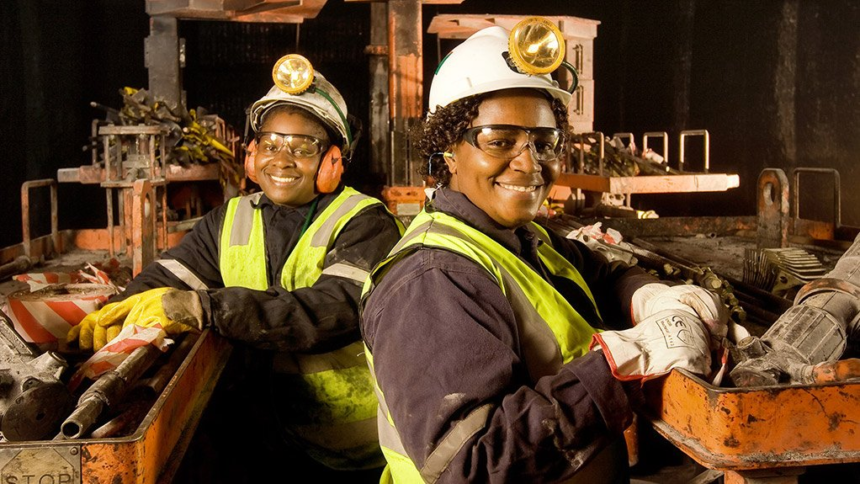
At the recent Mining Skills Lekgotla held at the Gallagher Convention Centre in Midrand, former Deputy President Dr Phumzile Mlambo-Ngcuka delivered a pointed and forward-looking address. Her message was unambiguous: the future of Africa’s mining sector hinges not only on resources, but on skills—and critically, on the inclusion of women as central actors in the industry’s transformation.
Beyond Representation: A Skills-Driven Transformation Agenda
Dr Mlambo-Ngcuka’s remarks reframed the conversation around gender inclusion. Rather than focusing solely on representation, she emphasized capability, technical proficiency, and strategic positioning as the true drivers of transformation.
“However, mineral abundance has not translated into shared prosperity. Poverty persists across much of the continent, and women disproportionately bear its burden. This disconnect underscores the urgency of placing skilled African women at the centre of the mining value chain,” said Mlambo Ngcuka.
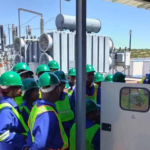
Her argument is grounded in a structural reality: Africa’s mining economy has historically been extractive, with limited local value addition. Without a highly skilled workforce—particularly one that includes women in leadership, technical, and ownership roles—the continent risks repeating this pattern.
Africa’s Strategic Mineral Advantage—and Its Risks
Africa’s resource base is unmatched in several critical areas:

-
Approximately 48% of global cobalt reserves
-
Significant deposits of manganese and copper
-
Around 12% of global copper concentrated in the Democratic Republic of Congo and Zambia
These resources are essential for powering the global green economy. However, Dr Mlambo-Ngcuka warned of a growing threat she described as “mineral colonisation”—a modern scramble for resources driven by global demand and geopolitical competition.
Without coordinated policies and strategic alignment across African nations, fragmented approaches could weaken the continent’s bargaining power, allowing external actors to extract value without delivering sustainable development.
The Central Role of Skills in Economic Sovereignty
At the core of Dr Mlambo-Ngcuka’s address was a clear thesis: skills are the foundation of transformation.
She commended the Mining Qualifications Authority (MQA), marking its 30th anniversary, for maintaining its focus on equipping South Africans with the competencies required to participate meaningfully in the mining economy. However, she also issued a caution—Africa cannot afford to fall behind in building a technically proficient workforce.
The future mining ecosystem requires expertise across multiple domains:
-
Engineering and advanced technical operations
-
Financial management and investment strategy
-
Legal and regulatory frameworks
-
Environmental management and sustainability
-
Policy development and international trade
Transformation, therefore, is not a symbolic exercise. It is a systemic shift that demands deep, multidisciplinary competence.
Repositioning Women Across the Mining Value Chain
A central pillar of the address was the repositioning of women—not as peripheral participants, but as decision-makers and operators across the entire mining value chain.
Dr Mlambo-Ngcuka challenged young women to envision themselves in roles spanning:
-
Ownership and executive leadership
-
Engineering and technical design
-
Finance and capital allocation
-
Legal advisory and regulatory compliance
-
Environmental protection and rehabilitation
This approach reflects a broader economic strategy. By integrating women into high-value segments of the industry, Africa can unlock a more inclusive and resilient growth model.
From Extraction to Beneficiation: Capturing More Value
One of the most critical shifts identified in the address is the need to move beyond raw extraction toward beneficiation and downstream manufacturing.
Historically, Africa has exported raw minerals while importing finished products—a model that limits job creation and economic diversification. Dr Mlambo-Ngcuka argued that reversing this trend is essential for sustainable development.
This transition requires:
-
Advanced technical skills
-
Industrial infrastructure
-
Policy coordination across borders
-
Investment in innovation and manufacturing capacity
Women, she stressed, must be integral to this shift—not only as participants, but as leaders shaping industrial strategy.
Environmental Responsibility as a Core Competency
The address also underscored the ethical and environmental dimensions of mining. While progress has been made in improving safety standards, significant challenges remain.
Dr Mlambo-Ngcuka highlighted two critical concerns:
-
Post-mining environmental degradation, including wastelands and polluted communities
-
The need for strong governance and technical planning
She argued that environmental stewardship must be embedded within the industry’s skill framework. Competencies in environmental protection, rehabilitation, and sustainable resource management are not optional—they are essential to maintaining mining’s social licence to operate.
A Message to the Next Generation
In a direct appeal to young Africans, Dr Mlambo-Ngcuka emphasized both the responsibility and opportunity inherent in the mining sector.
Mining remains foundational to modern life—“everything we consume is either mined or planted.” This reality positions the industry as a critical platform for innovation, employment, and economic transformation.
Her call to action was clear:
-
Acquire skills aligned with future industry needs
-
Engage with emerging technologies and global trends
-
Raise standards of leadership and innovation
“If Africa is to avoid repeating the patterns of its past where vast mineral wealth coexisted with poverty and limited local beneficiation, it will do so not through rhetoric, but through a generation of highly skilled women and men that are prepared to shape the mining industry on their own terms,” said Phumzile Mlambo-Ngcuka.
Conclusion: A Strategic Turning Point
Africa’s mining future is not predetermined. It will be shaped by decisions made today—about skills development, gender inclusion, policy coordination, and value creation.
Dr Mlambo-Ngcuka’s address offers a clear framework:
-
Build a technically proficient workforce
-
Place women at the centre of transformation
-
Move up the value chain
-
Protect environmental and social systems
-
Strengthen continental cooperation
If these elements align, Africa has the potential to transition from a resource supplier to a global industrial force. If not, the risk of repeating historical patterns remains.
The pathway forward is therefore not just about mining more—it is about mining smarter, more inclusively, and with long-term strategic intent.