






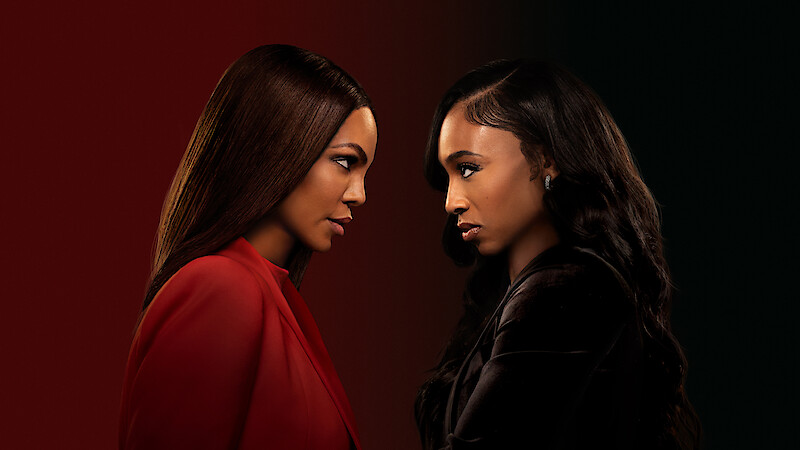
Beauty in Black Season 2 Part 2: Power, Revenge, and the Cost of Control
A High-Stakes Return to Netflix’s Viral Drama
Beauty in Black returns with a decisive escalation. The second part of Season 2, released on March 19, 2026, positions itself not as a continuation, but as a turning point—one where power structures shift, personal histories collide, and survival demands new alliances.
- A High-Stakes Return to Netflix’s Viral Drama
- Kimmie’s Rise: From Survival to Dominance
- Mallory vs. Kimmie: A Rivalry Reaches Boiling Point
- The Jules Factor: Power Reversed, Tension Reignited
- Fragile Alliances in a Dangerous Empire
- Ensemble Cast: Expanding the Narrative Landscape
- Soundtrack and Atmosphere: Reinforcing the Drama
- Cultural and Industry Impact: Why the Series Resonates
- What Comes Next: Escalation or Collapse?
- Conclusion: A Defining Chapter in the Series
All eight episodes dropped simultaneously on Netflix at 3 a.m. ET, reinforcing the platform’s binge-first strategy while capitalizing on the series’ growing global traction. Created by Tyler Perry, the drama has steadily built a reputation for blending emotional intensity with layered character conflicts. Part 2 amplifies that formula.
At its core, this installment is about control—who has it, who wants it, and what it costs to maintain it.
Kimmie’s Rise: From Survival to Dominance
The narrative centers on Kimmie, portrayed by Taylor Polidore Williams, who enters this phase of the story in a markedly transformed position. No longer operating from the margins, she now assumes leadership of her husband Horace’s powerful beauty empire.
This shift is not cosmetic—it restructures the entire power dynamic of the series.
Kimmie’s ascent is defined by confrontation rather than consolidation. Her leadership is immediately tested by unresolved trauma, particularly her history with Jules, her former pimp. Their renewed interaction becomes one of the most volatile elements of Part 2.


As Williams explained:
“I think she’s enjoying this role reversal with Jules at this moment because of the years of abuse that she’s endured from him.”
The statement frames Kimmie’s evolution not simply as professional growth, but as psychological reclamation. Her authority is both strategic and deeply personal.
Mallory vs. Kimmie: A Rivalry Reaches Boiling Point
If Season 2, Part 1 laid the groundwork for tension, Part 2 executes the collision.
Mallory, played by Crystle Stewart, emerges as Kimmie’s most formidable counterpart. Their rivalry intensifies into direct confrontation, delivering what Stewart previously described as:



“You’re going to see more of Mallory and Kimmie coming together head to head, which I think people are waiting for.”
The dynamic between the two women is central to the season’s dramatic architecture. It is not a simple opposition; rather, it is a layered contest involving ambition, identity, and control over the same power structures.
Mallory’s “clapbacks” and strategic positioning introduce unpredictability, ensuring that Kimmie’s dominance remains contested rather than absolute.
The Jules Factor: Power Reversed, Tension Reignited
The reintroduction of Jules, played by Charles Malik Whitfield, serves as a narrative pressure point.
In a pivotal exchange teased in preview clips, Kimmie and Jules engage in a tense verbal confrontation—one that symbolizes a complete inversion of their past dynamic. Where Jules once held control, he now faces resistance.
This reversal is not merely symbolic. It drives forward a recurring theme in the series: the cyclical nature of power and the lingering consequences of exploitation.
Kimmie’s willingness to confront Jules directly underscores a broader shift in tone—Part 2 is less about survival and more about reckoning.
Fragile Alliances in a Dangerous Empire
Beyond individual conflicts, the season expands its scope to include a broader network of alliances and rivalries.
Kimmie’s position at the top of a “mega beauty brand” introduces corporate intrigue into the storyline. Leadership is portrayed not as stability, but as exposure—where maintaining authority requires constant negotiation with allies who may not remain loyal.
The narrative suggests a simple equation: the higher the position, the greater the risk.
This is reinforced by the season’s underlying premise—surviving at the top means “dancing with the devil.” The phrase encapsulates the moral ambiguity that defines the show’s world.
Ensemble Cast: Expanding the Narrative Landscape
The strength of Beauty in Black lies not only in its central rivalry but also in its ensemble.
Season 2, Part 2 features a returning cast that deepens the narrative complexity:
-
Taylor Polidore Williams as Kimmie
-
Crystle Stewart as Mallory
-
Amber Reign Smith as Rain
-
Xavier Smalls as Angel
-
Ricco Ross as Horace
-
Julian Horton as Roy
-
Steven G. Norfleet as Charles
-
Debbi Morgan as Olivia
-
Richard Lawson as Norman
-
Charles Malik Whitfield as Jules
-
Terrell Carter as Varney
Each character contributes to a multi-layered ecosystem where personal ambition intersects with corporate and emotional stakes.
Soundtrack and Atmosphere: Reinforcing the Drama
Complementing the series’ tone is a newly released soundtrack album featuring original compositions by Wow Jones and JimiJame$.
Released digitally on March 19, alongside the show’s premiere, the album includes tracks such as:
-
Beauty in Ballad
-
Heat
-
Out of Order
-
Safety
-
No End
-
Enough Is Enough
-
Is This All Mine?
The music functions as more than background—it amplifies tension, underlining key emotional beats and reinforcing the show’s dramatic pacing.
Cultural and Industry Impact: Why the Series Resonates
Beauty in Black continues to gain traction due to its positioning at the intersection of entertainment and cultural commentary.
Several factors contribute to its relevance:
-
Power narratives: The show examines how individuals navigate systems of control, particularly within marginalized contexts.
-
Character-driven storytelling: Emotional complexity takes precedence over spectacle, making conflicts more resonant.
-
Streaming strategy: The full-season release model encourages rapid audience engagement and social media discourse.
The series also reflects broader trends in television—where character arcs are increasingly shaped by trauma, resilience, and shifting identities.
What Comes Next: Escalation or Collapse?
Season 2, Part 2 closes in a space of uncertainty rather than resolution.
Kimmie’s dominance is established but remains fragile. Mallory’s resistance ensures that the power struggle is ongoing. Jules’ presence introduces unresolved psychological tension that could escalate further.
The trajectory suggests two possibilities:
-
Consolidation of power through strategic alliances
-
Or fragmentation, driven by betrayal and unresolved conflict
Either path positions Beauty in Black for continued narrative expansion.
Conclusion: A Defining Chapter in the Series
Beauty in Black Season 2 Part 2 is less about continuation and more about transformation. It reframes its central character, intensifies its core rivalry, and broadens its thematic scope.
The result is a season that prioritizes confrontation—between past and present, power and vulnerability, control and consequence.
For viewers, the appeal lies not only in the drama itself, but in the evolving question it poses: what does it truly mean to rise, and what must be sacrificed to stay at the top?