






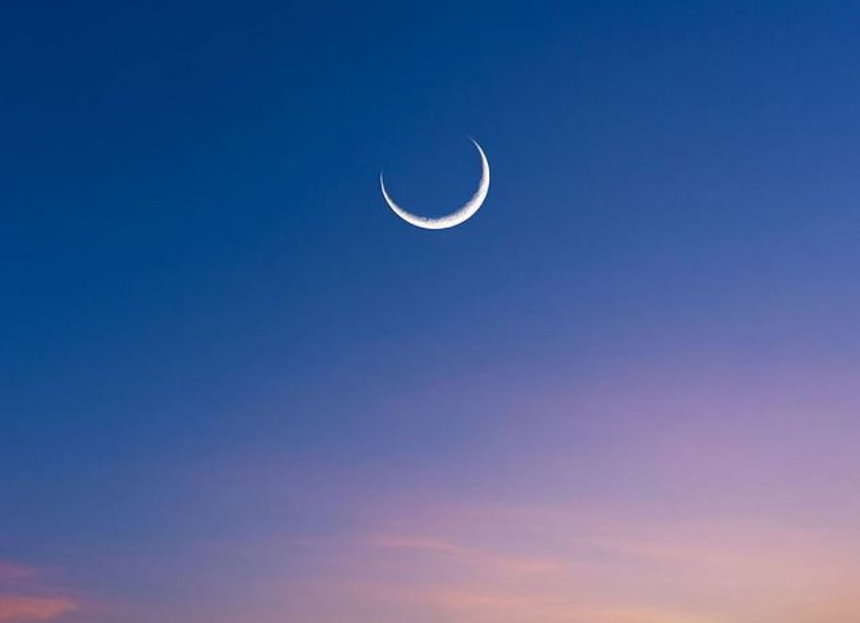
A Night of Anticipation Across the Muslim World
As the sun set over Saudi Arabia on March 18, 2026, attention across the Muslim world converged on a single question: had the Shawwal crescent moon been sighted?
- The Decision: Why Saudi Arabia Declared Eid on March 20
- Why Moon Sighting Matters in Islam
- A Global Ripple Effect: Countries Align with Saudi Arabia
- Why Eid Dates Differ Between Countries
- Beyond Astronomy: The Spiritual Significance of Eid
- A Year Marked by Coordination and Caution
- The Larger Meaning: Faith, Time, and Shared Experience
- Conclusion: A Crescent That Connects the World
For nearly 2 billion Muslims globally, this moment carries both spiritual and practical significance. The appearance—or absence—of the crescent determines the end of Ramadan and the beginning of Eid al-Fitr, one of the most important festivals in Islam.
In 2026, that decision came with clarity. The crescent moon was not sighted anywhere in Saudi Arabia, leading authorities to confirm that Eid al-Fitr would be observed on Friday, March 20, following the completion of 30 days of Ramadan.
The Decision: Why Saudi Arabia Declared Eid on March 20
The announcement followed a coordinated effort across the kingdom. The Supreme Court of Saudi Arabia had earlier called on citizens and astronomers to observe the sky on the evening of March 18, the 29th day of Ramadan 1447.



What Happened on the Ground
-
12 observatories across Saudi Arabia were mobilized
-
Key observation sites included Sudair, Tumair, Al-Hariq, and Dammam
-
Astronomers reported overcast and cloudy skies, complicating visibility
-
Despite widespread efforts, no confirmed sighting of the crescent was recorded
Under Islamic tradition, if the moon is not sighted on the 29th day, Ramadan extends to 30 days. This rule directly shaped the final outcome.
Result:


-
Ramadan completed 30 days
-
Eid al-Fitr confirmed for March 20, 2026
Why Moon Sighting Matters in Islam
The Islamic calendar is strictly lunar. Each month begins only after the physical sighting of the crescent moon, not purely on astronomical calculations.
What the Process Achieves
This method ensures:
-
Alignment with natural lunar cycles
-
Preservation of religious tradition
-
A shared, observable moment of unity across communities
In practical terms, it also means that the exact date of Eid is often confirmed only hours before the celebration begins.
A Global Ripple Effect: Countries Align with Saudi Arabia
Saudi Arabia’s announcement carries significant influence, particularly across the Gulf and parts of the wider Muslim world.



Following the confirmation:
-
UAE, Qatar, Kuwait, Bahrain, Turkey, and Lebanon aligned with March 20
-
Bahrain explicitly confirmed Eid on March 20 after no moon sighting
-
Singapore and some other countries opted for March 21, citing visibility constraints
This variation reflects a key reality: moon visibility differs by geography and atmospheric conditions.
Why Eid Dates Differ Between Countries
One of the most frequently asked questions each year is why countries celebrate Eid on different days.
The Scientific Explanation
-
Saudi Arabia lies west of countries like India
-
The sun sets later relative to the moon’s position
-
This gives the crescent more time to separate from the sun and become visible
As a result:
-
The moon often appears higher and brighter in Saudi skies
-
Countries further east may not see it on the same evening
Example: India’s Timeline
-
Moon sighting expected on March 19 evening
-
If visible → Eid on March 20
-
If not → Eid shifts to March 21
This explains why India typically celebrates Eid a day after Saudi Arabia.
Beyond Astronomy: The Spiritual Significance of Eid
Eid al-Fitr is more than a calendar event. It marks the conclusion of Ramadan—a month defined by:
-
Fasting from dawn to sunset
-
Increased prayer and reflection
-
Acts of charity and community support
The festival is widely known as the “Festival of Breaking the Fast.”
How Eid is Celebrated
The day begins with:
-
Early morning prayers in mosques
-
Wearing new or clean clothes
-
Giving Zakat al-Fitr (charity)
It continues with:
-
Family gatherings
-
Sharing meals and sweets such as kheer and sheer khurma
-
Exchanging greetings like “Eid Mubarak”
Children often receive gifts or money, known as Eidi, reinforcing the celebratory atmosphere.
A Year Marked by Coordination and Caution
Eid 2026 also reflects broader regional dynamics.
-
In some Gulf regions, Eid prayers were limited to mosques, with open-air gatherings suspended
-
Countries like Pakistan and Afghanistan reportedly paused tensions to observe the festival
-
Governments introduced public measures such as free parking and transport adjustments to accommodate celebrations
These developments highlight how Eid functions not only as a religious milestone but also as a moment of social coordination and stability.
The Larger Meaning: Faith, Time, and Shared Experience
The reliance on moon sighting underscores a defining feature of Islamic practice: the integration of faith with natural observation.
In a world dominated by digital precision, Eid still begins with a simple act—looking up at the sky.
This shared ritual:
-
Connects communities across continents
-
Reinforces patience and anticipation
-
Anchors a global celebration in a single, observable moment
Conclusion: A Crescent That Connects the World
The 2026 Saudi Arabia moon sighting reaffirmed a centuries-old tradition. Despite modern technology and astronomical forecasts, the final decision remained rooted in direct observation.
By confirming Eid al-Fitr on March 20 after the moon was not sighted, Saudi authorities triggered a chain reaction across nations, aligning millions in celebration.
Ultimately, the significance extends beyond dates and announcements. The crescent moon represents closure, renewal, and collective identity—marking not just the end of fasting, but the beginning of celebration, gratitude, and unity.