






The Mystery of Steve Motsumi: Inside a Name at the Center of South Africa’s Police Inquiry
A Figure Emerging From the Shadows
In the unfolding drama of South Africa’s high-profile police inquiry, one name has begun to surface repeatedly—Steve Motsumi.
Unlike many of the officials and witnesses appearing before the Madlanga Commission of Inquiry, Motsumi is not a public office bearer delivering testimony or defending policy decisions. Instead, he exists on the margins of the proceedings, referenced indirectly yet persistently—raising questions about influence, networks, and the deeper layers of alleged misconduct within law enforcement structures.
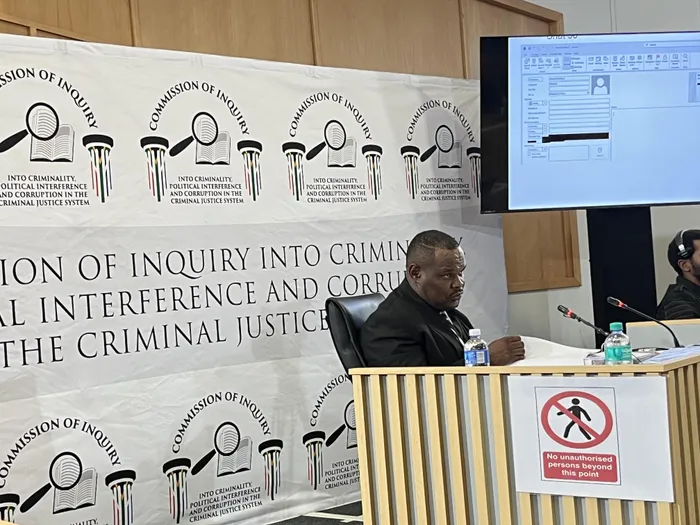
His name gained renewed attention during testimony by Gauteng police sergeant Fannie Nkosi, whose interactions and reluctance to disclose details have made Motsumi a focal point of curiosity.
This is not a conventional profile of a public figure. Rather, it is an examination of how one individual—largely unseen—has become central to a broader investigation into policing, accountability, and alleged criminal connections.



The Commission Context: What Is Being Investigated
To understand the significance of Steve Motsumi, it is necessary to situate his name within the broader framework of the Madlanga Commission of Inquiry, chaired by Mbuyiseli Madlanga.
The commission is tasked with scrutinizing allegations of corruption, misconduct, and systemic failures within the South African Police Service (SAPS). Its proceedings have brought forward:



-
Testimony from police officers
-
Evidence of leaked confidential reports
-
Allegations involving organized crime figures
-
Financial scrutiny, including bank records
A key procedural principle governs the inquiry: testimony given before the commission is considered compelled evidence. This has legal implications that were explicitly highlighted during Nkosi’s appearance.
The Legal Shield Around Testimony
During the hearings, evidence leader Matthew Chaskalson clarified a critical point to Nkosi:
“Where I indicate that the answer to a question may be incriminatory, if you choose to answer it, whatever you say cannot be used against you in a criminal trial, but if you believe your answer may incriminate you, you’re also entitled to say I elect not to answer that question because I have a privilege against self-incrimination.”
This legal safeguard serves a specific purpose: it allows witnesses to speak more freely without immediate fear of prosecution based on their statements.
However, the protection is not absolute.



Commission chairperson Madlanga emphasized:
“We are taking the view that this protection does not extend to issues relating to disciplinary matters, but do not translate to the criminal process and criminal proceedings.”
In practical terms, this means:
-
Testimony cannot be used in a criminal trial
-
It can influence disciplinary action within SAPS
-
It may be used in cases of perjury if false statements are made
This legal framework directly shaped Nkosi’s responses—particularly when questions touched on individuals like Motsumi.
Nkosi and the Refusal to Explain Motsumi
One of the most striking developments in the inquiry has been Nkosi’s refusal to elaborate on his relationship with Steve Motsumi.
This refusal did not occur in isolation. It followed a series of revelations and lines of questioning that included:
-
Alleged contact with a taxi boss linked to the Armand Swart murder
-
WhatsApp communications revealing the sharing of confidential SAPS reports
-
Questions about links to individuals described as influential or connected to criminal networks
Within this context, Motsumi’s name surfaced as a “mysterious figure”—a description that underscores both the lack of public information and the seriousness of the inquiry’s interest.
Nkosi’s decision not to provide details raises two possible interpretations:
-
Legal caution – invoking the privilege against self-incrimination
-
Operational sensitivity – suggesting deeper, potentially sensitive connections
Either way, the refusal has amplified attention around Motsumi rather than diminishing it.
Why Steve Motsumi Matters
At first glance, Motsumi’s role may appear peripheral. However, in investigative processes—especially those dealing with corruption and organized crime—peripheral figures often prove central.
His significance lies in three key dimensions:
1. Network Implications
Motsumi is not being examined in isolation. His mention occurs alongside discussions of:
-
Confidential information leaks
-
Links between police officials and external actors
-
Possible interference in investigations
This suggests that he may be part of a broader network under scrutiny.
2. Information Flow
The commission has already uncovered evidence of sensitive SAPS documents being shared outside official channels. If Motsumi is connected to these flows, his role could be pivotal.
3. Accountability Gaps
The reluctance to discuss him highlights potential gaps in accountability—particularly where informal relationships intersect with official duties.
The Broader Picture: Policing Under Pressure
The emergence of figures like Steve Motsumi must also be viewed against the backdrop of a wider policing crisis in South Africa.
Recent developments tied to the inquiry include:
-
Allegations of internal sabotage of investigations
-
Disputes over the disbandment of specialized units
-
Claims of political and criminal interference
-
Ongoing cases involving high-profile suspects
The commission is not simply examining isolated incidents—it is attempting to map systemic weaknesses.
In that context, individuals who operate outside formal structures but influence outcomes become critical to understanding how the system functions—and fails.
What Happens Next
The trajectory of the inquiry suggests that Motsumi’s name is unlikely to disappear.
Several possible developments could bring greater clarity:
Further Testimony
Additional witnesses may be questioned about their interactions with him, potentially corroborating or contradicting existing narratives.
Financial Analysis
The commission’s scrutiny of bank records could reveal transactional links, offering concrete evidence of relationships.
Legal Proceedings
While commission testimony itself cannot be used directly in criminal trials, it may lead investigators toward independent evidence.
Conclusion: A Name That Signals Deeper Questions
Steve Motsumi is not yet a public figure in the traditional sense. There is no official biography, no public office, and no formal role within the inquiry.
Yet his presence—indirect but persistent—signals something more consequential.
In complex investigations, it is often the unanswered questions that matter most. Nkosi’s refusal to explain his connection to Motsumi has turned a relatively unknown name into a point of national interest.
Whether he ultimately proves to be a minor associate or a central figure in a wider network remains to be seen.
What is clear is that the Madlanga Commission has reached a stage where the hidden connections behind official narratives are coming into focus—and Steve Motsumi is now part of that unfolding story.