




Human Rights Day: When Rights Become Reality — and When They Fail
A Global Ideal Meets Local Reality
Each year on December 10, the world marks Human Rights Day—a moment intended to reaffirm the universal promise that every person is entitled to dignity, equality, and fundamental freedoms. The day commemorates the adoption of the Universal Declaration of Human Rights, a landmark document that established a shared global standard for human rights.
- A Global Ideal Meets Local Reality
- The Right to Water: A Core Human Right Under Strain
- Infrastructure, Inequality, and the Roots of the Crisis
- Fear, Silence, and the Erosion of Rights
- Government Response and Policy Direction
- Human Rights Day in Context: Beyond Commemoration
- A Daily Reality, Not an Annual Reminder
- Conclusion: Bridging the Gap Between Principle and Practice
Yet, beyond the formal speeches and symbolic gestures, Human Rights Day increasingly serves another purpose: it exposes the gap between rights on paper and rights in practice.
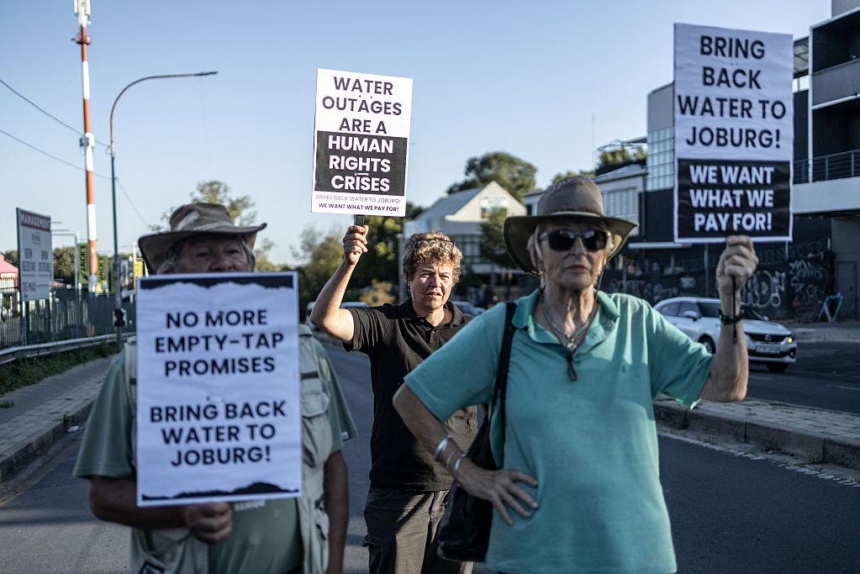
In parts of South Africa today, that gap is stark. Communities are protesting not for abstract freedoms, but for something more basic—access to clean water. Their situation illustrates a central truth: human rights are only meaningful when they are enforceable, accessible, and protected in everyday life.
The Right to Water: A Core Human Right Under Strain
Access to clean water is not a privilege. It is widely recognized as a fundamental human right, essential for health, dignity, and survival.



In Johannesburg’s northern suburbs, residents have taken to the streets, chanting, “We want water, we want water!” after some households went without running water for over a month. For individuals like Colin Regesky, the issue is both practical and constitutional:
“Our pipes have been bone-dry with no water coming through at all… according to the constitution it’s our right to have water.”
This is not an isolated disruption. Across regions such as Hammanskraal, families report going months without reliable access to water. Basic routines—washing clothes, maintaining hygiene, or ensuring children attend school clean—have become daily challenges.
Related News

The implications extend beyond inconvenience. Without consistent access to clean water, communities face heightened risks of disease, reduced quality of life, and deepening inequality. On Human Rights Day, such realities underscore the urgency of translating rights into functioning systems.
Infrastructure, Inequality, and the Roots of the Crisis
To understand why a basic right like water access is failing, it is necessary to examine the structural issues behind it.
Experts point to long-term underinvestment in water infrastructure. Much of South Africa’s system is aging, poorly maintained, and unable to meet growing demand. Similar to the country’s earlier electricity crisis—marked by widespread load shedding—water shortages now represent a systemic failure rather than a temporary disruption.
Dr Ferrial Adam of Watercan explains that the crisis is not solely technical. It is compounded by governance challenges and opportunistic exploitation. In some areas, private contractors tasked with delivering water have allegedly undermined infrastructure to maintain demand for their services.
This dynamic has led to the emergence of so-called “water mafias”—groups that profit from scarcity. In affected communities, residents report being charged for water that should be provided free of charge.
As one resident, Eric Sebotsane, describes:
“Some of the truck drivers sell the water… when you don’t have money you can’t do anything.”
The result is a layered crisis: infrastructure failure creates scarcity, and scarcity creates opportunities for exploitation. In such conditions, the right to water becomes contingent on financial means, undermining its status as a universal right.
Fear, Silence, and the Erosion of Rights
One of the less visible consequences of the crisis is the climate of fear it creates.
Where access to water depends on informal or irregular systems, communities may hesitate to speak out against abuses. As Dr Adam notes, residents fear losing access altogether if they challenge those controlling supply routes.
This dynamic reveals a critical dimension of human rights: they are not only about access, but also about agency. When individuals cannot safely report wrongdoing or demand accountability, their rights are effectively diminished—even if those rights are formally recognized.
Human Rights Day, therefore, is not only about ensuring services exist. It is about ensuring systems are transparent, accountable, and free from coercion.
Government Response and Policy Direction
Recognizing the severity of the situation, President Cyril Ramaphosa has announced measures aimed at addressing the crisis.
In his State of the Nation Address, he outlined the creation of a National Water Crisis Committee to coordinate responses across government levels. He also emphasized accountability, stating that municipal managers who fail to meet their obligations under the National Water Act could face criminal charges.
Addressing parliament, he described the need for a “multifaceted approach” and expressed confidence that interventions would “make a real and lasting difference in people’s lives.”
Proposed solutions include:
-
Strengthening infrastructure investment
-
Improving municipal governance
-
Reducing reliance on private tanker systems
-
Exploring alternative water sources such as boreholes
However, analysts caution that short-term fixes—such as expanding tanker delivery—risk becoming permanent substitutes rather than transitional measures. Sustainable solutions require systemic reform, not temporary relief.
Human Rights Day in Context: Beyond Commemoration
The situation in South Africa reflects a broader global challenge. Human Rights Day is often marked by ceremonies, policy announcements, and public messaging. But its deeper value lies in its capacity to prompt scrutiny.
It raises fundamental questions:
-
Are rights equally accessible across different communities?
-
Do governments have the capacity—and political will—to uphold them?
-
How do economic and environmental pressures reshape the delivery of basic services?
Climate change adds another layer of complexity. Floods, droughts, and shifting weather patterns are already affecting water infrastructure in various regions. In provinces like KwaZulu-Natal and the Eastern Cape, extreme weather has damaged systems, further entrenching reliance on emergency measures.
In this context, Human Rights Day is no longer just about legal frameworks. It is about resilience—how societies adapt to emerging pressures while preserving fundamental rights.
A Daily Reality, Not an Annual Reminder
For residents in affected communities, the significance of Human Rights Day is not symbolic. It is immediate and practical.
It is about whether water flows from a tap.
It is about whether children can attend school clean.
It is about whether families can live with dignity.
The contrast between global declarations and local realities highlights a central tension: rights must be continuously maintained, not merely declared.
Conclusion: Bridging the Gap Between Principle and Practice
Human Rights Day serves as a reminder of what societies aspire to achieve. But it also exposes where those aspirations fall short.
The ongoing water crisis in parts of South Africa illustrates how quickly fundamental rights can erode when infrastructure, governance, and accountability weaken. It also demonstrates that rights are interconnected—health, dignity, and economic opportunity all depend on access to basic services.
Closing this gap requires more than policy statements. It demands sustained investment, institutional reform, and community engagement.
Until then, the chants heard in Johannesburg—“We want water”—will continue to echo as both a protest and a reminder: human rights are only meaningful when they are lived realities.