






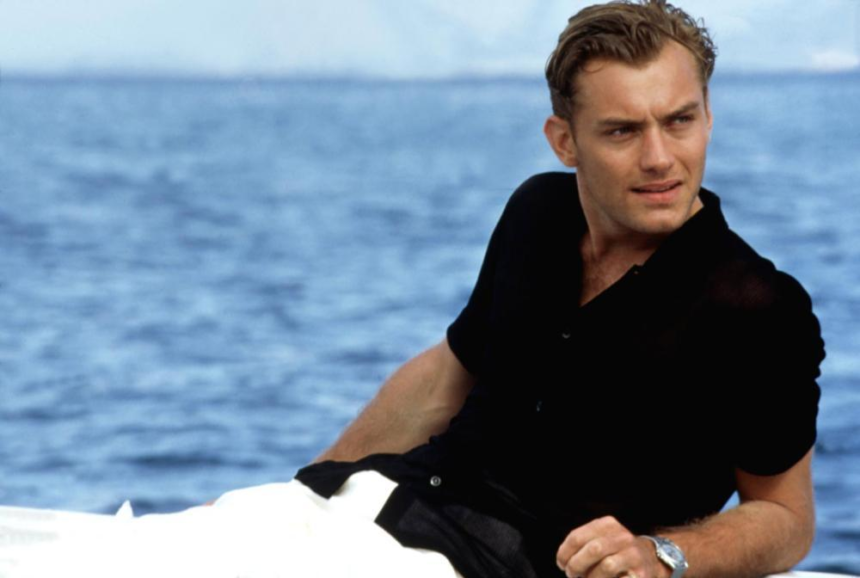
Jude Law: Fame, Family, and the Fragile Boundaries of Celebrity Life
A Public Figure at the Center of a Private Moment
The name Jude Law has long been associated with cinematic excellence, refined performances, and enduring presence in global entertainment. Yet in recent days, his name has surfaced in a different context—one that has little to do with film and everything to do with the increasingly complex relationship between celebrities, fans, and privacy.
- A Public Figure at the Center of a Private Moment
- From Rising Star to Global Icon
- The Family Dimension: A Life Beyond the Screen
- The São Paulo Incident: When Admiration Meets Authority
- Boundaries vs. Access: A Modern Celebrity Dilemma
- The Role of Security: Protection or Overreach?
- Cultural Implications: Fans, Fame, and Emotional Impact
- Jude Law’s Silent Presence in the Narrative
- Looking Ahead: A Shift in Celebrity-Fan Dynamics?
- Conclusion: Beyond the Spotlight
A viral incident involving Italian footballer Jorginho Frello, pop star Chappell Roan, and an 11-year-old girl—Ada Law, Jude Law’s daughter—has brought renewed attention to how fame intersects with family life. While the actor himself has not publicly commented, the situation has cast a spotlight on his personal world, offering a revealing lens into the realities faced by high-profile figures.
From Rising Star to Global Icon
Before examining the present moment, it is essential to understand the stature Jude Law holds in the film industry.
Emerging in the late 1990s, Law quickly distinguished himself through a combination of charisma, precision, and versatility. His breakout role in The Talented Mr. Ripley established him as a leading man capable of both charm and psychological depth. Subsequent performances in films such as Cold Mountain and the Sherlock Holmes franchise reinforced his reputation as one of Britain’s most dependable and refined actors.
Over time, Law expanded his range, taking on roles in major franchises, including his portrayal of Albus Dumbledore in the Fantastic Beasts series. This evolution—from independent dramas to blockbuster cinema—illustrates not just longevity, but adaptability in a rapidly changing industry.
The Family Dimension: A Life Beyond the Screen
Despite a career that places him firmly in the public eye, Jude Law has consistently maintained a degree of separation between his professional achievements and his personal life.


Ada Law, referenced in the recent incident, is his daughter with Catherine Harding. Harding, also known professionally as Cat Cavelli, has remained connected to both music and media, though largely outside the intense scrutiny faced by Hollywood actors.
In this context, Law’s role as a father becomes central. The incident involving Ada—who was reportedly left “extremely shaken” and “in tears”—illustrates a recurring challenge for celebrity families: the inability to fully shield children from the consequences of public attention.
The São Paulo Incident: When Admiration Meets Authority
The controversy unfolded in São Paulo, where Ada Law and her mother were staying at the same hotel as Chappell Roan during Lollapalooza Brasil.
According to Jorginho’s account, the interaction was minimal. Ada, described as a fan of the singer, reportedly recognized Roan during breakfast, briefly walked past her table, smiled, and returned to her seat without initiating any direct interaction.



What followed, however, escalated quickly.
“A large security guard came over to their table… and began speaking in an extremely aggressive manner,” Jorginho stated, alleging that his daughter was accused of “disrespect” and “harassment.” He added that the situation left the child visibly distressed: “My daughter was extremely shaken and cried a lot.”
The footballer emphasized the disproportionate nature of the response:
“It was just a child admiring someone.”
The incident has not been publicly addressed by Roan’s representatives or the hotel, leaving the narrative largely shaped by Jorginho’s detailed account.
Boundaries vs. Access: A Modern Celebrity Dilemma
This episode does not exist in isolation. It reflects a broader tension in contemporary celebrity culture: the negotiation between personal boundaries and public accessibility.
Chappell Roan has previously articulated a firm stance on this issue. In a 2024 TikTok video, she stated:
“I don’t want whatever the fuck you think you’re supposed to be entitled to whenever you see a celebrity… I’m allowed to say no to creepy behavior.”
Her comments underscore a growing movement among public figures to reclaim personal space in an era of constant visibility, social media scrutiny, and fan expectations.
However, the São Paulo incident complicates this narrative. The central question is not whether celebrities are entitled to boundaries—they are—but how those boundaries are enforced, particularly when the interaction involves a child and no apparent intrusion.
The Role of Security: Protection or Overreach?
Security teams are an integral component of celebrity life. Their function is preventive, designed to mitigate risk before it escalates. Yet incidents like this raise questions about proportionality and judgment.
Jorginho’s criticism focused not on Roan directly, but on the conduct of her security personnel. He described the response as “completely disproportionate,” suggesting that the enforcement of boundaries crossed into unnecessary aggression.
This distinction is critical. While celebrities may set the terms of interaction, the execution often falls to intermediaries—security staff whose decisions can significantly shape public perception.
Cultural Implications: Fans, Fame, and Emotional Impact
At its core, this story resonates because it involves a child—a young fan whose admiration turned into distress.
Jorginho’s closing remarks reflect a broader cultural sentiment:
“It’s sad to see this kind of treatment coming from those who should understand the importance of fans. At the end of the day, they are the ones who build all of this.”
This perspective highlights the reciprocal nature of fame. Artists depend on audiences for relevance and success, while fans seek connection, inspiration, or simple acknowledgment.
When that balance is disrupted—particularly in emotionally charged situations—the consequences extend beyond a single incident. They influence how audiences perceive not just individuals, but the culture of celebrity itself.
Jude Law’s Silent Presence in the Narrative
Notably, Jude Law has remained absent from the public discourse surrounding the incident. His silence is consistent with a career marked by discretion in personal matters.
Yet his presence is felt implicitly. As Ada’s father, and as a globally recognized figure, his connection to the story reinforces the reality that even those who have mastered the art of public life cannot fully control its impact on their families.
Looking Ahead: A Shift in Celebrity-Fan Dynamics?
The São Paulo episode may ultimately serve as a case study in the evolving dynamics between celebrities and their audiences.
Several trends are likely to shape future interactions:
- Stronger boundary enforcement: Artists increasingly assert control over personal space.
- Greater scrutiny of security practices: Public reaction may push for more measured responses.
- Heightened awareness of minors in public encounters: Incidents involving children tend to generate stronger emotional responses and accountability.
For figures like Jude Law, whose careers span decades, these developments represent a changing landscape—one where fame is not just about performance, but about navigating complex social expectations.
Conclusion: Beyond the Spotlight
Jude Law’s career remains defined by artistic achievement and sustained relevance. Yet moments like this remind audiences that behind the performances lies a private life shaped by the same vulnerabilities as anyone else.
The incident involving his daughter does not redefine his legacy, but it does illuminate an essential truth: celebrity is not a shield. It is a condition—one that extends beyond the individual to touch families, relationships, and moments that should, ideally, remain ordinary.
As the boundaries between public and private continue to blur, the question is no longer whether celebrities can protect their personal lives—but how they, and those around them, choose to do so.