






Fiorentina vs Inter: A Tactical Battle Defined by Fine Margins
A Match That Shifted Momentum Minute by Minute
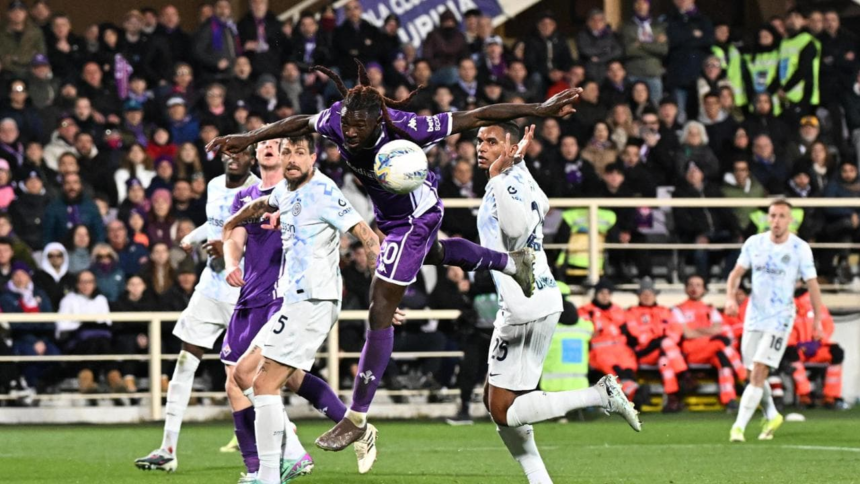
The Serie A encounter between ACF Fiorentina and Inter Milan on March 22, 2026, at the Stadio Artemio Franchi unfolded as a tightly contested tactical duel that ultimately ended in a 1-1 draw. While the scoreline suggests balance, the match itself told a more layered story—one of early dominance, missed opportunities, and a late resurgence that denied Inter a crucial away victory.
- Fiorentina vs Inter: A Tactical Battle Defined by Fine Margins
- Lightning Start: Inter’s Early Advantage
- Fiorentina’s Response: Persistence Over Precision
- Turning Point: The Final Quarter-Hour
- Tactical Analysis: Where the Game Was Won and Lost
- Key Performers
- Broader Implications for Serie A
- Looking Ahead: What Comes Next
- Conclusion
From the opening whistle, the tempo was set decisively. Inter struck within seconds, but Fiorentina’s persistence and structural discipline ensured the contest remained alive until the final moments.
Lightning Start: Inter’s Early Advantage
The match began with immediate intensity. After just one minute, Pio Esposito capitalized on a precise delivery from Nicolò Barella, heading Inter into a 1-0 lead.
This early breakthrough shaped the first half. Inter controlled possession (60%) and dictated the rhythm, completing 577 passes with an 86.1% accuracy rate. Their ability to circulate the ball and penetrate the final third—registering 102 successful passes in attacking areas—kept Fiorentina under sustained pressure.



However, despite their dominance, Inter failed to extend their lead. Esposito himself came close to doubling the advantage, slipping past defenders but narrowly missing the target.
Fiorentina’s Response: Persistence Over Precision
Fiorentina, managed by Paolo Vanoli, showed resilience after conceding early. Rather than collapsing, they gradually reasserted themselves through structured buildup and counter-attacking transitions.



Statistically, Fiorentina held less possession (40%) but were more direct and aggressive in attack:
- 16 total shots compared to Inter’s 12
- 6 shots on target versus Inter’s 4
- 7 attempts from outside the box, indicating willingness to test from range
Their attacking efforts were spearheaded by midfield dynamism, particularly from Cher Ndour, whose influence grew as the match progressed.
Turning Point: The Final Quarter-Hour
The decisive moment came in the 77th minute. A sequence involving Albert Gudmundsson produced a rebound that Inter goalkeeper Yann Sommer failed to control cleanly. Ndour reacted quickest, converting from close range to level the match at 1-1.
This equalizer was not merely a moment of opportunism—it reflected a broader shift in control. Following the substitution of Hakan Calhanoglu, Inter lost midfield cohesion. Fiorentina exploited this gap, increasing pressure and creating additional chances late in the game.


Tactical Analysis: Where the Game Was Won and Lost
Inter Milan: Control Without Closure
Inter’s performance highlighted both their strengths and vulnerabilities:
- Strengths:
- Dominant possession and passing accuracy
- Early attacking sharpness
- Defensive interventions (16 tackles, strong aerial presence)
- Weaknesses:
- Failure to convert key chances
- Midfield instability after substitutions
- Defensive lapses under pressure
A critical error from Barella—attempting to dribble out of danger instead of clearing—contributed directly to Fiorentina’s equalizer.
Managerial decisions also came under scrutiny, with Aleksandar Kolarov (standing in for the suspended Cristian Chivu) unable to maintain structural balance after key changes.
Fiorentina: Efficiency in Transition
Fiorentina’s approach was less about control and more about calculated execution:
- Strengths:
- Higher shot volume and attacking intent
- Effective use of transitions
- Defensive resilience (31 clearances)
- Weaknesses:
- Early defensive lapse leading to Inter’s goal
- Missed opportunities, particularly from Moise Kean
Despite these issues, their ability to sustain pressure late in the match proved decisive.
Goalkeeper David De Gea delivered crucial saves in stoppage time, including interventions in the 92nd and 95th minutes, preserving the draw.
Key Performers
Fiorentina
- Cher Ndour (7/10): Central to the comeback; scored the equalizer and controlled midfield phases.
- Marco Brescianini (7/10): Tactical discipline and transitional play disrupted Inter’s rhythm.
- David De Gea (6.5/10): Late-game heroics ensured Fiorentina secured a point.
Inter Milan
- Yann Bisseck (7/10): Defensive standout, consistently neutralizing threats.
- Pio Esposito (6.5/10): Early goal and constant movement troubled Fiorentina’s defense.
- Hakan Calhanoglu (6.5/10): His absence in the latter stages exposed Inter’s midfield fragility.
Broader Implications for Serie A
This result carries implications beyond the single match:
- For Inter Milan:
Dropped points in matches they control could affect their title ambitions. Their inability to close out games remains a structural concern. - For Fiorentina:
The performance reinforces their competitiveness against top-tier opponents. Their tactical flexibility and resilience could position them as a disruptive force in the league standings. - For Serie A:
The match exemplifies the league’s growing tactical complexity—where possession dominance does not guarantee results, and transitions remain a decisive factor.
Looking Ahead: What Comes Next
Both teams face critical fixtures in early April:
- Fiorentina will aim to build momentum and improve efficiency in front of goal.
- Inter must address late-game management and midfield balance to avoid further dropped points.
If this match is indicative, both sides remain capable—but consistency will determine their trajectory in the closing stages of the season.
Conclusion
The 1-1 draw between Fiorentina and Inter Milan was not a stalemate in substance, but a contest shaped by contrasting approaches. Inter controlled, Fiorentina adapted—and in the end, adaptation proved just as effective as dominance.
Matches like this underline a fundamental truth in modern football: control without execution rarely guarantees victory.