






Eugene de Kock and the Cradock Four Inquest: A Reckoning Revisited
A Return to the Stand After Decades
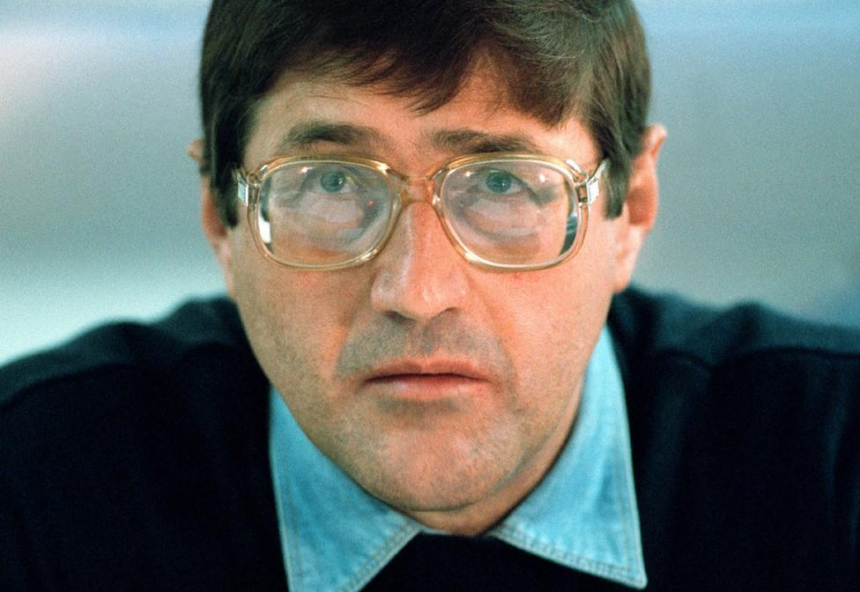
More than four decades after one of apartheid South Africa’s most notorious killings, the name Eugene de Kock has once again resurfaced at the center of national attention. On Monday, 23 March 2026, the former apartheid-era police commander appeared in the High Court in Gqeberha, where the long-running inquest into the deaths of the Cradock Four killings resumed.
- A Return to the Stand After Decades
- The Cradock Four: A Crime That Defined an Era
- Inside the Courtroom: De Kock’s Testimony
- What This Inquest Seeks to Achieve
- A Nation Still Confronting Its Past
- Institutional Accountability Under Scrutiny
- The Broader Implications
- What Comes Next
- Conclusion: Justice Deferred, Not Forgotten
At 77 years old, De Kock—once known as “Prime Evil” for his leadership of the Vlakplaas death squad—has taken the stand in what is now the third inquest into the killings of four anti-apartheid activists: Fort Calata, Matthew Goniwe, Sparrow Mkhonto, and Sicelo Mhlauli.
This renewed legal process is not merely procedural. It represents a deeper national effort to confront unresolved truths, revisit institutional failures, and test the limits of justice in post-apartheid South Africa.
The Cradock Four: A Crime That Defined an Era
The Cradock Four were prominent activists opposing apartheid policies in the Eastern Cape. In 1985, they were abducted and killed by apartheid security forces—an act that became emblematic of state-sponsored repression.


Despite extensive investigations, including findings by the Truth and Reconciliation Commission and the earlier Zietsman Inquest, no individual has ever been criminally prosecuted for their murders.
This absence of accountability has long been a point of contention. Families of the victims and civil society groups have consistently argued that justice has been delayed, if not denied.


Inside the Courtroom: De Kock’s Testimony
Appearing before the court, De Kock has categorically denied any involvement in the planning or execution of the Cradock Four killings.
During testimony, he outlined operational procedures at Vlakplaas, describing how:
- Instructions were received within the unit
- Telephones were used to gather intelligence on targeted individuals
- Information flowed through a structured chain of command
However, he maintained that he played no direct role in the murders themselves.
He is currently being examined by his legal representative, Juan Schoeman, as the court attempts to clarify both operational responsibility and decision-making hierarchies within apartheid security structures.



What This Inquest Seeks to Achieve
The current proceedings are not limited to revisiting historical facts. Their broader objective is to:
- Uncover systemic obstruction that may have prevented prosecutions
- Investigate alleged political interference in earlier inquiries
- Examine institutional failures in the justice system
- Establish a clearer chain of accountability
In essence, the inquest aims to determine why, despite substantial evidence pointing to state involvement, no one has faced criminal charges.
This distinction is critical. While the TRC focused on truth-telling and conditional amnesty, the present inquest operates within a legal framework that could potentially lead to prosecution.
A Nation Still Confronting Its Past
The reappearance of De Kock in court underscores a broader societal tension: how to reconcile historical truth with legal accountability.
For many South Africans, particularly the families of the victims, the inquest represents a final opportunity for closure. For others, it raises difficult questions about whether justice can still be meaningfully delivered decades after the crimes.
Public opinion remains divided. Some argue that accountability—even delayed—is essential for national healing. Others question whether revisiting these cases can produce tangible outcomes after so many years.
Institutional Accountability Under Scrutiny
One of the most significant aspects of the inquest is its focus on state structures rather than individual actors alone.
Previous findings have already suggested that:
- The killings were state-sanctioned or facilitated
- Senior officials may have been aware of, or complicit in, the operation
- Investigative and prosecutorial bodies may have failed to act
If substantiated, these conclusions could reshape how apartheid-era crimes are understood—not as isolated incidents, but as part of a coordinated system of repression.
The Broader Implications
The outcome of this inquest could carry consequences beyond the Cradock Four case itself.
Potential implications include:
- Renewed legal action against surviving officials
- Reopening of other unresolved apartheid-era cases
- Increased scrutiny of past prosecutorial decisions
- Reinforcement of calls for justice reform
More broadly, it tests the resilience of South Africa’s legal institutions in addressing historical injustices.
What Comes Next
The inquest is scheduled to continue throughout the week, with additional testimonies expected. As proceedings unfold, the court will assess whether new evidence or interpretations can finally bridge the gap between historical acknowledgment and legal accountability.
For De Kock, this appearance represents another chapter in a long and controversial legacy. For South Africa, it is a reminder that the past—especially when unresolved—continues to shape the present.
Conclusion: Justice Deferred, Not Forgotten
The return of Eugene de Kock to the witness stand is more than a legal development—it is a moment of national reflection.
Decades after the killings of the Cradock Four, the central question remains unchanged: can justice still be achieved when so much time has passed?
This inquest does not guarantee answers. But it reopens a conversation that South Africa has never fully resolved—one that sits at the intersection of truth, accountability, and the enduring search for closure.