






Air Canada Plane Crash at LaGuardia: A Night of Tragedy and Systemic Questions
A Catastrophic Collision on One of America’s Busiest Runways
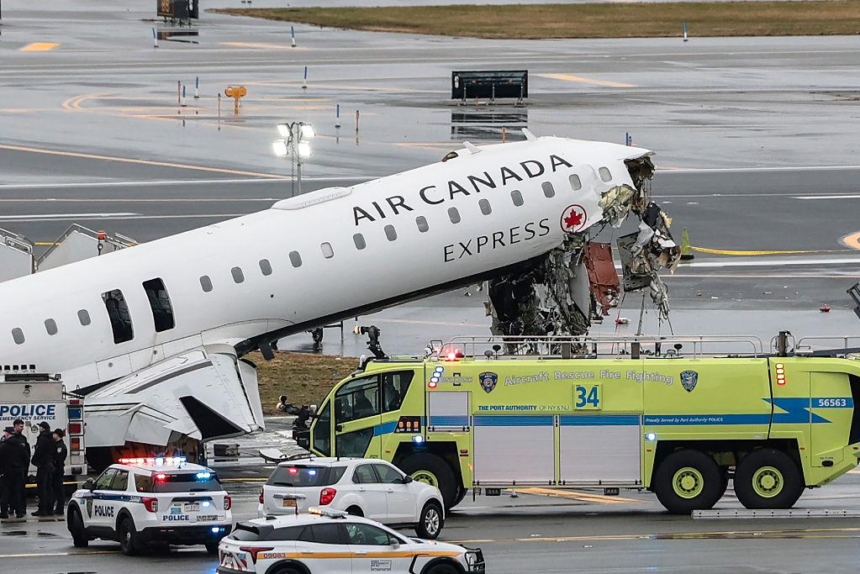
Late on Sunday night, a routine landing at LaGuardia Airport turned into a devastating aviation disaster. An Air Canada Express regional jet collided with a firefighting vehicle on the runway, killing both pilots and injuring dozens.
- A Catastrophic Collision on One of America’s Busiest Runways
- What Happened: A Timeline of the Incident
- Eyewitness Accounts: Fear, Confusion, and Survival
- The Investigation: What Authorities Are Examining
- A Rare but Critical Failure in Aviation Safety
- National Response and Political Context
- Travel Chaos: A City Disrupted
- Structural Questions for the Aviation Industry
- What Happens Next
- Conclusion: A Tragedy That Demands Accountability
The aircraft, a CRJ-900 operated by Jazz Aviation, had arrived from Montreal carrying 72 passengers and four crew members. It had already landed and was rolling on the runway when the collision occurred at approximately 11:40 p.m. ET.
What followed was a scene described by witnesses as chaotic and surreal. One eyewitness, standing just 100 meters away, said:
“It was like the plane got cut in half.”
What Happened: A Timeline of the Incident
Understanding the sequence of events clarifies how a rare ground collision escalated into a fatal accident.


Pre-Collision Events
- Flight AC8646 departed Montreal more than two hours late.
- A firefighting vehicle was dispatched to respond to a separate emergency involving a United Airlines aircraft reporting an “odour” issue.
The Moment of Impact
- At approximately 23:40 ET, the Air Canada jet collided with the emergency vehicle while landing.
- Air traffic control audio captured urgent warnings:
“Stop, Truck 1. Stop.”
Immediate Aftermath
- Emergency services responded within minutes.
- The airport was shut down around 03:00 ET to secure the scene and begin investigation.
Casualties and Injuries
- Both pilots were killed on impact.
- 41 passengers and crew were taken to hospital; most have since been discharged.
- Two firefighters sustained serious but stable injuries.
Eyewitness Accounts: Fear, Confusion, and Survival
Passengers and witnesses described a deeply unsettling experience.
Leo Medina, who watched from a nearby aircraft, recalled:
“We were literally like 100 meters away… it was like the plane got cut in half.”



Inside terminals, stranded passengers faced long delays, cancellations, and uncertainty. One traveler, Katie Rojas, described spending hours on a grounded plane before evacuation:
“It’s scary… you never know if it could have been one of us.”
The emotional impact extended beyond those directly involved. Travelers slept on terminal floors, while others scrambled to rebook flights or leave the city via alternative airports.
The Investigation: What Authorities Are Examining
A multi-agency investigation is now underway, led by the National Transportation Safety Board, with support from Canada’s Transportation Safety Board.
Key Areas of Focus
- Air traffic control decisions and communication protocols
- Runway clearance procedures for both aircraft and ground vehicles
- Speed and positioning of the aircraft at impact
- Staffing levels, particularly amid a partial government shutdown affecting aviation services
Former NTSB chair Robert Sumwalt indicated investigators will analyze:



- cockpit voice recordings
- radar data
- air traffic control tapes
- witness interviews
The investigation is expected to take 12 to 18 months.
A Rare but Critical Failure in Aviation Safety
Ground collisions between aircraft and vehicles are extremely uncommon, particularly those resulting in fatalities. Aviation analysts emphasize that such incidents typically involve a breakdown in coordination.
One expert described the likely cause as an “operational issue involving either the pilot, the controller, or the vehicle driver.”
Preliminary reports suggest that:
- The aircraft had clearance to land
- The vehicle had clearance to cross the runway
If confirmed, this raises serious concerns about simultaneous clearance conflicts, a critical safety failure in air traffic management.
National Response and Political Context
The crash triggered immediate responses from political leaders and aviation authorities.
Donald Trump described the incident as:
“They made a mistake. It’s a dangerous business. That’s terrible.”
Mark Carney called it “deeply saddening”, emphasizing cross-border cooperation in the investigation.
Meanwhile, U.S. Transportation Secretary Sean Duffy confirmed federal agencies are examining whether air traffic control staffing shortages played a role.
Travel Chaos: A City Disrupted
The closure of LaGuardia—one of the busiest airports in the United States, handling over 16.7 million passengers annually—triggered widespread disruption.
Immediate Impact
- All flights were cancelled overnight
- At least 18 flights were diverted
- Passengers faced hours-long delays and rebookings
Compounding the situation:
- Newark Liberty International Airport experienced a separate temporary shutdown due to a tower evacuation
- A partial government shutdown had already strained airport operations
The result was a near-total breakdown of air travel across the New York metropolitan area for several hours.
Structural Questions for the Aviation Industry
Beyond the immediate tragedy, the incident raises broader systemic concerns.
1. Air Traffic Control Capacity
Chronic understaffing in U.S. control towers has been widely documented. This incident may intensify scrutiny on workforce shortages and fatigue.
2. Runway Coordination Protocols
Simultaneous clearance for aircraft and vehicles suggests potential gaps in procedural safeguards or real-time communication systems.
3. Emergency Response Integration
The firefighting vehicle was responding to another aircraft emergency. This highlights the complexity of managing multiple simultaneous incidents on active runways.
4. Infrastructure Pressure
Major hubs like LaGuardia operate under high traffic density, increasing the margin for operational error.
What Happens Next
The investigation will proceed in phases, ultimately producing a formal report with findings and safety recommendations.
Expected Outcomes
- Identification of the root cause
- Potential regulatory changes
- Updates to runway coordination procedures
- Recommendations for staffing and training improvements
In the near term, LaGuardia is expected to resume operations gradually, though delays may persist.
Conclusion: A Tragedy That Demands Accountability
The Air Canada collision at LaGuardia is more than an isolated accident—it is a stress test of modern aviation systems under pressure. While emergency responders prevented a higher death toll, the loss of two pilots underscores the stakes of even minor operational failures.
As investigators work through data and testimony, the focus will shift from what happened to why it happened—and how to ensure it does not happen again.