






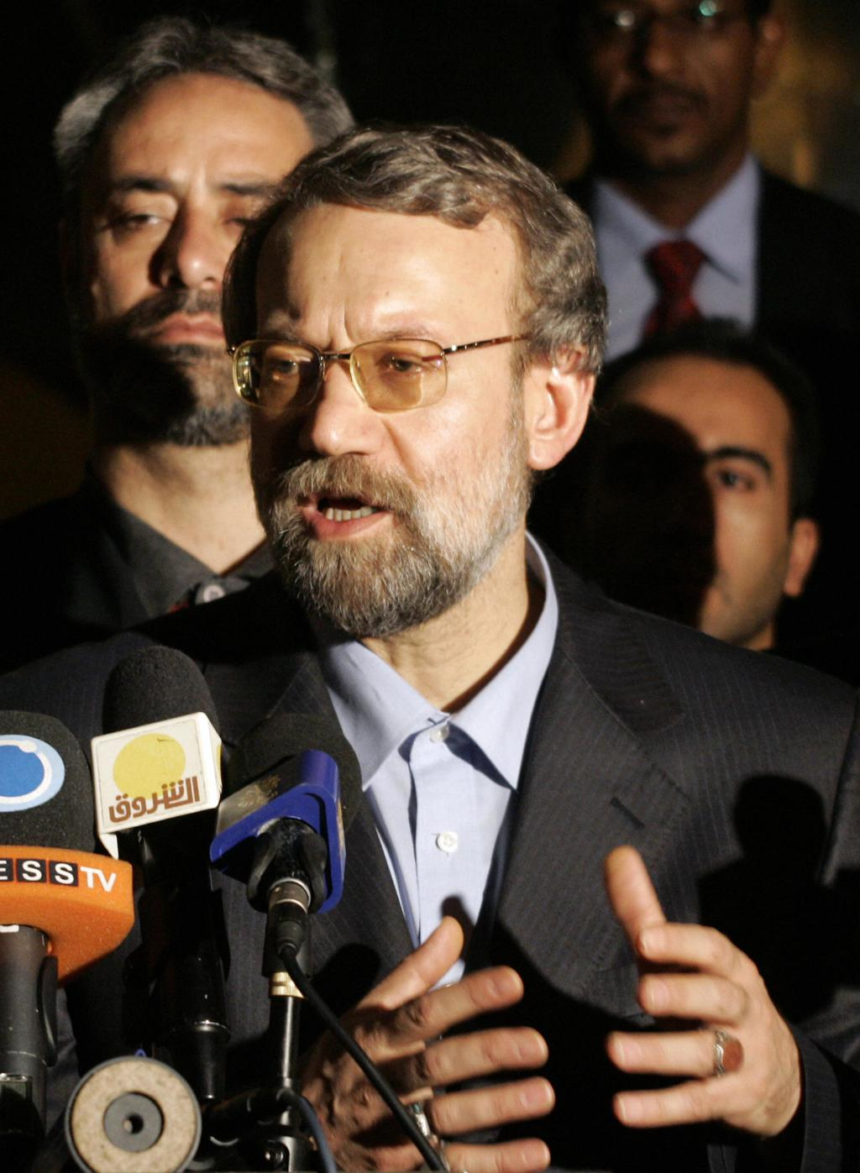
Ali Larijani: The Power Broker Whose Death Reshaped a War
A Defining Moment in the Iran-Israel Conflict
The death of Ali Larijani in an Israeli airstrike has triggered one of the most volatile escalations in the Middle East conflict in recent years. More than the loss of a senior official, it represents the removal of a central strategist within Iran’s political and security architecture—at a moment when the country is deeply entangled in a multi-front confrontation involving Israel, the United States, and regional actors.
- A Defining Moment in the Iran-Israel Conflict
- Who Was Ali Larijani? A Strategic Architect of Power
- The Strike and Immediate Fallout
- Regional Escalation: A Multi-Front Conflict
- Leadership Vacuum: Who Replaces Larijani?
- Strategic Implications: A Shift in Power Dynamics
- Civilian Impact: Fear and Disruption Across the Region
- What Comes Next: A Fragile and Uncertain Path
- Conclusion
Iran’s immediate response—missile barrages targeting Israeli cities and warnings of a “decisive” retaliation—underscores the strategic weight Larijani carried. His death has not only intensified military operations but also exposed a fragile balance within Iran’s leadership structure.
Who Was Ali Larijani? A Strategic Architect of Power
Ali Larijani was widely regarded as one of Iran’s most influential political figures. Serving as secretary of the Supreme National Security Council, he occupied a pivotal role at the intersection of military strategy, diplomacy, and internal governance.
Unlike military commanders, Larijani’s influence was rooted in political coordination and negotiation. He was known for:



-
Acting as a bridge between competing factions within Iran’s leadership
-
Managing high-stakes negotiations involving the United States and Israel
-
Balancing ideological commitment with pragmatic decision-making
Despite his hardline stance toward Western powers, analysts often described him as a pragmatist with a technocratic approach, favoring calculated strategies over ideological rhetoric.
His position placed him at the core of decisions shaping Iran’s wartime posture—making his elimination particularly consequential.


The Strike and Immediate Fallout
Larijani was killed in an Israeli strike on Tuesday, marking the most senior Iranian official killed since the country’s supreme leadership was previously targeted in the conflict. His death forms part of a broader pattern of Israeli operations aimed at dismantling Iran’s leadership network.
The reaction was immediate and forceful.
Iran’s military launched what it described as “intense” retaliatory attacks, including missile strikes on central Israel. In Tel Aviv and surrounding areas:
-
Missile debris struck residential zones
-
At least two civilians were killed
-
Emergency services reported widespread damage and fires
A resident described the moment of impact:
“There was an alarm, we went into the shelter, we heard a crazy boom… we saw that everything here was blown up.”



Iran’s Revolutionary Guards stated the attacks were carried out “in retaliation” for Larijani’s killing, signaling a direct link between the assassination and the escalation.
Regional Escalation: A Multi-Front Conflict
The consequences of Larijani’s death extend far beyond Iran and Israel. The conflict has rapidly expanded across the region, with multiple theaters of activity:
Israel and Lebanon
Israeli airstrikes intensified in Beirut, destroying buildings in central districts and displacing large populations. Over one million people have reportedly been affected in Lebanon.
Gulf States
Missile and drone attacks were reported across:
-
United Arab Emirates
-
Saudi Arabia
-
Kuwait
-
Bahrain
Air defense systems intercepted multiple threats, but the psychological impact on civilian populations remains significant.
Iraq
Explosions were reported near the US embassy in Baghdad, with Iran-backed militias claiming responsibility for some attacks.
Strait of Hormuz
The United States escalated its involvement by deploying 5,000-pound bunker-buster bombs against Iranian missile sites along the Strait of Hormuz—a critical global oil transit route handling roughly 20% of the world’s oil shipments.
This has disrupted maritime traffic and triggered volatility in global energy markets.
Leadership Vacuum: Who Replaces Larijani?
The immediate question within Iran’s political system is succession.
By law, President Masoud Pezeshkian is responsible for appointing the next national security advisor. Among the leading candidates is Saeed Jalili, a former nuclear negotiator and known hardliner.
However, this potential transition raises significant concerns.
Analysts note that Larijani’s strength lay in his ability to navigate internal divisions and engage internationally. Jalili, by contrast, is described as:
-
“An arch-hardliner”
-
Strongly anti-Western
-
Less flexible in negotiation settings
One analyst warned that his leadership could represent a sharp shift toward ideological rigidity, potentially reducing Iran’s ability to maneuver diplomatically during the crisis.
At the same time, Iran’s Revolutionary Guards—who “hold much of the real power”—may push for a figure with stronger military credentials, reflecting the current wartime environment.
Strategic Implications: A Shift in Power Dynamics
Larijani’s death alters the internal balance of power within Iran in several ways:
1. Centralization of Hardline Influence
Without a pragmatic intermediary, decision-making may shift toward more ideologically rigid factions.
2. Reduced Diplomatic Flexibility
Larijani’s role in bridging domestic and international divides is not easily replicated, potentially complicating future negotiations.
3. Increased Military Escalation
The current trajectory suggests a preference for retaliation over restraint, raising the risk of prolonged conflict.
4. Impact on Negotiations
As one analyst noted,
“Who replaces Larijani… will shape the power balance of the regime and influence its posture toward the US and Israel.”
Civilian Impact: Fear and Disruption Across the Region
Beyond geopolitical calculations, the conflict is reshaping daily life across multiple countries.
In Iran, civilians describe a climate of constant fear:
“With the start of the drone attacks, no one dares to go outside… it is like gambling with my life.”
In Israel, missile strikes have caused casualties and widespread disruption.
In Lebanon, entire neighborhoods have been reduced to rubble, forcing mass displacement.
Even distant economies are feeling the strain. In India, disruptions to gas supplies linked to the Hormuz crisis have affected food preparation, forcing restaurants to alter menus and operations.
What Comes Next: A Fragile and Uncertain Path
The killing of Ali Larijani represents more than a tactical strike—it is a strategic inflection point.
Several trajectories are now possible:
-
Escalation into a broader regional war, involving additional state and non-state actors
-
Hardening of Iran’s political stance, particularly if a more rigid successor is appointed
-
Extended disruption of global energy markets, driven by instability in the Strait of Hormuz
-
Renewed diplomatic efforts, though complicated by leadership changes
What is clear is that Larijani’s absence leaves a vacuum that cannot be easily filled. His ability to balance ideology with pragmatism was a stabilizing force within an already complex system.
Its removal has introduced new volatility—both within Iran and across the wider region.
Conclusion
Ali Larijani’s death marks a decisive turning point in the Middle East conflict. As a central architect of Iran’s strategic decision-making, his loss has immediate military consequences and long-term political implications.
The retaliation already underway signals that the conflict has entered a more dangerous phase. At the same time, the uncertainty surrounding his successor raises questions about Iran’s future direction—whether it will pursue negotiation, confrontation, or a combination of both.
In a region already defined by fragile alliances and shifting power dynamics, the removal of a key intermediary figure has made the path forward more unpredictable—and potentially more perilous.