






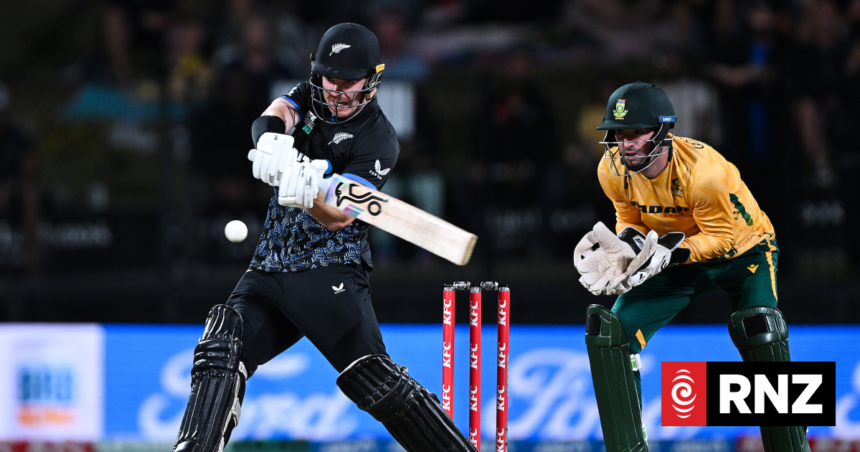
South Africa vs New Zealand: A Series Defined by Momentum Swings and Ruthless Efficiency
A Rivalry Renewed in New Zealand Conditions
The ongoing T20 International series between South Africa and New Zealand has unfolded as a compelling study in contrast—youth versus structure, inconsistency versus control, and flashes of brilliance against sustained execution. Played across iconic venues such as Mount Maunganui, Hamilton, and Auckland, the five-match contest has quickly developed into a narrative of shifting dominance.
- A Rivalry Renewed in New Zealand Conditions
- Match Three: Black Caps Dominate at Eden Park
- South Africa’s Batting Collapse: A Recurring Concern
- Match Two: New Zealand’s Tactical Superiority in Hamilton
- Match One: South Africa’s Early Promise
- Tactical Context: Youth vs Experience
- Key Performers and Statistical Highlights
- The Series Narrative: Momentum Shifts
- What Comes Next: Wellington and Christchurch
- Broader Implications for International Cricket
- Conclusion: A Series Tilting Toward Control
What began as a promising start for South Africa has now tilted firmly in New Zealand’s favor, with the hosts taking a 2-1 lead after a commanding performance in the third match at Eden Park.
Match Three: Black Caps Dominate at Eden Park
New Zealand’s latest victory—an eight-wicket win at Eden Park Outer Oval in Auckland—was decisive both in execution and intent. Chasing a modest target of 137, the hosts reached 137/2 in just 16.2 overs, finishing the match with 22 balls to spare.
The foundation of the win was laid early. Devon Conway (39 off 26 balls) and Tom Latham (63* off 55 balls) combined for a 96-run opening partnership, effectively neutralizing South Africa’s bowling attack before it could establish pressure.



Latham, in particular, anchored the chase with precision, striking seven fours and two sixes while maintaining composure throughout. His innings ensured there was no late drama, even after Conway’s dismissal at 96.
South Africa’s bowling lacked penetration. While Lutho Sipamla and Keshav Maharaj each claimed a wicket, the overall attack failed to disrupt New Zealand’s rhythm.



South Africa’s Batting Collapse: A Recurring Concern
If New Zealand’s chase was clinical, South Africa’s innings was chaotic. The Proteas managed only 136/9 in their 20 overs—a total that reflected persistent structural issues in their batting lineup.
Only George Linde (23 off 19 balls) crossed the 20-run mark among the top nine batters. The innings was characterized by poor shot selection, mistimed strokes, and a steady procession of wickets.
At one stage, South Africa were 112/9 with 22 balls remaining. A late cameo from Nqobani Mokoena (26* off 20 balls), including three sixes, added a degree of respectability, but the damage had already been done.
New Zealand’s bowling unit operated collectively rather than relying on individual brilliance. Mitchell Santner (2-21) and Kyle Jamieson (2-42) applied sustained pressure through the middle overs, ensuring that South Africa never recovered momentum.



Match Two: New Zealand’s Tactical Superiority in Hamilton
The second T20I in Hamilton further exposed South Africa’s vulnerabilities. New Zealand posted 175/6, anchored by Devon Conway’s 60 off 49 balls—an innings described as “far from fluent” but ultimately match-defining on a difficult pitch.
Despite uneven timing and multiple missed shots, Conway’s approach reflected situational awareness. He recognized the challenges of the surface and adjusted accordingly, a contrast to South Africa’s later struggles.
South Africa’s reply collapsed to 107 all out, handing New Zealand a 68-run victory. George Linde’s aggressive 33 off 12 balls was the only significant resistance.
Ben Sears led a disciplined bowling effort with figures of 3-14, while Lockie Ferguson’s late burst ensured there was no lower-order recovery.
Match One: South Africa’s Early Promise
The series began with a markedly different tone. South Africa secured a seven-wicket victory in the opening match at Mount Maunganui, dismissing New Zealand for just 91.
Connor Esterhuizen, making a notable impact, guided the chase with a composed 45* off 48 balls. Supported by contributions from Dian Forrester (16) and others, South Africa completed the chase with 20 balls remaining.
The bowling unit, led by Gerald Coetzee and Ottneil Baartman, dismantled New Zealand’s top order, reducing them to 36-5 during the powerplay. Nqobani Mokoena’s three wickets further reinforced South Africa’s early dominance.
At that stage, the series appeared balanced. However, subsequent matches revealed a widening gap in consistency and execution.
Tactical Context: Youth vs Experience
A defining feature of this series has been South Africa’s decision to field a relatively inexperienced squad. Under the leadership of Keshav Maharaj, the team includes several uncapped players such as Connor Esterhuizen, Dian Forrester, and Nqobani Mokoena.
This approach aligns with a broader developmental strategy, offering exposure to international conditions. However, the trade-off has been evident: inconsistency under pressure.
Maharaj acknowledged both the challenge and ambition ahead of the series, emphasizing the importance of competing effectively despite the team’s inexperience.
New Zealand, by contrast, have balanced squad rotation with structural stability. While key players like Mitchell Santner and Devon Conway were scheduled for limited involvement due to workload management, the team’s depth has ensured continuity.
Key Performers and Statistical Highlights
-
Tom Latham: 63* (55 balls) in the third T20I, anchoring the chase
-
Devon Conway: Consistent contributions across matches, including 60 in Hamilton
-
Mitchell Santner: Effective middle-overs control with 2-21 in Auckland
-
Kyle Jamieson: Key wickets in pressure phases
-
George Linde: One of the few consistent performers for South Africa
-
Nqobani Mokoena: Emerging impact player with both ball and late-order hitting
The Series Narrative: Momentum Shifts
The trajectory of the series is clear:
-
1st T20I: South Africa win convincingly
-
2nd T20I: New Zealand respond with a dominant victory
-
3rd T20I: New Zealand take control with a comprehensive chase
With New Zealand now leading 2-1, the psychological advantage lies firmly with the hosts.
What Comes Next: Wellington and Christchurch
The remaining fixtures in Wellington and Christchurch will determine whether South Africa can recover or whether New Zealand will consolidate their dominance.
For South Africa, the path forward requires:
-
Improved top-order stability
-
Better shot selection under pressure
-
Stronger bowling discipline during powerplays
For New Zealand, the objective is simpler: maintain the current template of controlled batting and collective bowling execution.
Broader Implications for International Cricket
Beyond the immediate series result, this contest reflects broader trends in T20 cricket:
-
Depth over star power: New Zealand’s success highlights the value of system-based cricket
-
Youth integration challenges: South Africa’s approach underscores the risks of rapid transition
-
Adaptability to conditions: Matches in New Zealand demand technical adjustments, particularly for visiting teams
Conclusion: A Series Tilting Toward Control
The South Africa vs New Zealand T20I series has evolved into a clear demonstration of momentum-driven cricket. While South Africa showed early promise, New Zealand’s structured approach and adaptability have shifted the balance decisively.
With two matches remaining, the series is still mathematically open. However, based on current form and execution levels, New Zealand hold both the tactical and psychological edge.