




Braga vs Porto: A Comeback That Reinforced Title Authority
Introduction: A Defining Night in the Primeira Liga
The clash between Sporting Braga and FC Porto on March 22, 2026, was more than just another fixture in the Primeira Liga calendar. It was a test of resilience, tactical discipline, and championship mentality.
At full time, Porto emerged with a 2–1 victory at the Estádio Municipal de Braga—a result shaped not by dominance in possession, but by efficiency, tactical adjustments, and decisive moments in the second half.
First Half: Tactical Balance Without Breakthrough
The opening 45 minutes reflected a tightly contested encounter with contrasting styles.
Braga, true to their identity, controlled possession with 61.7%, completing 491 passes at 87.2% accuracy, asserting themselves in midfield. Porto, meanwhile, operated with calculated restraint, prioritizing defensive structure and quick transitions.
Despite Porto’s early attacking intent—highlighted by attempts from distance and pressure through wide areas—clear-cut chances remained limited. Braga gradually grew into the game, creating moments of danger but lacking precision in the final third.
The half concluded 0–0, with both teams showing intent but neither able to convert.
Turning Point: Zalazar Breaks the Deadlock
The match shifted immediately after the restart.
In the 54th minute, Braga were awarded a penalty following sustained attacking pressure.
Rodrigo Zalazar, the club’s leading scorer, stepped up and converted confidently to make it 1–0.
At that moment, Braga appeared in control—both tactically and psychologically.
Porto’s Response: Tactical Changes and Clinical Execution
What followed defined the outcome of the match.
Porto manager Francesco Farioli reacted decisively, introducing attacking reinforcements including William Gomes and Seko Fofana. The shift injected urgency and verticality into Porto’s play.
Equalizer (69’)
The breakthrough came through a rapid transition:
- Oskar Pietuszewski delivered a decisive assist
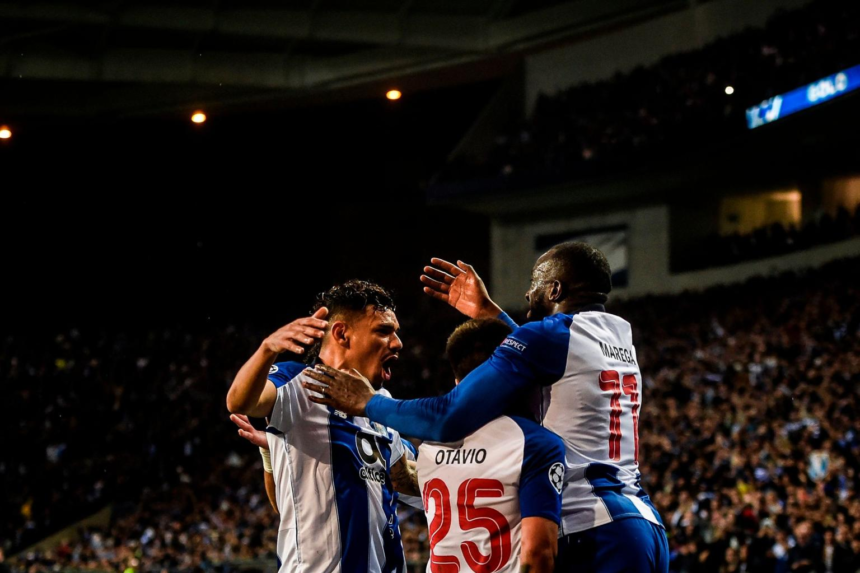
- William Gomes finished inside the box to level the score
The goal validated Porto’s growing pressure and changed the tempo of the match.
Winner (80’)
Just eleven minutes later, Porto completed the turnaround:
- A corner situation created chaos in Braga’s box
- Seko Fofana reacted quickest, striking powerfully to make it 1–2
From that point, Porto transitioned into defensive control, managing the game with experience.
Final Phase: Braga Push, Porto Resist
The closing minutes were defined by Braga’s relentless pursuit of an equalizer.
They committed numbers forward, increasing attacking pressure, but struggled with:
- Lack of clarity in finishing
- Limited shots on target (only 1 from 6 attempts)
- Porto’s compact defensive organization
Porto absorbed pressure effectively, recording 19 tackles and 23 clearances, ultimately securing all three points.
By the Numbers: Efficiency vs Control
A deeper look at the statistics reveals the underlying story:
Possession & Distribution
- Braga: 61.7% possession, 491 passes
- Porto: 38.3% possession, 297 passes
Attacking Output
- Braga: 6 shots, 1 on target
- Porto: 12 shots, 3 on target
Defensive Metrics
- Porto: 19 tackles, 23 clearances
- Braga: 13 tackles, 19 clearances
Despite controlling the ball, Braga failed to translate possession into meaningful chances. Porto, by contrast, maximized fewer opportunities with higher efficiency.
Context and Stakes: Why This Result Matters
The significance of this result extends beyond a single matchday.
- Porto maintained their lead at the top of the table with 72 points
- The victory prevented Braga from closing the gap in the standings
- It reinforced Porto’s reputation as the league’s most defensively disciplined side, with just 10 goals conceded all season
Coming into the match:
- Braga had been unbeaten in 10 consecutive home games
- Porto had recorded 11 wins in 13 away matches
This fixture effectively tested both strengths—and Porto’s prevailed.
Tactical Identity: A Clash of Philosophies
The game highlighted two distinct footballing approaches:
Braga (Carlos Vicens)
- High possession structure
- Aggressive midfield control
- Strong home form and attacking consistency
As Vicens noted pre-match:
“We expect a very competitive game… we will have to be very competent at all times.”
Porto (Francesco Farioli)
- Defensive compactness
- Quick transitions
- Clinical finishing
Farioli emphasized:
“SC Braga is a very strong rival… we will go step by step.”
Ultimately, Porto’s pragmatic approach proved more decisive.
Key Performers
Porto
- William Gomes – Impactful substitute, scored equalizer
- Seko Fofana – Match-winning goal, decisive presence
- Oskar Pietuszewski – Key assist in transition
Braga
- Rodrigo Zalazar – Opened scoring from penalty
- Ricardo Horta – Creative threat but lacked finishing support
Historical Context: Porto’s Continued Dominance
The result also reinforced long-term trends in this fixture:
- Porto have won 115 of 172 meetings
- Braga have only 27 victories
- Goal difference: 370–145 in Porto’s favor
While Braga have grown competitively, Porto continue to assert dominance in key moments.
Conclusion: A Statement Victory with Title Implications
This was not a match won through control—it was won through execution.
Braga demonstrated structure, discipline, and territorial dominance. But Porto demonstrated something more valuable in elite competition: decisiveness under pressure.
The comeback victory not only delivered three points but also sent a clear message across the Primeira Liga—Porto remain firmly in control of the title race.