






Spider-Man: Brand New Day — A New Era Begins for Peter Parker
A Franchise Reset Disguised as a Sequel
The arrival of Spider-Man: Brand New Day signals more than just another installment in the Marvel Cinematic Universe. Positioned as the follow-up to the record-breaking No Way Home, the film marks a structural reset for Peter Parker’s story—one that reframes the character’s identity, relationships, and trajectory.
- A Franchise Reset Disguised as a Sequel
- The Trailer: Familiar Faces, Altered Realities
- A Changing Spider-Man: Mutation and Metamorphosis
- The Mystery of Sadie Sink’s Character
- Expanding Threats: Crime, Power, and Control
- A Cultural Detail That Sparked a Digital Debate
- A Story About Isolation and Identity
- Release Timeline and Franchise Implications
- Conclusion: A Reinvention with High Stakes
According to the official synopsis, “Spider-Man: Brand New Day marks an entirely new chapter for Peter Parker and Spider-Man.” The narrative picks up four years after the events that erased Peter from the memories of those closest to him, leaving him isolated in a city he continues to protect but that no longer knows his name.
This premise establishes a tonal and thematic pivot: Spider-Man is no longer balancing dual identities—he is now fully immersed in the role, with personal sacrifice defining his existence.
The Trailer: Familiar Faces, Altered Realities
The first full trailer offers a strategic blend of continuity and change. While the film introduces a new direction, it reassures audiences by reintroducing key characters:
-
Zendaya’s MJ and Jacob Batalon’s Ned reappear, maintaining emotional continuity.
-
A poignant shot of Aunt May’s gravestone reinforces the lasting consequences of past events.
-
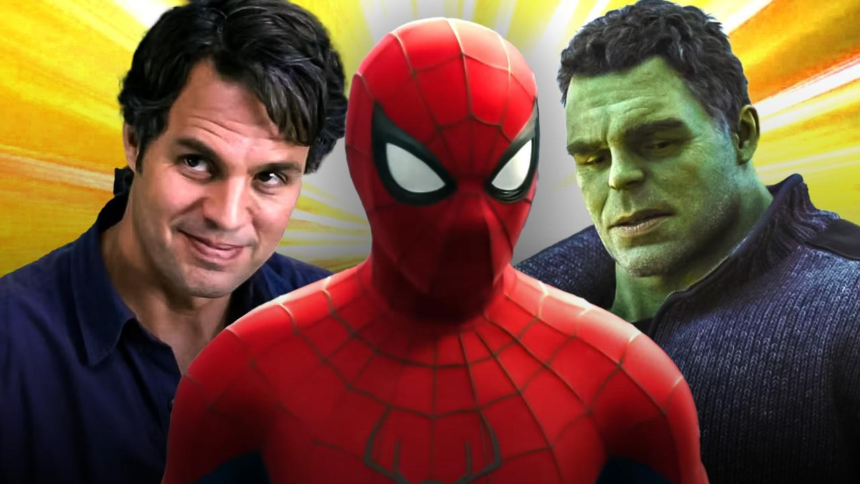
Mark Ruffalo’s Bruce Banner returns, now seemingly operating within an academic setting.
-
Jon Bernthal’s Punisher and Michael Mando’s Scorpion re-enter the narrative, expanding the film’s threat landscape.
This layered cast signals an interconnected storyline, bridging prior Spider-Man arcs with broader Marvel narratives, including elements tied to Daredevil and The Defenders universe.
A Changing Spider-Man: Mutation and Metamorphosis
One of the trailer’s most striking elements is Peter Parker’s apparent physical transformation. Visual cues—blackened eyes and a cocoon-like state—suggest a biological evolution tied to his Spider-Man DNA.

Bruce Banner provides a key insight, indicating that Peter’s genetic structure is mutating. This development introduces a scientific dimension to the story, potentially redefining Spider-Man’s abilities and limitations.
Narratively, this mutation operates on two levels:
-
Literal: A shift in Peter’s powers and physical condition.
-
Symbolic: A representation of his transition into adulthood and a more complex phase of heroism.
The implication is clear: this is not the same Spider-Man audiences have known. The character is evolving, and not without risk.
The Mystery of Sadie Sink’s Character
A central point of intrigue revolves around Sadie Sink’s unnamed role. The trailer deliberately obscures her identity, offering only fragmented glimpses:


-
A figure in a long coat, often shown from behind.
-
Scenes implying mind-control abilities.
-
A cryptic warning: “We are faced with a danger that we can’t control, one we can’t even see.”
Additional footage suggests ambiguity—she may be both a threat and a victim, as indicated by a scene where a similar figure appears restrained in a holding cell.
Speculation has intensified around her potential identity. One prevailing theory positions her as Jean Grey, a character whose inclusion would mark a significant step toward integrating the X-Men into the MCU. Notably, reports indicate her character will appear in Avengers: Secret Wars, reinforcing the likelihood that she is not a one-off antagonist.
Expanding Threats: Crime, Power, and Control
Beyond individual character arcs, Brand New Day introduces a broader pattern of escalating threats:
-
The return of The Hand, a secretive ninja organization previously seen in The Defenders.
-
The reappearance of Scorpion, signaling unresolved conflicts from earlier films.
-
The involvement of Punisher, hinting at a more grounded, violent dimension to the story.
These elements suggest a multi-layered conflict structure—combining street-level crime, psychological manipulation, and potentially global-scale consequences.
A Cultural Detail That Sparked a Digital Debate
Interestingly, one of the most widely discussed aspects of the trailer is not narrative-driven but cultural: Peter Parker’s choice of smartphone.
In a brief sequence, he is seen using what appears to be a Samsung Galaxy Z Flip 7—scrolling Instagram Reels before snapping the device shut mid-action. This moment has triggered extensive online discussion, particularly given Spider-Man’s historical association with Sony Xperia devices.
The shift has been interpreted as a subtle but notable departure from past brand alignments. However, the conversation has quickly evolved into commentary on Peter’s financial situation.
With Parker depicted as financially strained following No Way Home, the presence of a premium device—reportedly priced at around $1,100—has prompted humor and speculation. Online reactions range from practical theories about trade-in deals to tongue-in-cheek remarks about his priorities.
While seemingly trivial, this detail reflects how modern audiences engage with superhero narratives—not just through plot, but through lifestyle realism and cultural markers.
A Story About Isolation and Identity
At its core, Spider-Man: Brand New Day is structured around a single defining condition: Peter Parker is alone.
Having erased himself from the lives of MJ, Ned, and others, he operates without emotional anchors. This isolation reshapes the character:
-
His heroism becomes more absolute—uncompromised by personal ties.
-
His psychological burden increases, as he carries the weight of his choices in solitude.
-
His identity shifts from duality (Peter vs. Spider-Man) to singularity (Spider-Man as his primary existence).
This framework positions the film as both a continuation and a reinvention—retaining the essence of Spider-Man while fundamentally altering his circumstances.
Release Timeline and Franchise Implications
Spider-Man: Brand New Day is scheduled for theatrical release on July 31, 2026. The film is widely expected to initiate a new trilogy, effectively launching the next phase of Tom Holland’s portrayal of the character.
Holland himself has indicated long-term ambitions for the role, writing: “I hope we do this many times over.”
From a franchise perspective, the film serves multiple strategic functions:
-
Re-establishing Spider-Man as a central MCU figure post-No Way Home.
-
Introducing new narrative threads, including potential X-Men integration.
-
Expanding crossover potential with characters from other Marvel properties.
Conclusion: A Reinvention with High Stakes
Spider-Man: Brand New Day operates at the intersection of continuity and reinvention. It preserves key emotional and narrative threads while introducing substantial changes to the character’s world.
The film’s success will likely hinge on how effectively it balances these elements:
-
Maintaining audience attachment to familiar characters.
-
Delivering credible evolution in Peter Parker’s arc.
-
Integrating new threats and alliances without diluting focus.
What is already evident is that this is not a routine sequel. It is a recalibration—one that redefines Spider-Man’s place in both the MCU and contemporary pop culture.