






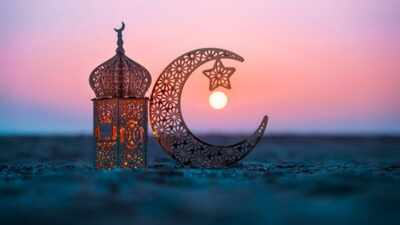
When Is Eid? A Clear Guide to Eid-ul-Fitr 2026 Dates, Moon Sighting, and Global Variations
Understanding the Timing of Eid-ul-Fitr
Eid-ul-Fitr, one of the most significant celebrations in Islam, does not have a fixed date in the Gregorian calendar. Instead, it is determined by the Islamic lunar calendar, making the question “when is Eid?” both simple in principle and variable in practice.
- Understanding the Timing of Eid-ul-Fitr
- The Moon Sighting Process: What Determines the Date
- Expected Eid Dates in 2026 by Region
- Why the Date of Eid Changes Every Year
- What Eid-ul-Fitr Represents
- Global Traditions: How Eid Is Celebrated Worldwide
- Eid 2026 in a Broader Context
- The Cultural and Spiritual Significance
- Conclusion: So, When Is Eid?
For 2026, Eid-ul-Fitr is expected to fall around March 20 or March 21, depending on the sighting of the crescent moon that marks the beginning of Shawwal, the tenth month in the Islamic calendar.
As of Wednesday, March 18, 2026, the Muslim world reached the 29th day of Ramadan (1447 AH), triggering preparations for moon sighting that will determine the exact day of Eid.
The Moon Sighting Process: What Determines the Date
Eid-ul-Fitr begins only after the crescent moon—known as the Shawwal crescent—is sighted. This process is central to Islamic tradition and carries both religious and communal significance.



What the process achieves
The moon-sighting system ensures that Islamic months remain aligned with natural lunar cycles. It reinforces unity, as communities collectively observe the sky and confirm the start of a new month.
How it works
-
On the 29th evening of Ramadan, Muslims look for the crescent moon
-
If the moon is seen, the next day becomes 1 Shawwal (Eid day)
-
If not, Ramadan completes 30 days, and Eid follows the day after
In 2026, the Saudi Supreme Court officially called for moon sighting on March 18, aligning with the Umm Al Qura calendar.



Expected Eid Dates in 2026 by Region
Saudi Arabia and the Middle East
If the crescent moon is sighted on March 18, Eid-ul-Fitr will likely be observed on:
-
March 19, 2026 (Thursday)
If not, Eid shifts to:
-
March 20, 2026 (Friday)
India and South Asia
Due to geographical differences, India typically observes Eid one day after Saudi Arabia.
-
If the moon is sighted on March 19, Eid will be:
-
March 20, 2026
-
-
Otherwise, it may fall on:
-
March 21, 2026
-
This variation is normal and reflects differences in moon visibility across regions.



Why the Date of Eid Changes Every Year
Unlike the Gregorian calendar, the Islamic calendar is purely lunar, consisting of 12 months of 29 or 30 days.
This results in:
-
A year that is about 10–11 days shorter
-
Eid shifting earlier each year in the Gregorian calendar
As a result, Eid moves across different seasons over time—sometimes falling in summer, winter, or spring.
What Eid-ul-Fitr Represents
Eid-ul-Fitr translates to the “Festival of Breaking the Fast.” It marks the conclusion of Ramadan, a month defined by:
-
Fasting from dawn to sunset
-
Increased prayer and spiritual reflection
-
Charity and community support
Eid itself is both a religious observance and a social celebration.
Key elements of Eid
-
Special morning prayers in mosques or open grounds
-
Zakat al-Fitr, a form of charity ensuring inclusivity
-
Family gatherings and shared meals
-
Wearing new clothes and exchanging greetings like “Eid Mubarak”
Global Traditions: How Eid Is Celebrated Worldwide
Although the timing may differ slightly, the essence of Eid remains consistent across cultures.
Southeast Asia (Indonesia & Malaysia)
-
Large-scale homecomings to reunite with family
-
Open-house traditions with shared meals
-
Monetary gifts distributed to children
Middle East (Egypt and Gulf countries)
-
Festive prayers followed by family visits
-
Traditional sweets and desserts
-
Gifts known as “eidiya” for children
Western countries (United States and beyond)
-
Community festivals with cultural diversity
-
Public celebrations with activities for families
-
Emphasis on unity across different ethnic groups
Eid 2026 in a Broader Context
The 2026 Eid-ul-Fitr arrives during a complex global backdrop, including ongoing tensions in parts of the Middle East. Despite this, the festival continues to serve as a powerful reminder of:
-
Resilience within Muslim communities
-
The importance of compassion and charity
-
The enduring role of faith in uncertain times
In some regions, adjustments have been made—for example, reports indicate restrictions on open-air prayers in the UAE, reflecting evolving local circumstances.
The Cultural and Spiritual Significance
Eid is not only a celebration—it is the culmination of a deeply spiritual journey. After a month of discipline and reflection, it represents:
-
Renewal of faith
-
Gratitude for strength and guidance
-
Reconnection with family and community
The reliance on moon sighting underscores a unique connection between religion and nature, anchoring the Islamic calendar in observable reality.
Conclusion: So, When Is Eid?
For 2026, Eid-ul-Fitr is expected to be celebrated:
-
March 19 or 20 in Saudi Arabia and parts of the Middle East
-
March 20 or 21 in India and neighboring regions
The exact date depends entirely on the sighting of the crescent moon.
This variability is not uncertainty—it is tradition. It reflects a system rooted in observation, community participation, and centuries-old religious practice.
Ultimately, Eid is less about a fixed date and more about what it represents: the end of sacrifice, the beginning of celebration, and a renewed commitment to faith, generosity, and unity.