





Government Strengthens Technical Skills Development With Training Of 600 Technicians
A Strategic Push Toward Skills, Sustainability, and Employment
South Africa is intensifying its investment in technical skills development, marking a significant milestone with the graduation of 600 refrigeration and air-conditioning servicing technicians and 35 trainers. The initiative reflects a broader policy direction: equipping the workforce with practical, industry-relevant competencies while aligning with environmental sustainability targets.
- A Strategic Push Toward Skills, Sustainability, and Employment
- Why Technical Skills Development Matters Now
- Partnerships Driving the Programme Forward
- Training With an Environmental Mandate
- National Reach and Inclusive Participation
- Expansion Plans: Scaling Impact to 800 More Technicians
- South Africa’s Commitment to the Montreal Protocol
- Broader Implications: Economy, Environment, and Workforce
- Conclusion: A Model for Integrated Skills Development
Announced in Johannesburg on Tuesday, 17 March 2026, the programme underscores a dual objective—stimulating economic growth and ensuring compliance with global environmental commitments.
Deputy Minister of Forestry, Fisheries and the Environment Bernice Swarts framed the initiative within a wider developmental context, stating:
“Skills development in the refrigeration and air-conditioning sector contributes to inclusive economic growth, job creation, and a transition towards a low-emissions economy.”

Why Technical Skills Development Matters Now
The refrigeration and air-conditioning (RAC) sector sits at the intersection of multiple critical industries. From preserving food supply chains to maintaining healthcare systems and supporting manufacturing, the sector is foundational to both economic stability and public welfare.
In practical terms, a shortage of skilled technicians can disrupt:

-
Cold-chain logistics essential for food security
-
Climate-controlled environments in hospitals and laboratories
-
Industrial operations requiring precise temperature regulation
By training hundreds of technicians, the government is addressing both immediate labor gaps and long-term industrial resilience.
Partnerships Driving the Programme Forward
The initiative is not a standalone government effort. It is the result of coordinated collaboration between key national and international stakeholders.
Core partners include:
-
The Department of Forestry, Fisheries and the Environment (DFFE)
-
The United Nations Industrial Development Organisation (UNIDO)
-
The Department of Employment and Labour (DEL)
-
The Department of Higher Education and Training
These partnerships led to the creation of the National Implementation Strategy for Refrigeration and Air-Conditioning (RAC) service technicians in 2015, along with the RAC Servicing Technician Training Programme.
This multi-agency approach ensures alignment between policy, training standards, and labor market needs—reducing fragmentation that often limits the effectiveness of skills programmes.
Training With an Environmental Mandate
Unlike conventional vocational programmes, this initiative integrates environmental compliance as a core component of technical training.
A key focus is the phase-out of harmful substances used in refrigeration systems, particularly Hydrochlorofluorocarbons (HCFCs), including HCFC-22. These substances are known contributors to ozone depletion and climate change.
The programme promotes:
-
Adoption of environmentally friendly refrigerants
-
Reduction in global warming potential (GWP) emissions
-
Improved handling and disposal practices
These measures align directly with the global Montreal Protocol, a legally binding agreement aimed at regulating substances that deplete the ozone layer.
National Reach and Inclusive Participation
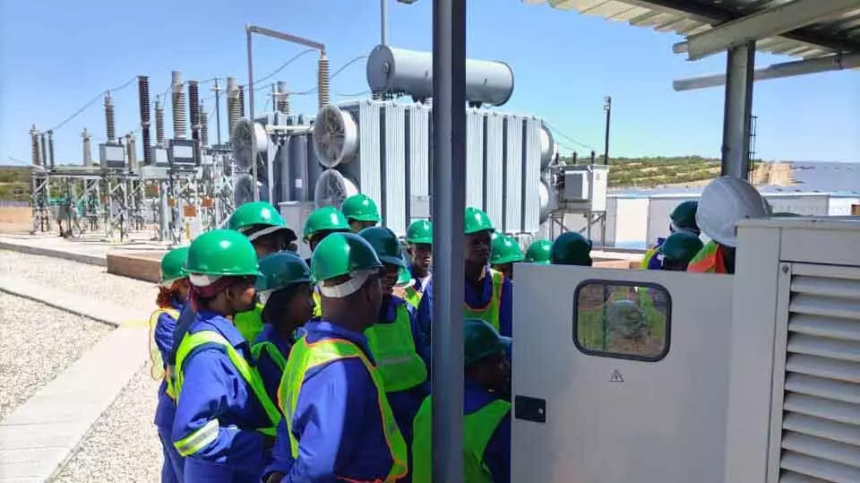
Training sessions were conducted in Johannesburg and Durban, drawing participants from all nine provinces. This national coverage is significant, as it ensures that skills development is not concentrated in urban centers alone.
The programme also places emphasis on inclusivity. According to Swarts, future phases will prioritize:
-
Increased participation of women in technical fields
-
Opportunities for individuals in the informal sector
-
Broader access to quality training across demographics
This aligns with wider national priorities, including poverty alleviation, gender equality, and access to education.
Expansion Plans: Scaling Impact to 800 More Technicians
The current milestone is only the first phase of a larger strategy.
Looking ahead, the Department of Forestry, Fisheries and the Environment plans to extend training to an additional 800 technicians operating within the informal servicing sector.
Swarts outlined the objectives of this expansion:
“Looking ahead, the DFFE will expand training interventions to 800 more technicians operating within the informal servicing sector. This will support standardisation of practices, improved compliance, and further reductions in Hydrofluorocarbon (HFC) consumption.”
This next phase targets a critical segment of the economy—informal technicians who often lack formal certification but play a major role in service delivery. Standardizing their practices is expected to improve safety, efficiency, and environmental compliance.
South Africa’s Commitment to the Montreal Protocol
The initiative is closely tied to South Africa’s obligations under the Montreal Protocol on Substances that Deplete the Ozone Layer.
Swarts reaffirmed the government’s position:
“The Government of the Republic of South Africa, through the department, remains firmly committed to the effective implementation of the Montreal Protocol on Substances that Deplete the Ozone Layer.”
She further emphasized measurable progress:
“Through sustained compliance with Montreal Protocol obligations, South Africa has achieved a marked reduction in the consumption of ozone-depleting substances used in refrigeration and air-conditioning applications.”
The country is currently managing the phase-out of HCFCs in line with international schedules, with a specific target:
“I am confident that the 2026 reduction target of 97.5% of the baseline consumption will be achieved.”
Broader Implications: Economy, Environment, and Workforce
This initiative illustrates a convergence of three strategic priorities:
1. Economic Development
By increasing the number of skilled technicians, the programme enhances productivity and supports industries reliant on refrigeration systems.
2. Job Creation
Training translates directly into employability, particularly in sectors with consistent demand for technical maintenance and repair services.
3. Environmental Sustainability
Reducing reliance on ozone-depleting substances contributes to global climate goals while protecting public health and ecosystems.
The integration of these elements reflects a policy shift toward “green skills”—a workforce equipped not only with technical expertise but also with environmental awareness.
Conclusion: A Model for Integrated Skills Development
The training of 600 technicians represents more than a numerical achievement. It signals a structured, forward-looking approach to workforce development—one that combines economic necessity with environmental responsibility.
With plans already underway to expand training to 800 additional technicians, the initiative is positioned to scale its impact across both formal and informal sectors.
As South Africa continues to align its industrial growth with global environmental frameworks, programmes like this offer a replicable model: targeted skills development that delivers measurable outcomes across employment, sustainability, and national development priorities.