






A Killing in Broad Daylight: Inside the Johannesburg Lawyer Assassination
The Moment That Stopped a City Block
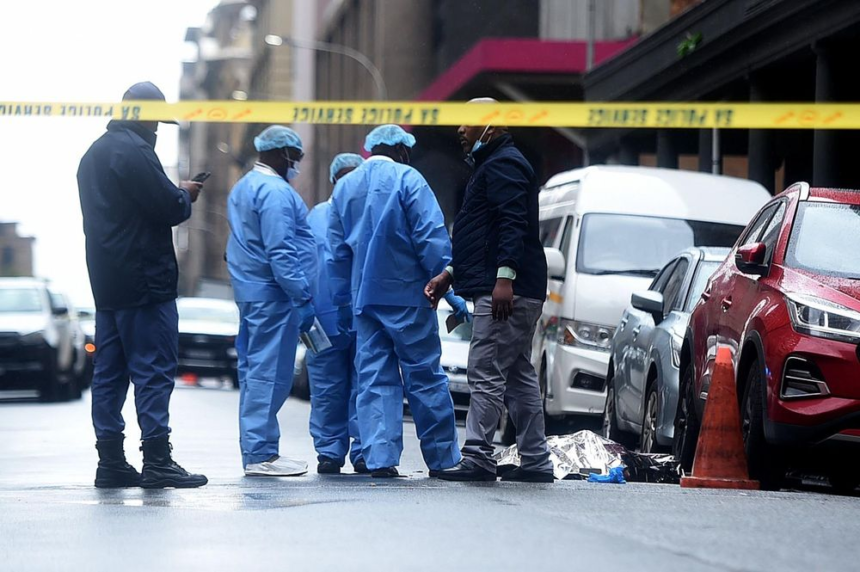
On the morning of 23 March 2026, the rhythm of central Johannesburg was interrupted by gunfire. At the intersection of Fox and Joubert streets—just steps from the Commission for Conciliation, Mediation and Arbitration (CCMA)—a 35-year-old lawyer was shot dead in what authorities have described as a targeted attack.
- The Moment That Stopped a City Block
- A Lawyer in the Line of Fire
- What the Investigation Reveals So Far
- A Pattern That Is Becoming Hard to Ignore
- Labour Relations Under a New Shadow
- Security Concerns Ripple Through the Legal System
- The Broader Implications
- What Comes Next
- Conclusion: A Case That Extends Beyond One Victim
She had been working on a labour dispute tied to a major mining company. Within minutes, the scene transformed from a routine business district into a forensic zone, as pathologists and police secured the area and began piecing together what had happened.
The killing was not random. It was precise, calculated, and, according to preliminary reports, executed by suspects who had been following her before opening fire and fleeing on foot.
A Lawyer in the Line of Fire
The victim was part of the legal team representing Sibanye-Stillwater, one of South Africa’s major mining companies. Her work centered on employee disputes—cases that frequently escalate to arbitration at the CCMA.



“She represented us in employee disputes, which often go to the CCMA. I know there was a dispute that she was busy dealing with, but I don’t have all of the details,” said company spokesperson James Wellsted.
Her identity has not been publicly disclosed, a decision made out of respect for her family and in accordance with company policy.



What is clear, however, is that she was actively engaged in a live case at the time of her death—a detail that has fueled speculation, even as officials caution against drawing premature conclusions.
What the Investigation Reveals So Far
South African Police Service (SAPS) officers responding to the scene confirmed the following sequence:
- The victim was allegedly followed by two unknown suspects.
- The attackers opened fire at close range.
- They fled the scene on foot immediately afterward.
- No arrests have been made.
- The motive remains officially unknown.
While authorities have not formally labeled the killing as a hit, the circumstances—daylight execution, targeted pursuit, and immediate escape—align with patterns seen in prior contract-style assassinations.
Sibanye-Stillwater has indicated it will conduct its own internal investigation alongside the police inquiry.



A Pattern That Is Becoming Hard to Ignore
This killing does not exist in isolation. It follows the assassination of Johannesburg insolvency attorney Bouwer van Niekerk in September 2025, a case that sent shockwaves through South Africa’s legal community.
That earlier murder was widely interpreted as part of a broader pattern: professionals involved in high-stakes disputes—particularly those linked to corruption, insolvency, or corporate conflict—are increasingly becoming targets.
The latest incident reinforces a troubling trend: lawyers, once seen as intermediaries in disputes, are now being drawn directly into the crosshairs.
Labour Relations Under a New Shadow
If the killing is ultimately linked to the labour dispute the victim was handling, it could signal a significant escalation in labour tensions.
South Africa’s mining sector, in recent years, has experienced relatively stable labour relations compared to its volatile past. Prolonged strikes have become less frequent, and dispute resolution mechanisms—particularly through the CCMA—have played a stabilizing role.
A targeted killing connected to such a dispute would represent a departure from that trajectory.
It would suggest that certain conflicts are no longer confined to negotiation rooms or arbitration hearings, but are spilling into violent territory.
For now, however, officials stress that any connection remains speculative.
Security Concerns Ripple Through the Legal System
The immediate aftermath of the shooting triggered concern at the highest levels of the judiciary.
Judge Dario Dosio, who oversees security in the Johannesburg High Court precinct, issued a memo calling for urgent action. His recommendations included:
- An emergency meeting with SAPS and the Johannesburg Metro Police Department
- Enhanced security presence around courts
- Verification of surveillance coverage by Vumacam’s citywide camera network
- The introduction of stop-and-search operations within the precinct
He also emphasized that the area is designated a gun-free zone, with exceptions only for law enforcement.
The response reflects a growing recognition that legal spaces—courts, arbitration centers, and surrounding areas—may no longer be insulated from the risks faced by those working within them.
The Broader Implications
Beyond the immediate tragedy, the killing raises deeper questions about the intersection of law, business, and security in South Africa.
If legal professionals can be targeted while carrying out routine duties, the implications extend far beyond a single case:
- For the legal profession: It introduces a new layer of personal risk for lawyers handling sensitive matters.
- For businesses: It complicates dispute resolution processes, particularly in sectors like mining where labour tensions can run high.
- For society: It challenges the notion that accountability mechanisms—courts, arbitration bodies, legal representation—can function safely and independently.
The phrase “accountability is becoming a death sentence,” referenced in discussions following previous incidents, is no longer rhetorical. It is increasingly grounded in lived reality.
What Comes Next
At this stage, the investigation remains open, with key questions unanswered:
- Who ordered the attack?
- Was the labour dispute a factor?
- Are there broader networks involved?
Authorities are expected to rely heavily on surveillance footage, witness accounts, and forensic analysis to build a case.
Meanwhile, the legal community—and the country at large—waits for clarity.
Conclusion: A Case That Extends Beyond One Victim
The killing of a 35-year-old lawyer in Johannesburg’s CBD is not just a criminal case; it is a signal.
It points to a shifting landscape where professional roles tied to dispute resolution are no longer shielded from violence. It underscores vulnerabilities in urban security. And it raises urgent questions about how institutions can protect those who operate at the front lines of accountability.
Until the motive is confirmed, the case will remain surrounded by uncertainty. But its impact is already clear: a profession on edge, a justice system under pressure, and a city forced to confront a new kind of risk.