





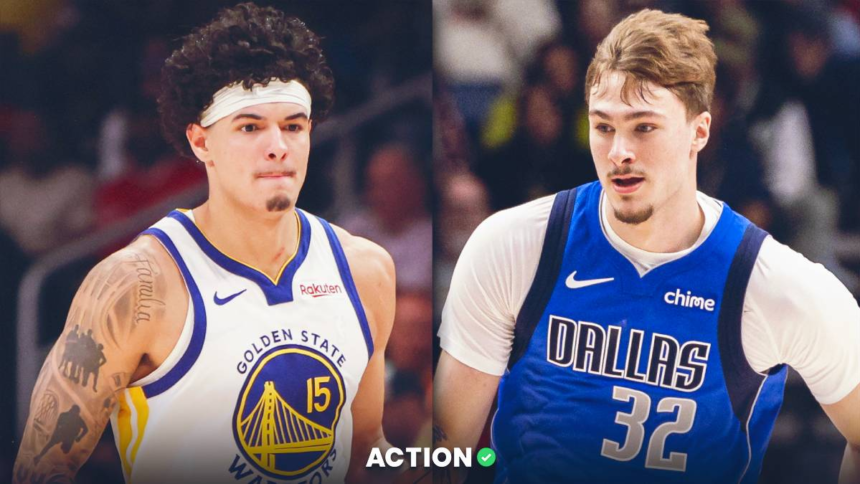
Mavericks vs Warriors: Momentum, Returns, and Pressure in a Crucial Western Conference Clash
A Game Defined by Timing and Stakes
The March 24, 2026 meeting between the Dallas Mavericks and the Golden State Warriors arrives at a critical point in the NBA calendar. With the playoffs approaching, both teams enter the matchup navigating contrasting trajectories—Dallas looking to capitalize on form, and Golden State attempting to arrest a slide that threatens its postseason ambitions.
- A Game Defined by Timing and Stakes
- Warriors’ Urgency: A Season Hanging in the Balance
- A Familiar Opponent for Porzingis
- Mavericks’ Internal Storylines: Youth, Form, and Familiar Faces
- Tactical Undercurrents: Where the Game Could Turn
- Supporting Cast and Key Contributors
- Broader Implications: More Than One Game
- Conclusion: A Contest Framed by Urgency and Opportunity
Set at the American Airlines Center in Dallas, the game is more than a routine regular-season fixture. It represents a convergence of storylines: returning stars, emerging talent, tactical adjustments, and mounting pressure in the Western Conference standings.
Warriors’ Urgency: A Season Hanging in the Balance
Golden State enters the contest with a 33–38 record, placing them 10th in the Western Conference. The team is currently on a three-game losing streak, including defeats to the Detroit Pistons (115–101) and Atlanta Hawks (126–110). These results have intensified scrutiny on a roster still searching for consistency.
A central figure in that equation is Kristaps Porzingis, acquired in a mid-season blockbuster trade. His tenure with the Warriors has been interrupted by injuries, limiting his rhythm and impact. However, there is a significant development ahead of this matchup: Porzingis has been cleared to play and is set to return to the starting lineup after missing one game due to a back issue.



His statistical output, while modest by his standards, provides insight into both his potential and the team’s reliance on him:
- 14.9 points per game
- 41.8% shooting
- 3.9 rebounds
- 2.3 assists
- 2.0 blocks
- 1.4 three-pointers in 20.3 minutes
Golden State’s investment in Porzingis underscores the urgency. The franchise “gave up quite a haul” to secure him, and his ability to deliver consistently could determine whether the Warriors stabilize or continue to drift.


A Familiar Opponent for Porzingis
This matchup carries additional narrative weight for Porzingis. Before his stints with Washington and Golden State, he spent two and a half seasons with the Mavericks. Facing his former team adds an emotional and tactical dimension, particularly as Dallas is well-acquainted with his strengths and tendencies.
For Golden State, his return is not just symbolic—it is strategic. The Warriors require interior presence, rim protection, and scoring versatility, all areas where Porzingis can influence the game if fully fit.
Mavericks’ Internal Storylines: Youth, Form, and Familiar Faces
Dallas approaches the game with its own evolving identity. The emergence of rookie Cooper Flagg has been one of the most compelling developments in recent weeks. His performances suggest a player rapidly adapting to the NBA level.
Over his last five games, Flagg has recorded 13 or more combined rebounds and assists in four outings. In a previous meeting against Golden State this season, he logged 11 rebounds and two assists, surpassing expectations tied to his role.


His activity on both ends of the floor reflects a broader Mavericks approach—dynamic, transitional, and increasingly reliant on multi-dimensional contributors.
Meanwhile, Klay Thompson, now with Dallas, adds another layer to the contest. Facing his former team, he brings both experience and emotional intensity. However, recent trends indicate limitations in his perimeter output against Golden State, where he has recorded fewer than three made three-pointers in his last two meetings with them.
Tactical Undercurrents: Where the Game Could Turn
Several statistical patterns provide insight into how this matchup may unfold:
Dallas Defensive Vulnerability
The Mavericks have struggled defensively in recent games, allowing 134.0 points per game over their last three outings—the highest in the NBA during that span. This presents an opportunity for Golden State, particularly with scoring threats like De’Anthony Melton stepping into a larger role amid roster absences.
Warriors’ Perimeter Defense
Golden State remains relatively strong in limiting three-point production, allowing the seventh fewest made threes per game (12.6). This could neutralize Dallas’ perimeter threats, including Thompson.
Playmaking and Ball Movement
Dallas has shown vulnerability in defending assists, allowing 28.2 per game this season and 33.3 over their last three contests. This trend suggests that players like Draymond Green could find opportunities to orchestrate offensive flow—if Golden State executes efficiently.
Supporting Cast and Key Contributors
Beyond headline names, several role players could influence the outcome:
- De’Anthony Melton (Warriors): With Stephen Curry unavailable, Melton has stepped into a primary scoring role, recording 20+ points in two of his last three games and performing well against Dallas previously.
- Marvin Bagley III (Mavericks): Providing interior scoring and rebounding, though recent performances indicate inconsistency on the boards.
- Daniel Gafford (Mavericks): His presence in pre-game preparations highlights Dallas’ focus on physicality inside.
These contributions, often overlooked, may determine the margin in a closely contested game.
Broader Implications: More Than One Game
This matchup extends beyond immediate results. For Golden State, it is part of a broader push to regain momentum and secure a playoff position. A continued losing streak would further complicate their path in a tightly contested Western Conference.
For Dallas, the game represents an opportunity to consolidate progress, integrate emerging talent, and exploit defensive matchups against a team under pressure.
Conclusion: A Contest Framed by Urgency and Opportunity
The Mavericks vs Warriors clash encapsulates the volatility of late-season NBA basketball. One team seeks stability and resurgence; the other aims to build continuity and capitalize on form.
With Kristaps Porzingis returning to face his former team, Cooper Flagg continuing his upward trajectory, and both sides navigating tactical adjustments, the game is positioned as a defining moment—less for its final score, and more for what it reveals about each team’s trajectory heading into the postseason.