





Nuggets vs 76ers: A One-Sided Showcase That Revealed More Than the Scoreline
A Game That Told a Bigger Story
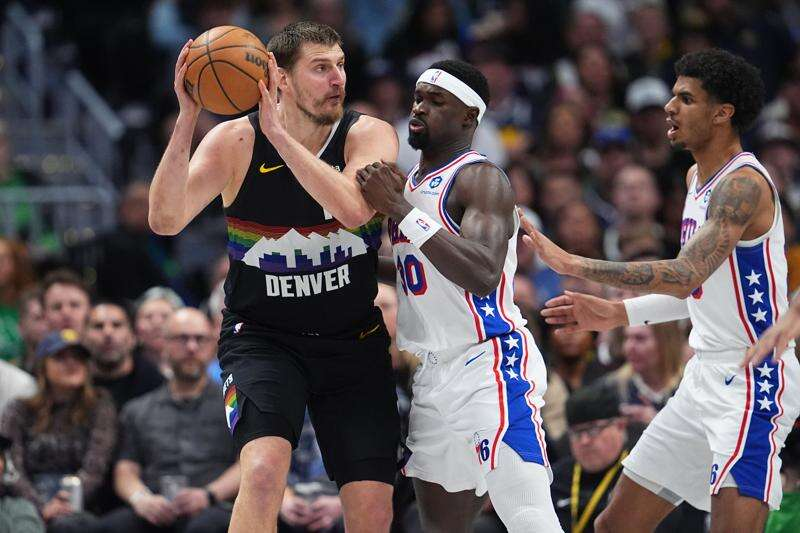
The March 18, 2026, clash between the Denver Nuggets and the Philadelphia 76ers was, on paper, a high-profile NBA matchup—one that typically promises a headline duel between two MVP-caliber centers. Instead, what unfolded at Ball Arena was something quite different: a controlled, dominant performance by Denver that exposed both the strength of a contender and the fragility of a depleted opponent.
- A Game That Told a Bigger Story
- First Half Blitz: Denver Establishes Total Control
- Nikola Jokić’s “Recreational” Masterclass
- Christian Braun Leads the Scoring Charge
- Philadelphia’s Absences: A Structural Breakdown
- Tactical Contrast: System vs Dependence
- Western Conference Implications
- Season Series: Nuggets Assert Superiority
- Looking Ahead: Diverging Paths
- Conclusion: More Than a Routine Win
The final score—124–96 in favor of Denver—only partially captures the narrative. This was not simply a win; it was a structural dismantling shaped by depth, discipline, and availability.
First Half Blitz: Denver Establishes Total Control
From the opening quarter, the Nuggets set a tone that the 76ers never managed to disrupt.
Denver surged ahead early, building a 16-point lead by the end of the first quarter, then expanding it relentlessly. By late in the second quarter, the scoreboard read 71–38, effectively ending the contest before halftime.

Two critical factors defined this early dominance:
-
Ball movement efficiency
-
Defensive containment
The Nuggets held Philadelphia to just 40 first-half points, their lowest defensive concession in a half this season. That defensive discipline, combined with rapid offensive execution, created a gap too wide for any comeback scenario.



Nikola Jokić’s “Recreational” Masterclass
Statistically, Nikola Jokić did not dominate in scoring. He finished with:
-
8 points (4-of-7 shooting)
-
14 assists
-
7 rebounds
Yet this was precisely the point.
Jokić orchestrated the game at a tempo that resembled controlled training rather than high-stakes competition. He reached 10 assists in under 12 minutes, demonstrating how efficiently he could dictate play without scoring heavily.
His approach emphasized:


-
Early ball distribution
-
Spacing optimization
-
Involving every teammate
By the end of the night, every Nuggets player had scored, a rare outcome that reflects not just dominance but cohesion.
Christian Braun Leads the Scoring Charge
While Jokić controlled the rhythm, Christian Braun became the primary beneficiary of Denver’s fluid offense.
-
22 points
-
5 rebounds
-
3 assists
Braun’s performance highlighted how Denver’s system elevates role players when the central playmaker distributes effectively.
Supporting contributions included:
-
Cameron Johnson – 18 points
-
Jamal Murray – 12 points
Murray’s performance was particularly notable given his previous outing against the Lakers, where he shot 1-of-14 and missed his final 13 attempts. This game served as a reset—less about volume scoring and more about reintegration into the team’s rhythm.
Philadelphia’s Absences: A Structural Breakdown
If Denver’s performance reflected depth, Philadelphia’s situation exposed its lack of it under pressure.
The 76ers entered the game severely undermanned:
-
Joel Embiid – out (right oblique strain)
-
Tyrese Maxey – out (sprained finger)
-
Kelly Oubre Jr. – out (left elbow strain)
-
Paul George – serving a 25-game suspension
The absence of Embiid was particularly significant—not only tactically but symbolically. Nuggets fans were again denied the anticipated MVP duel between Embiid and Jokić, a matchup that has repeatedly failed to materialize in Denver.
When Embiid appeared on the bench in the third quarter, he was met with boos from the sold-out crowd—an indication of lingering frustration.
Without their core players, Philadelphia struggled in all phases:
-
Limited offensive creation
-
Weak defensive resistance
-
Minimal transition threat
Only reserve Beauchamp, with 16 points, offered any notable resistance.
Tactical Contrast: System vs Dependence
This game underscored a broader structural contrast between the two franchises.
Denver Nuggets
-
System-driven offense
-
Distributed scoring
-
High assist ratio
-
Strong bench integration
Philadelphia 76ers
-
Star-dependent framework
-
Reduced flexibility without key players
-
Limited scoring alternatives
Denver’s ability to maintain performance regardless of individual scoring output—particularly from Jokić—signals a team built for postseason resilience.
Western Conference Implications
The victory carried significant weight beyond the immediate result.
-
Denver improved to 42–27 (19–13 home record)
-
Maintained pace in a tightly contested Western Conference
-
Remained within a narrow margin of teams ranked 3rd to 6th
With just 1.5 games separating key playoff positions, every win carries strategic importance. Denver’s consistency, especially at home, positions them as a stable contender in a volatile standings race.
Season Series: Nuggets Assert Superiority
The win completed a 2–0 season sweep for Denver over Philadelphia:
-
Game 1: Nuggets win (125–96, overtime in Philadelphia)
-
Game 2: Nuggets win (124–96 in Denver)
What makes this sweep notable is the context:
-
Denver won in Philadelphia despite missing its starting five earlier in the season
-
Philadelphia failed to compete in Denver without its stars
Across both games, Denver demonstrated adaptability under different conditions—a key indicator of playoff readiness.
Looking Ahead: Diverging Paths
Denver Nuggets
Next fixture: Memphis Grizzlies (away)
With Memphis struggling and sitting near the bottom of the Western Conference, Denver enters as a clear favorite. However, maintaining focus will be critical given the compressed standings.
Philadelphia 76ers
Next fixture: Sacramento Kings (away)
Philadelphia’s immediate challenge is recovery—both physical and structural. Their position in the Eastern Conference play-in zone (37–32) leaves little margin for extended absences.
Conclusion: More Than a Routine Win
This matchup was less about rivalry and more about revelation.
For Denver, it reinforced their identity as a system-first contender capable of winning comfortably without relying on individual scoring explosions. For Philadelphia, it highlighted the risks of over-reliance on star power in a league where depth increasingly defines success.
The absence of a headline MVP duel may have disappointed fans, but what emerged instead was arguably more instructive: a clear demonstration of how elite teams function—and how vulnerable others can become when key components are removed.