






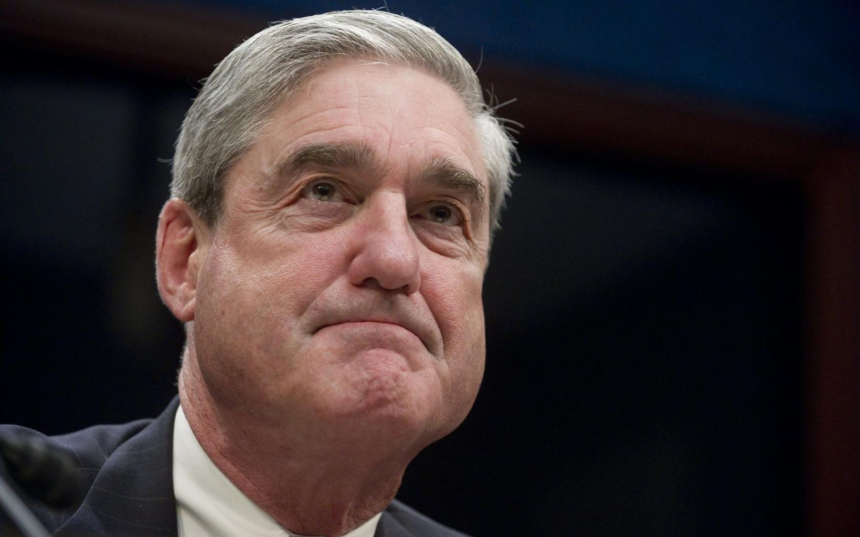
Robert Mueller: The Reluctant Figure at the Center of America’s Political Storm
A Career Defined by Duty—and Controversy
The death of Robert Mueller at the age of 81 marks the end of a career that spanned war, law enforcement, and one of the most politically charged investigations in modern American history. For decades, Mueller was known as a disciplined, methodical public servant. Yet in his final years, his name became synonymous with a deeply polarizing chapter in U.S. politics.
- A Career Defined by Duty—and Controversy
- From Battlefield to Bureau: The Making of a Public Servant
- Reshaping the FBI After 9/11
- The Investigation That Defined a Presidency
- A Polarizing Legacy in Real Time
- Death, Reaction, and Renewed Controversy
- Beyond Politics: A Life of Service
- What Comes Next: Reassessing the Mueller Era
- Conclusion: A Figure Larger Than His Investigation
His passing has reignited debate—not only about his legacy, but about the state of political discourse itself.
From Battlefield to Bureau: The Making of a Public Servant
Born in 1944, Mueller’s early life followed a trajectory of elite education and military service. After studying at Princeton University, he joined the U.S. Marine Corps and was deployed to Vietnam in 1968. There, he led troops in combat, was wounded twice, and earned commendations including the Bronze Star and Purple Heart.
Following the war, Mueller transitioned into law, graduating from the University of Virginia in 1973. His career as a federal prosecutor would eventually lead him to some of the most complex criminal cases in the United States, including organized crime and terrorism-related investigations.
This foundation—military discipline paired with prosecutorial rigor—defined his approach to leadership.
Reshaping the FBI After 9/11
In August 2001, Mueller was appointed director of the Federal Bureau of Investigation, just days before the September 11 terrorist attacks.


The timing would define his tenure.
Under Mueller’s leadership, the FBI underwent a structural transformation. Once primarily focused on traditional law enforcement, the agency pivoted toward counterterrorism and national security. He expanded intelligence-sharing mechanisms and redirected resources to prevent future attacks.
Former U.S. President George W. Bush later credited Mueller with helping ensure that no comparable attack occurred on American soil during his tenure. Similarly, Barack Obama described him as “one of the finest directors in the history of the FBI,” highlighting his commitment to the rule of law.
Mueller remained in the role until 2013, making him one of the longest-serving FBI directors in modern history.

The Investigation That Defined a Presidency
Despite a long and decorated career, Mueller’s legacy became inseparable from one assignment: the investigation into Russian interference in the 2016 U.S. election.
Appointed as special counsel in 2017, Mueller led a 22-month inquiry into potential links between Russia and the campaign of Donald Trump.
The investigation produced a 448-page report and resulted in numerous indictments, plea deals, and convictions. According to findings, Russia interfered in the election in a “sweeping and systematic fashion.” However, the report did not establish that members of Trump’s campaign conspired with the Russian government.
Mueller’s own words during congressional testimony captured the complexity:
“Second, the investigation did not establish that members of the Trump campaign conspired with the Russian government in its election interference activities.”
At the same time, the report made a critical distinction:
“While this report does not conclude that the president committed a crime, it also does not exonerate him.”
This ambiguity ensured that the investigation would remain a political flashpoint long after its conclusion.
A Polarizing Legacy in Real Time
Mueller’s work drew starkly different reactions across the political spectrum.
Supporters viewed him as a principled investigator who upheld institutional integrity under intense pressure. Critics, particularly within Trump’s circle, dismissed the inquiry as a “witch hunt” and a politically motivated exercise.
The divide extended beyond political elites and into the broader public, where Mueller became both a symbol of accountability and a target of skepticism.
As one former colleague noted, his decision-making reflected “integrity” and “thoughtfulness,” even when outcomes were contested.
Death, Reaction, and Renewed Controversy
Mueller’s death on Friday night triggered an immediate wave of reactions, both respectful and incendiary.
His family announced the news in a brief statement:
“With deep sadness, we are sharing the news that Bob passed away… His family asks that their privacy be respected.”
Tributes poured in from former officials and colleagues, describing him as an “extraordinary leader” and “a great American.”
However, the response from Donald Trump sparked widespread backlash. In a post on Truth Social, Trump wrote:
“Robert Mueller just died. Good, I’m glad he’s dead. He can no longer hurt innocent people! President DONALD J. TRUMP”
The statement drew immediate condemnation.
Michael Steele responded sharply:
“You are a vile disgusting man. Petty and pathetic, you are a hypocrite who reeks of weakness and insecurities with no moral core.”
Political strategist Rick Wilson described Mueller as a “hero” and criticized Trump as a “low, degenerate, criminal fraud.”
Democratic leaders also weighed in. Adam Schiff wrote:
“Every day, this president shows his basic indecency and unfitness for office.”
Meanwhile, Dan Goldman argued that the reaction reflected a deeper contrast:
“Mueller and Trump represent polar opposites of what a public servant should be.”
The episode quickly evolved into a broader debate about political civility, consistency, and the boundaries of acceptable public discourse.
Beyond Politics: A Life of Service
Stripped of political context, Mueller’s career reflects a consistent theme: service within institutions.
From the battlefield in Vietnam to the highest levels of U.S. law enforcement, he operated largely outside the spotlight, rarely speaking publicly and avoiding overt political alignment.
Even his decision to lead the Russia investigation, he later said, stemmed from a simple principle:
“I found that I’ve gotten tremendous enjoyment out of public service. And I find it hard to turn down a challenging assignment.”
What Comes Next: Reassessing the Mueller Era
Mueller’s death is likely to trigger a longer-term reassessment of his legacy.
Historians and analysts will continue to debate key questions:
- Did his investigation strengthen institutional accountability?
- Did it deepen political polarization?
- Could clearer conclusions have altered public perception?
In the short term, however, the immediate reaction to his death highlights a more pressing issue: the erosion of norms around public discourse, even in moments traditionally reserved for reflection and respect.
Conclusion: A Figure Larger Than His Investigation
Robert Mueller’s life cannot be reduced to a single investigation, yet that chapter will remain central to how he is remembered.
He was a war veteran, a legal strategist, and a reformer of one of the world’s most powerful law enforcement agencies. At the same time, he became an unwilling symbol in a political conflict that reshaped modern America.
His death has not ended that conversation—it has intensified it.