






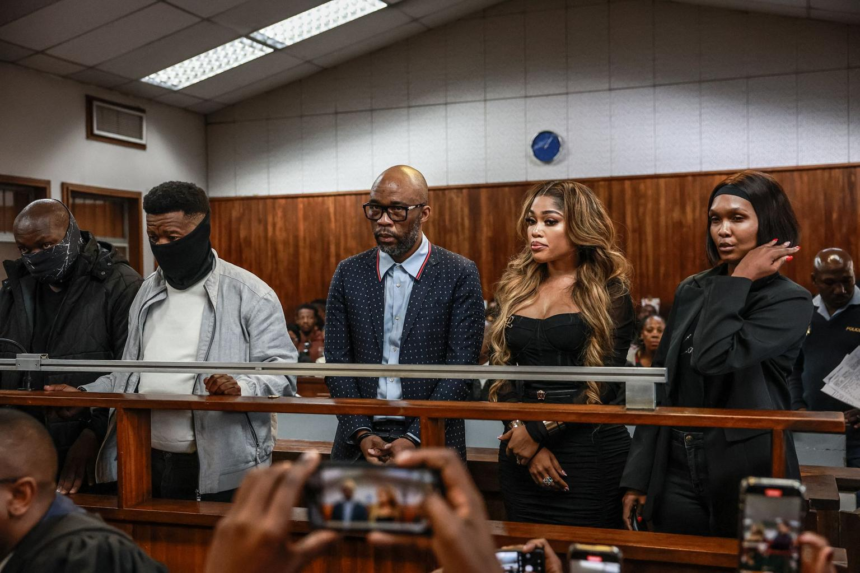
Tsakane Matlala: Inside the Legal Storm Linking Crime, Celebrity, and Public Scrutiny
A Case That Extends Beyond the Courtroom
The name Tsakane Matlala has moved sharply into the public spotlight, not as a passive figure tied to controversy, but as an active participant in an escalating legal and social conflict. Her recent decision to open a criminal case against actress and media personality Tebogo Thobejane marks a significant development in a broader saga already entangled with criminal allegations, public perception, and institutional scrutiny.
- A Case That Extends Beyond the Courtroom
- The Immediate Trigger: A Criminal Complaint Filed
- Tebogo Thobejane’s Response: Trauma at the Center
- The Broader Context: Vusimuzi “Cat” Matlala’s Legal Battles
- A Parallel Controversy: The Ekurhuleni Tender Investigation
- Legal and Social Implications
- What Happens Next?
- A Story Still Unfolding
This is not an isolated dispute. It is a convergence point where personal trauma, legal accountability, and reputational stakes intersect—drawing attention across South Africa’s legal and entertainment landscapes.
The Immediate Trigger: A Criminal Complaint Filed
On 16 March 2026, Tsakane Matlala formally initiated legal action against Tebogo Thobejane. The complaint centers on allegations of:
-
Cyberbullying
-
Defamation
-
Intimidation
-
Harassment
According to Matlala, the issue extends beyond digital platforms. She claims that Thobejane followed her to multiple court appearances, observing her in a way that caused distress and raised concerns about her personal safety.
A key element of the complaint involves social media activity. Thobejane allegedly referred to Matlala as a “killer” and described her husband using the term “nkabi,” commonly interpreted as a hitman. Additional claims include statements suggesting that Matlala appeared happy following an attack that nearly killed Thobejane.
These assertions form the evidentiary basis of the harassment case now under legal review.


Tebogo Thobejane’s Response: Trauma at the Center
Thobejane has not denied making the posts but has framed them within the context of personal trauma. Speaking to eNCA, she stated:
“I am focused on healing.”
She further clarified that her posts were not intended to intimidate or threaten, but rather reflected emotional distress following a violent incident that left her with Post-Traumatic Stress Disorder (PTSD).
This introduces a complex legal dimension: whether expressions rooted in trauma can still meet the threshold for defamation or harassment under South African law.



The Broader Context: Vusimuzi “Cat” Matlala’s Legal Battles
The dispute cannot be fully understood without examining the position of Tsakane’s husband, Vusimuzi “Cat” Matlala.
Currently detained at eBongweni Correctional Facility (Kokstad C-Max), he faces more than 20 charges, including:
-
Attempted murder
-
Conspiracy to commit murder
-
Money laundering
His ongoing case has already attracted significant public attention, and the allegations against him form part of the narrative shaping perceptions around Tsakane Matlala herself.
The association has intensified scrutiny, with public discourse often merging individual accountability with relational proximity.
A Parallel Controversy: The Ekurhuleni Tender Investigation
Separate from the harassment case, Tsakane Matlala is also linked to a developing governance issue involving the City of Ekurhuleni.
Authorities have requested the Public Protector to investigate an alleged irregular tender valued at approximately R3.7 million. Key points emerging from testimony at the Madlanga Commission include:
-
The tender was awarded to Buena Vista Learning Academy, a company linked to Matlala.
-
At the time of bidding, the company was reportedly not registered as a skills development provider.
-
The business had recently operated under a different identity, described as a local shisanyama establishment.
-
The original contract value of R66,500 escalated to payments totaling around R3.7 million.
The investigation will examine potential discrepancies in:
-
Registration history
-
Accreditation credentials
-
Financial disclosures
-
Use of Sector Education and Training Authority (SETA) funds
Municipal authorities have initiated both an internal audit and an external referral to ensure independent oversight.
Legal and Social Implications
1. Defamation vs Freedom of Expression
The case raises critical questions about the boundary between protected speech and unlawful defamation. Courts will likely assess:
-
Whether the statements were factual claims or opinion
-
The intent behind the posts
-
The extent of reputational harm
2. Trauma as Context, Not Immunity
While Thobejane’s PTSD is a significant factor, it does not automatically exempt her from legal consequences. Instead, it may influence how intent and proportionality are interpreted.
3. Public Perception and Digital Amplification
Social media has transformed private disputes into public spectacles. Allegations—whether proven or not—can rapidly shape reputations, often before legal processes conclude.
4. Intersection of Crime, Celebrity, and Governance
This situation uniquely combines:
-
A high-profile criminal case
-
A public figure in entertainment
-
Allegations of municipal corruption
Such intersections tend to magnify both media attention and public interest.
What Happens Next?
Court proceedings related to the harassment case are expected to resume within the week. Several outcomes remain possible:
-
Formal charges against Thobejane if sufficient evidence is established
-
Civil litigation for damages related to defamation
-
Counterclaims or additional legal filings from either party
Simultaneously, the Public Protector’s investigation into the Ekurhuleni tender could produce findings that further influence public and legal narratives surrounding Tsakane Matlala.
A Story Still Unfolding
The Tsakane Matlala case is not a singular legal dispute—it is a layered conflict involving personal grievance, criminal allegations, and institutional accountability.
At its core, it reflects broader tensions in modern society: the speed of digital judgment, the complexity of trauma-informed narratives, and the challenge of maintaining due process in the public eye.
As proceedings continue, the outcome will likely extend beyond the individuals involved, contributing to ongoing debates about law, media, and the limits of public expression.