





World News Analysis: A Conflict Reshaping Global Stability, Energy, and Markets
A World on Edge
The current wave of world news is defined by a rapidly escalating conflict centered in the Middle East, where tensions between the United States, Israel, and Iran have evolved into a multi-layered geopolitical crisis. What began as targeted military operations has now expanded into a broader confrontation affecting global energy systems, financial markets, and civilian populations across multiple regions.
- A World on Edge
- The Strategic Flashpoint: Strait of Hormuz
- Military Escalation Across the Region
- Energy Crisis: A Shock Beyond the 1970s
- Financial Markets React: Asia Leads the Decline
- Domestic and Political Pressures
- Secondary Effects: Food, Fuel, and Supply Chains
- Regional Spillover: West Bank and Lebanon
- The Strategic Calculus: What Comes Next?
- Conclusion: A Conflict With Global Consequences
At the heart of this crisis lies the Strait of Hormuz—a narrow but critical maritime chokepoint through which roughly one-fifth of the world’s oil supply passes. Its effective closure has transformed a regional war into a global economic and security emergency.
The Strategic Flashpoint: Strait of Hormuz
The Strait of Hormuz has emerged as the central pressure point in the conflict. Iran has threatened to close it indefinitely, warning that any U.S. strike on its power plants would trigger a full shutdown of the waterway and coordinated attacks on regional infrastructure.
U.S. President Donald Trump has issued a stark ultimatum, stating that failure to reopen the strait would result in the United States moving to “obliterate” Iran’s power plants. In response, Iran’s military has declared:


“Do not doubt that we will do this.”
Iran has also signaled its willingness to target energy and communications infrastructure across the region, including assets linked to U.S. and Israeli interests.
This escalation has turned the strait into both a military and economic battlefield, with global consequences.


Military Escalation Across the Region
Expanding Strike Zones
The conflict is no longer confined to Iran and Israel. It has spread across the Gulf and neighboring territories:
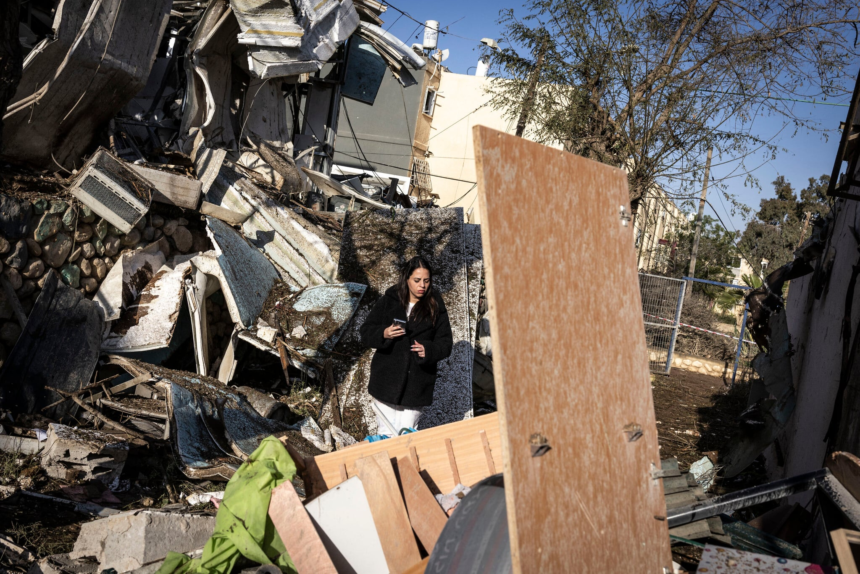
- Iranian missiles and drones have struck Israel, injuring dozens, though Israel claims it has intercepted over 90% of incoming threats.
- Air defense systems in the United Arab Emirates, Saudi Arabia, Kuwait, and Bahrain have been activated to intercept incoming attacks.
- In Abu Dhabi, one civilian was injured by debris following a missile interception.
- Israeli airstrikes have targeted infrastructure in Tehran and Lebanon, including bridges critical for civilian movement and supply routes.
Lebanon’s President Joseph Aoun described these actions as:
“a prelude to a ground invasion” and a “clear violation of international law.”
Civilian Impact
The humanitarian toll continues to rise sharply:
- Iran’s death toll has surpassed 1,500.
- Lebanon reports over 1,000 deaths and more than 1 million displaced.
- Thousands of civilian structures in Iran—schools, hospitals, and homes—have been damaged.
- In Israel, at least 15 people have been killed by missile strikes.
In Tel Aviv, residents describe life under constant threat:



“It’s Russian roulette,” one resident said, reflecting uncertainty despite advanced air defense systems.
Energy Crisis: A Shock Beyond the 1970s
The International Energy Agency has issued one of its strongest warnings in decades. Executive Director Fatih Birol described the situation as:
“very severe” and “a major, major threat” to the global economy.
He added that the crisis could surpass the oil shocks of 1973 and 1979.
Key Disruptions
- Oil prices have surged above $110 per barrel, rising more than 50% since the conflict began.
- U.S. crude has crossed $100 per barrel.
- At least 44 energy assets across nine countries have been severely damaged.
- Qatar’s liquefied natural gas exports have been disrupted by missile strikes.
The disruption extends beyond oil and gas:
- Petrochemicals, fertilizers, sulfur, and helium supply chains are all affected.
- Shipping insurance has collapsed in parts of the region, further restricting trade.
Birol emphasized:
“The single most important solution to this problem is opening up the Hormuz trade.”
Financial Markets React: Asia Leads the Decline
Global markets have responded immediately to the crisis, with Asia experiencing the sharpest downturns:
- Japan’s Nikkei 225 fell 3.5% in early trading.
- South Korea’s Kospi dropped 4.9%.
- Hong Kong’s Hang Seng declined 2.7%.
- Taiwan’s Taiex lost 2.2%.
Since the start of the war:
- Nikkei and Kospi are down around 12%.
- Hang Seng and Taiex have fallen between 7% and 8%.
These declines reflect deep reliance on Middle Eastern energy imports, particularly among East Asian economies.
Domestic and Political Pressures
United States
The conflict is generating internal political debate:
- Senator Lisa Murkowski has suggested Congress may need to authorize the war formally through an Authorization for Military Force (AUMF).
- A poll shows two-thirds of Americans view the war as a choice rather than a necessity.
The U.S. State Department has issued a global alert urging citizens abroad to:
“exercise increased caution”
due to risks of travel disruption and attacks on diplomatic facilities.
NATO and Global Alliances
NATO Secretary General Mark Rutte has expressed confidence:
“absolutely convinced” the alliance will reopen the Strait of Hormuz.
However, tensions remain, with criticism from the U.S. over alliance contributions to the crisis response.
Secondary Effects: Food, Fuel, and Supply Chains
While U.S. officials argue that domestic food prices may remain stable, global systems face mounting strain:
- Fertilizer costs are rising due to disrupted supply chains.
- The World Food Programme warns of the most severe disruption since COVID-19 and the Ukraine war.
- Gas prices in the U.S. are approaching $4 per gallon and are expected to rise further.
Experts warn that even after the conflict ends, recovery will be slow:
Gas prices will fall at a “snail’s pace.”
Regional Spillover: West Bank and Lebanon
Violence has intensified beyond the primary conflict zone:
- Israeli settlers have launched widespread attacks on Palestinian communities, injuring civilians and destroying homes.
- Reports indicate an average of 10 settler attacks per day in March.
- Israeli forces have arrested several settlers but face criticism for failing to prevent violence.
Simultaneously, infrastructure strikes in Lebanon have isolated communities, cutting off access to food and medical supplies.
The Strategic Calculus: What Comes Next?
The trajectory of the conflict hinges on several critical variables:
1. The Strait of Hormuz
If reopened, it could stabilize global markets. If not, the energy crisis will deepen significantly.
2. Infrastructure Targeting
Escalation into full-scale attacks on power plants and energy systems could trigger broader regional war.
3. International Intervention
Diplomatic or military intervention by NATO or other global actors could reshape the conflict’s direction.
4. Economic Pressure
Sustained high oil prices and supply disruptions may force negotiations or intensify geopolitical competition.
Conclusion: A Conflict With Global Consequences
This is no longer a localized war. It is a systemic crisis affecting energy security, financial stability, and civilian safety across multiple continents.
The intersection of military escalation, economic disruption, and geopolitical rivalry has created a volatile environment where each decision carries global implications.
Whether through diplomacy, force, or economic necessity, the resolution of this conflict will likely define the trajectory of international relations and global markets for years to come.