





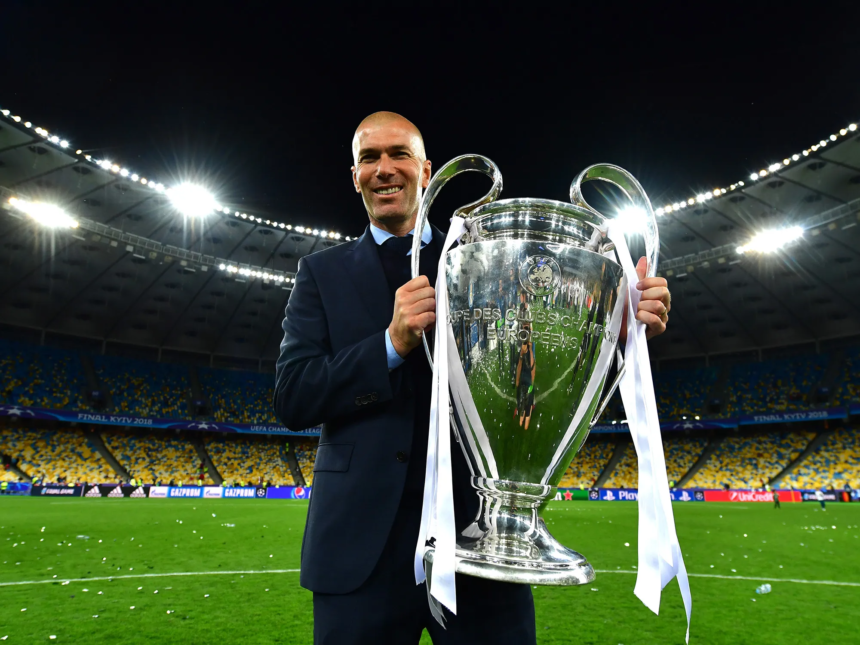
Zinedine Zidane: The Next Chapter Begins for a French Football Icon
A Transition Years in the Making
Few figures in world football carry the weight of legacy quite like Zinedine Zidane. From his artistry on the pitch to his composed authority on the touchline, Zidane’s trajectory has always seemed destined for a return to the summit of French football. That return now appears imminent.
- A Transition Years in the Making
- From Global Superstar to Elite Manager
- Building the France Project Behind the Scenes
- Performance, Science, and Communication
- Tactical Identity: What Zidane Could Bring
- The Broader Context: A New Era for Les Bleus
- What This Means for French Football
- Conclusion: Legacy Meets Opportunity
As France prepares for a new era following the upcoming FIFA World Cup, Zidane has reportedly reached a verbal agreement with the French Football Federation to take over as head coach, replacing long-serving manager Didier Deschamps, who has led the national side since 2012.
The development signals not just a managerial change, but a generational shift—one that blends historical prestige with a modern, carefully constructed footballing vision.
From Global Superstar to Elite Manager
Zidane’s credentials are not merely strong—they are foundational to modern French football identity.

As a player, he was instrumental in France’s 1998 World Cup triumph and later guided the team to a runner-up finish in 2006. Individually, his achievements include the 1998 Ballon d’Or and three FIFA World Player of the Year awards (1998, 2000, 2003).
Yet his career has never been without complexity. The infamous moment in the 2006 World Cup final—his sending-off after a headbutt on Marco Materazzi—remains one of football’s most widely discussed incidents. It did little, however, to diminish his standing as one of the sport’s most influential figures.

Transitioning into management, Zidane took charge of Real Madrid across two spells (2016–2018, 2019–2021), building a reputation for calm leadership and tactical clarity. His tenure in Madrid solidified his ability to manage elite talent and deliver results at the highest level.
Building the France Project Behind the Scenes
While the official appointment is expected after the World Cup, Zidane has already begun shaping what his France setup could look like.
Speaking to Le Figaro, FFF president Philippe Diallo stated, “Oui, je connais le nom,” confirming that the next coach is known internally and fits a very specific profile—one that aligns with Zidane’s discreet, methodical approach.
A Trusted Inner Circle
At the center of Zidane’s plans is David Bettoni, a long-time collaborator dating back to their early days in Cannes. Bettoni is expected to play a critical role in designing training sessions and engaging in tactical discussions, while Zidane retains final authority over team selection.
Another key figure is Hamidou Msaidie, who previously worked with Zidane at Real Madrid. His role extends beyond medical duties—he is known for organizing drills, coordinating injury management, and even preparing motivational material for players.
Zidane’s preference for a streamlined staff is well documented, but the scale of international football necessitates a broader support structure.
Integrating Federation Expertise
Figures within the French system are also under consideration. Bernard Diomède, currently managing the Under-19 team, is a close ally with deep knowledge of emerging talent.
Meanwhile, Stéphane Plancque—a former Bordeaux teammate—brings analytical expertise, having previously studied opponents for Real Madrid. Zidane’s emphasis on data-driven preparation suggests this role could be central to his approach.
Performance, Science, and Communication
Zidane’s prospective setup reflects a clear priority: balance between performance, science, and messaging.
The performance and medical department remains a focal point, especially after ongoing debates around player fitness and injury management in recent years. While Grégory Dupont—a key figure in France’s 2018 World Cup win—has since moved on to a directorial role at Red Star, Zidane’s past collaboration with him indicates the importance he places on physical preparation.
Beyond the pitch, structural roles are equally important. Mohamed Sanhadji is expected to continue overseeing security, while Jacques Bungert will manage the national team’s messaging—an increasingly critical component in modern international football.
Tactical Identity: What Zidane Could Bring
Zidane’s managerial philosophy has often been described as understated but effective. He prioritizes:
- Tactical adaptability rather than rigid systems
- Strong player relationships and trust-based management
- Decisive in-game adjustments
- Emphasis on big-match mentality
His partnership model—delegating preparation while maintaining control over key decisions—was central to his success at Real Madrid and appears set to continue with France.
The Broader Context: A New Era for Les Bleus
France enters this transition period with one of the deepest talent pools in international football. The challenge for Zidane will not be talent identification, but cohesion—integrating established stars with emerging prospects.
The timing is also significant. Taking over after a World Cup allows for structural reset without immediate tournament pressure, giving Zidane space to implement his vision.
What This Means for French Football
Zidane’s expected appointment is more than a managerial change—it is a symbolic alignment of France’s past and future.
- A World Cup-winning player returning to lead a new generation
- A proven club manager stepping into the international arena
- A system blending federation continuity with personalized leadership
If executed effectively, it could define the next decade of French football.
Conclusion: Legacy Meets Opportunity
Zinedine Zidane’s journey—from global icon to potential national team architect—has followed a trajectory shaped by patience, precision, and timing.
Now, with the French national team on the brink of transition, the pieces appear to be falling into place. His staff is taking shape, his philosophy is clear, and the expectations are immense.
The question is no longer whether Zidane will take charge of France—but how he will reshape one of football’s most powerful teams once he does.