






Liberty Gold’s Strategic Pivot: Inside the $72.5M Goldstrike Deal
A Portfolio Reset in the Precious Metals Sector
In the often cyclical and capital-intensive world of gold mining, strategic discipline can be as valuable as the metal itself. The latest move by Liberty Gold Corp. signals precisely that: a deliberate narrowing of focus, backed by a structured deal designed to preserve liquidity while maintaining upside exposure.
- A Portfolio Reset in the Precious Metals Sector
- Why Goldstrike—and Why Now?
- Breaking Down the $72.5 Million Deal
- What Heliostar Gains
- Market Context: Gold Prices and Strategic Timing
- Regulatory and Transaction Timeline
- Risk Considerations and Forward Outlook
- A Shift Toward Focused Growth
- Conclusion: A Transaction Defined by Strategy, Not Necessity
On March 23, 2026, Liberty Gold confirmed it is selling its Goldstrike Project in southern Utah to Heliostar Metals Ltd. for total consideration of US$72.5 million. The transaction is not simply an asset sale—it represents a calculated shift in capital allocation, risk management, and long-term project prioritization.
Why Goldstrike—and Why Now?
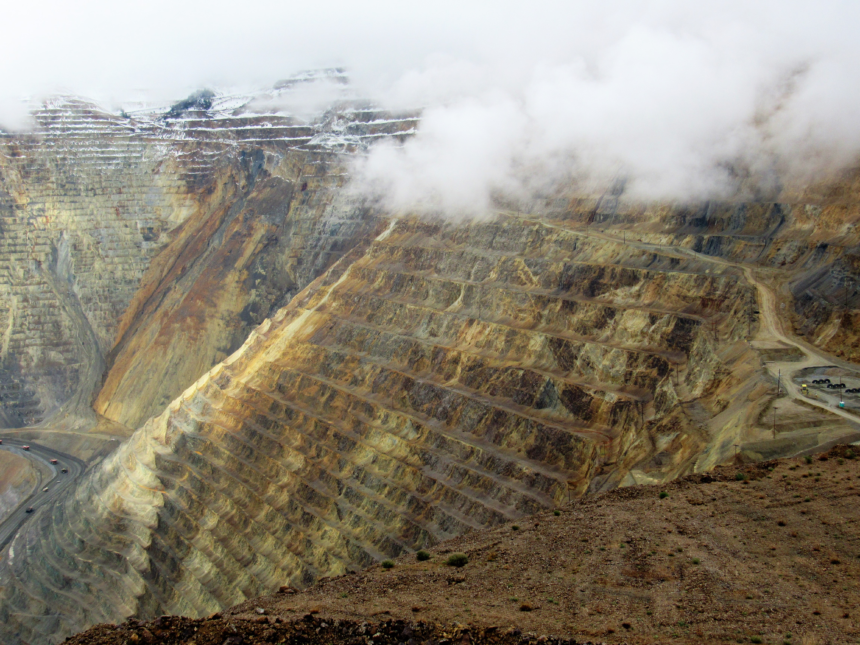
The Goldstrike Project, located in Utah’s Bull Valley Mountains roughly 50 kilometres northwest of St. George, is far from a marginal asset. It spans 5,173 hectares and includes a combination of patented and unpatented claims, as well as leased state and private land.
From a resource standpoint, Goldstrike carries notable scale:



- 925,000 ounces of gold (indicated) at 0.50 g/t
- 296,000 ounces (inferred) at 0.47 g/t
Historically, it has also demonstrated production viability, having yielded 209,000 ounces of gold between 1988 and 1994 through heap leach operations.
However, for Liberty Gold, the strategic calculus is less about asset quality and more about capital efficiency.


The company is currently advancing its flagship Black Pine Project in Idaho, a large-scale oxide gold system moving through feasibility and permitting stages. That development requires significant upfront capital—particularly for long-lead procurement and infrastructure.
By divesting Goldstrike, Liberty avoids raising equity in public markets, thereby protecting existing shareholders from dilution.
As CEO Jon Gilligan stated:
“The structure delivers near-term funding while maintaining exposure to additional value as Goldstrike advances.”
Breaking Down the $72.5 Million Deal
The transaction structure reflects a hybrid financing model—part immediate liquidity, part deferred performance-linked payments.



Initial Consideration
- US$10 million in cash at closing
- 1,593,213 Heliostar shares issued immediately
Deferred Payments
- US$10 million after 12 months
- US$10 million after 18 months
- US$15 million tied to infrastructure milestones (or within five years)
- US$25 million tied to feasibility, construction decision, or five-year timeline
This staggered structure allows Liberty to secure non-dilutive capital over a five-year horizon, aligning inflows with development needs at Black Pine.
For Heliostar, the arrangement reduces upfront risk while tying major payments to project advancement milestones.
What Heliostar Gains
For Heliostar Metals, the acquisition is a clear expansion play.
The company is positioning itself as a mid-tier gold producer, targeting 500,000 ounces of annual production by the end of the decade. Its existing operations include:
- La Colorada (Sonora, Mexico)
- San Agustin (Durango, Mexico)
It also maintains a diversified development pipeline across Mexico and the United States, including projects in Guerrero, Guanajuato, Baja Sur, and Alaska.
Goldstrike fits into this growth trajectory as a development-ready asset in a mining-friendly jurisdiction, offering:
- Established resource base
- Historical production track record
- Expansion potential through further exploration
In essence, Heliostar acquires optionality—an asset that can be advanced when capital and market conditions align.
Market Context: Gold Prices and Strategic Timing
The transaction unfolds against a volatile but generally supportive commodities backdrop.
As of March 2026:
- Gold prices hover around $4,435 per ounce
- Precious metals markets continue to reflect geopolitical uncertainty and macroeconomic hedging demand
For companies like Liberty Gold, this environment creates an incentive to prioritize near-term development assets that can be brought into production efficiently.
Selling non-core assets during favorable pricing cycles allows firms to:
- Strengthen balance sheets
- Accelerate flagship projects
- Reduce financing risk
Regulatory and Transaction Timeline
The deal is structured with standard regulatory safeguards and is expected to close within 30 days, subject to:
- Approval from the TSX Venture Exchange
- Satisfaction of customary closing conditions
Heliostar shares issued as part of the deal will be subject to a four-month and one-day hold period, consistent with securities regulations.
Risk Considerations and Forward Outlook
As with any mining transaction, forward-looking elements introduce uncertainty. Key risks include:
- Regulatory approval delays
- Commodity price volatility
- Project integration challenges
- Environmental and permitting hurdles
- Financing constraints for development
The companies have explicitly noted that forward-looking statements rely on assumptions around approvals, economic conditions, and successful project execution.
Still, the strategic rationale is clear.
A Shift Toward Focused Growth
Liberty Gold’s decision to divest Goldstrike underscores a broader industry pattern: portfolio rationalization in pursuit of capital efficiency.
Rather than attempting to advance multiple assets simultaneously—a strategy that often stretches balance sheets—companies are increasingly concentrating on flagship projects with the highest probability of near-term returns.
For Liberty, that project is Black Pine.
For Heliostar, Goldstrike becomes a new lever in its growth pipeline.
Conclusion: A Transaction Defined by Strategy, Not Necessity
The sale of Goldstrike is not a distressed move—it is a deliberate repositioning.
Liberty Gold converts a valuable but non-core asset into structured capital that supports its primary development objective. Heliostar gains a scalable project aligned with its production ambitions.
In a sector where capital discipline often separates successful developers from stalled explorers, this deal reflects a clear, strategic alignment on both sides.
The outcome will ultimately be judged not by the transaction itself, but by what each company builds next.